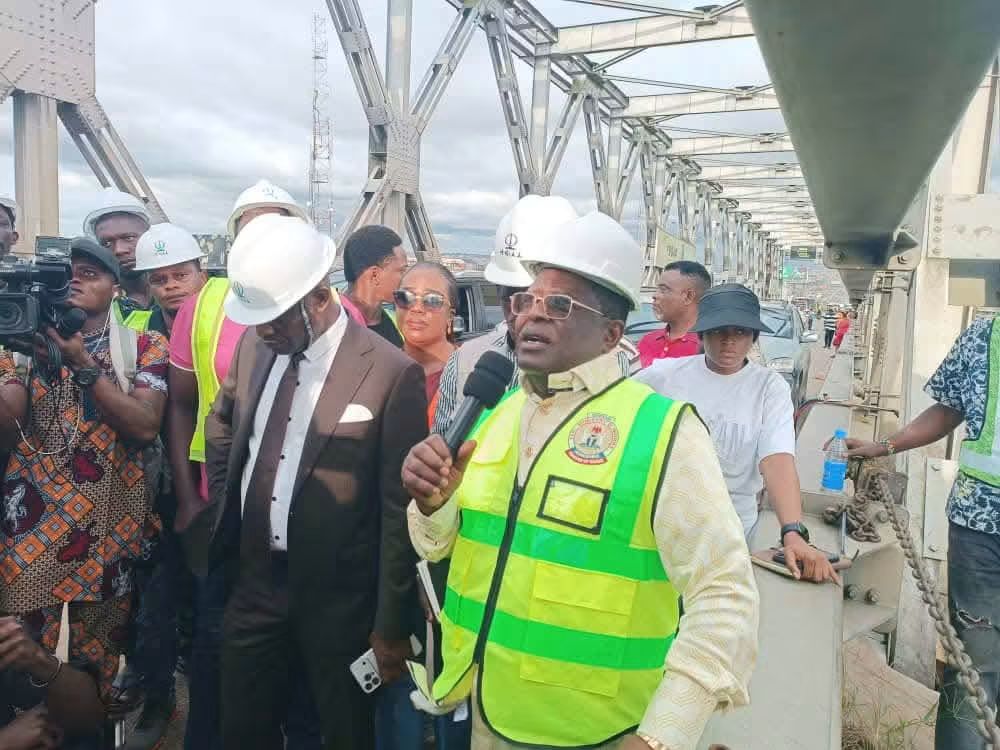
Nigeria’s Minister of Works, David Umahi, has ordered the immediate arrest of the Managing Director of Hartland Nigeria Ltd over the alleged failure to deliver an 11-kilometre section of the Benin–Onitsha Expressway despite receiving about N14 billion for the project.
Umahi issued the directive on Thursday during an inspection of federal road and bridge projects along the Agbor–Asaba–Onitsha corridor, where he expressed anger over the contractor’s alleged failure to meet its contractual obligations.
Umahi said Hartland had completed only about 40 per cent of the contracted work, covering the stretch from Summit Junction to the Head Bridge, including channelisation and hydraulic structures.
“I’ve called the MD to discuss their return to the site. I am going to look for him and have him arrested,” Umahi said, directing ministry officials to locate the company’s managing director.
He also ordered the ministry to begin moves to recover funds paid to the contractor and directed officials to audit Hartland’s payment records and certificates across all its federal projects.
“When I paid them that money, we reached an agreement: they were to finish 11 kilometres from Summit Junction to this Head Bridge with that money, as well as handle the channelisation and hydraulic structures. That was the agreement,” he said.
“Today, they have only completed about 40 per cent of what was agreed upon,” Umahi added.
READ ALSO: Minister of Works Commissions Projects in Kano
He ordered the immediate filling of both sides of the approach to the Head Bridge and directed ministry officials to ensure the work was carried out without delay.
The minister’s directive came during an inspection that also focused on the condition and security of the First and Second Niger Bridges, strategic transport links connecting Southeast Nigeria with other parts of the country.
At the First Niger Bridge, Umahi expressed concern over the vandalism and removal of bolts, expansion joints, steel members and other critical components, warning that the damage could threaten the safety of the bridge if left unattended.
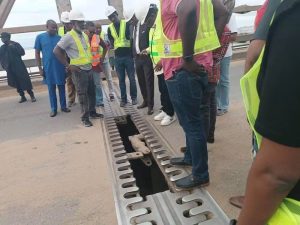
He directed the immediate replacement of the missing or damaged components and ordered welding repairs to commence.
The Nigerian Government will also install closed-circuit television cameras and solar-powered lighting on the bridge as part of measures to curb vandalism and strengthen security.
Umahi said live CCTV feeds would be linked to designated government officials and the police to facilitate the identification and arrest of suspected vandals.
“We will fix solar streetlights and CCTV on this bridge; that’ll all be transmitted to your phone and also linked to the police,” he said.
He also announced maintenance and resurfacing works on the bridge, which would be carried out at night and require temporary closure of the structure during the exercise.
Addressing concerns over movement or vibration on the First Niger Bridge, Umahi said some movement was normal for bridge structures and did not necessarily indicate structural failure.
At the Second Niger Bridge, the minister inspected areas affected by erosion and ordered immediate remedial work.
Umahi said the government could not continue to commit public funds to critical infrastructure while vandalism and illegal activities damaged public assets.
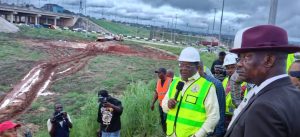
The inspection also covered the 17.5-kilometre access road to the Second Niger Bridge, where Umahi commended the contractor handling the project and assured the firm of continued government funding.
He further said the Nigerian Government was exploring options to rehabilitate failed sections of the Benin–Agbor road, while accusing concessionaires involved in previous arrangements of frustrating efforts to restore the route.
Umahi’s directives highlight the Nigerian Government’s renewed push to enforce contractual obligations, recover public funds and protect strategic transport infrastructure critical to the economic and social connectivity of Southeast Nigeria.