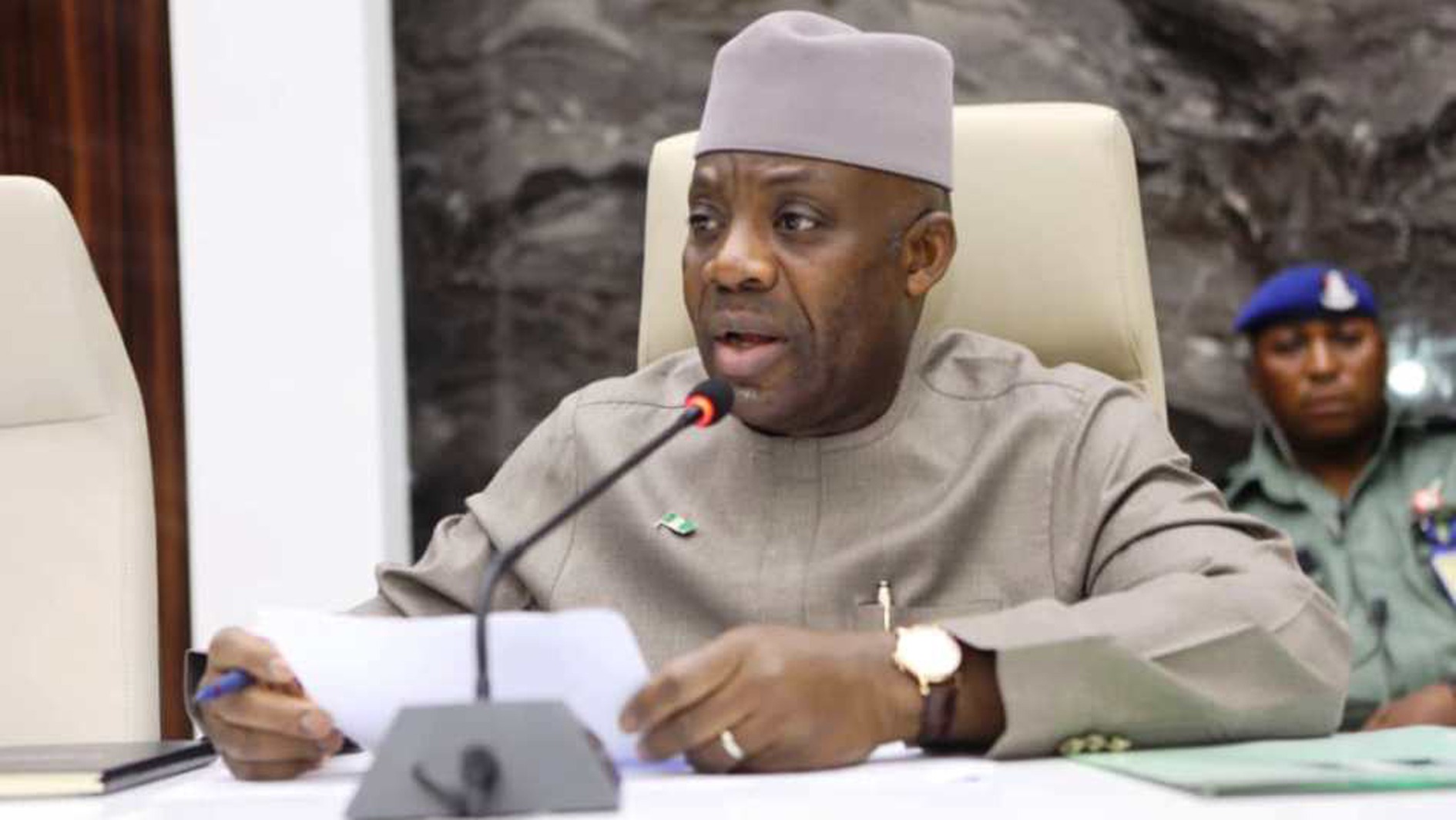
The Nigerian Government has ruled out the sale of King’s College, Lagos and other Federal Unity Colleges nationwide, assuring citizens that the proposed management arrangement for King’s College, Lagos, will neither lead to an increase in school fees nor the loss of jobs for teachers.
The Minister of Education, Dr Tunji Alausa, gave the assurances in Abuja while addressing journalists on the controversy surrounding the proposed management arrangement involving the King’s College Old Boys Association (KCOBA).
Alausa said the government had no plan to extend the arrangement to other Unity Colleges, stressing that the Federal Government remained responsible for the institutions.
The minister also dismissed reports that the government intended to sell any of the Federal Unity Colleges.
“Let me be unequivocal, the Federal Government is not selling any Unity College.
“The Federal Government, through the Federal Ministry of Education, does not have the intention to sell any Unity College, and we will not sell any Unity College.
“That is the government position, and go and write it down and hold on to that, we are not selling the government institutions,” he said.
The minister explained that the proposed arrangement with KCOBA was intended to mobilise additional resources to rehabilitate and modernise King’s College while retaining government ownership of the institution.
READ ALSO: Oyo Governor Reaffirms Commitment To Education Reform
According to him, the decision was driven by the extensive deterioration of infrastructure at the school and the need to restore its historical standard.
Alausa said he had visited the school unannounced and observed poor conditions in some hostels, bathrooms, classrooms, laboratories and other facilities.
He noted that the college had experienced a prolonged electricity problem during his visit, prompting him to contact the relevant electricity distribution company, after which power was restored to the Senior Secondary School section.
Also, the minister raised security concerns over the use of parts of the school premises as a paid car park, saying unrestricted access by members of the public posed risks to the students. He said he directed that the arrangement be cancelled.
Alausa said KCOBA had expressed willingness to invest substantially in the institution through a non-profit foundation and had indicated that it would maintain merit-based admission while ensuring students from across the country continued to have access to the school.
He mentioned that the association had claimed to have invested more than N2 billion in supporting infrastructure at the college over the years.
The minister said the government faced a significant funding gap in rehabilitating the country’s 115 Federal Unity Colleges, noting that the accumulated infrastructure deficit could not be addressed immediately through government funding alone.
“President Bola Tinubu is investing in infrastructure, including the sub-sector, but there’s so much, significant infrastructure gap that has happened for 40 years and we don’t have the funds,” he said.
He estimated that even N2 trillion would not be enough to address the infrastructure needs of all the Unity Colleges.
To complement government funding, Alausa said the Federal Government had secured approval to repurpose about $20 million from a World Bank-supported programme for the comprehensive rehabilitation of selected Unity Colleges.
He said about 20 schools had been selected for the intervention, although the funding would cover schools across the country.
The minister stated that the estimated cost of rehabilitating Unity Colleges in the South-West alone was nearly N100 billion, making it necessary for government to explore additional funding options without conceding the institutions.
No Fees Increment
On the concerns over fees, Alausa assured Nigerians that the King’s College arrangement would not result in any increase in school fees.
He said the agreement was subject to stringent Key Performance Indicators (KPIs) designed to protect the interests of government and learners.
The minister disclosed that the Ministry of Education had established an implementation and monitoring team to conduct unannounced inspections of the school and ensure compliance with the terms of the agreement.
He said government remained open to dialogue with the unions and would consider legitimate concerns that could add value to the arrangement.
Alausa also urged journalists to visit the schools and independently assess their conditions before reporting on the controversy.
Meanwhile, Alausa said the government had engaged the Trade Union Congress (TUC) and other unions over the issues surrounding the schools.
According to him, the government reached a six-point agreement with the TUC leadership, after which a communiqué was issued calling on workers to return to work.
The minister said the Federal Government would continue to engage the unions while pursuing measures to address the infrastructure and management challenges confronting the Unity Colleges.
He said the administration remained committed to restoring the quality and reputation of the institutions while retaining government ownership.
No Job Loss
For her part, Minister of State for Education, Prof. Suwaiba Ahmad, said no teacher would lose his or her job as a result of the King’s College arrangement.
Ahmad said affected teachers had been given the option to indicate where they wanted to be redeployed, in line with the Public Service Rules.
She said the government was implementing teacher capacity-building programmes as part of broader efforts to improve the quality of learning in Unity Colleges and other schools.
The minister said a committee had been established to review the Memorandum of Understanding (MOU) and address concerns raised by stakeholders, while union representatives would also be included in another committee to monitor its implementation.
” There is no fee increase in this arrangement. It is part of the MoU we signed,’‘ she said.
Ahmad said the government’s objective was to restore the quality and excellence historically associated with the Unity Colleges, noting that the decline in standards had occurred over several decades and would require sustained investment in infrastructure and teacher development.
She explained that the government was exploring various public-private partnership models to rehabilitate Unity Colleges, citing the Kano model as one of the options under consideration.