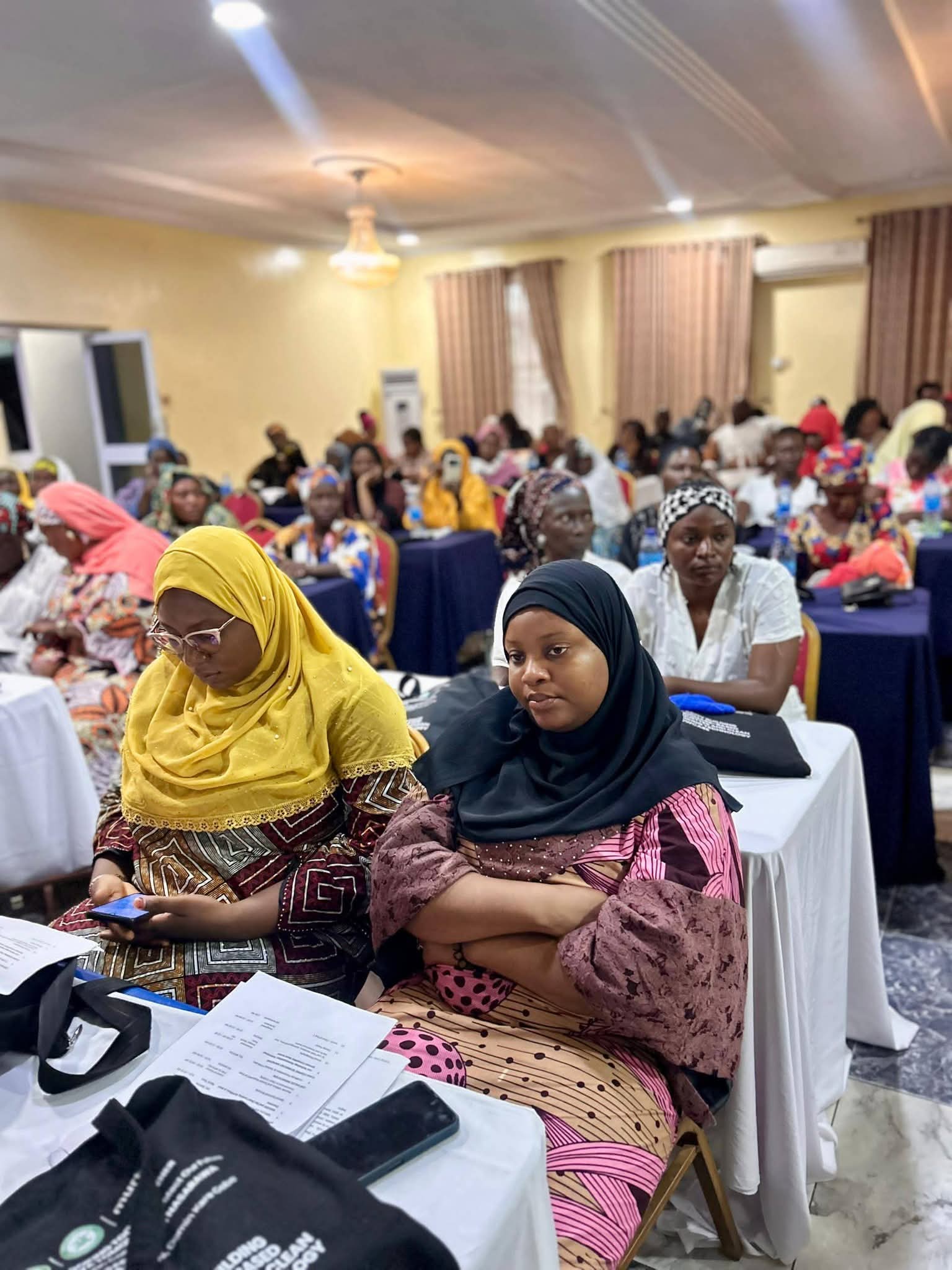
The Nasarawa State government has trained fifty nine women on Biomass Briquette Production and Clean Cooking Technology, a major green energy initiative.
The Director General, Human Capital Development Agency, Miss Habiba Balarabe made this known at the closing ceremony and presentation of certificate of the two day capacity building workshop.
The workshop was organised by the state government in collaboration with Murty International Limited and Power Stove Energy.
Miss Balarabe, emphasised a structural shift in the state’s approach to economic and environmental sustainability.
“We have moved from talking to doing, our approach has not been to import a solution and hand it down. It is to empower the people and create a healthier citizenry for Nasarawa State,” she said.
READ ALSO: Minister Reaffirms Support for Women Empowerment Initiatives
Miss Balarabe said the initiative places clean cooking as the state’s topmost priority under the Nasarawa State Low Emission Development Strategy.
She further challenged the graduates to scale their businesses and hold the government accountable to its 2030 climate goals.
Also speaking, a resource person from the Department of Environmental Management at Bayero University, Kano, Dr. Ummi Kulthum Muhammad, said the initiative of the workshop aims to curb rapid deforestation, reduce dangerous household smoke, and unlock microfinance and private investments,
by converting agricultural residue and open-air waste into clean-burning briquettes.
She said the program explicitly places women and youth at the center of the transition, transforming those who traditionally bear the burden of cooking into producers and entrepreneurs.
For many participants, the training provided a vital link between environmental advocacy and financial independence.
Rahmatu Osaze Sani, a waste management advocate and trainee, noted the practical impact of the workshop.
“I’ve engaged in a series of advocacies with people on clean cooking energy, but this is the first time I’m having an actual firsthand experience for the process of the production of this briquette. This gives women that have not even heard anything about briquettes before this opportunity to learn, to be able to commercialise this and empower themselves financially,” Sani said.
Another participant from Karu Local Government Area, Hannatu Fumumidakor, said beyond economics, the health benefits of moving away from traditional charcoal and firewood remain paramount.
“Normally we grew up in an environment where we see our parents cooking in a toxic environment using firewood, which has posed serious dangers to our health, like respiratory diseases and lung health challenges. Coming to this training has really equipped me a lot, on how to put it into practice and how to maintain clean cooking hygiene,” she stated.
Participants drawn across the 13 local government were learnt the process of briquette production.