


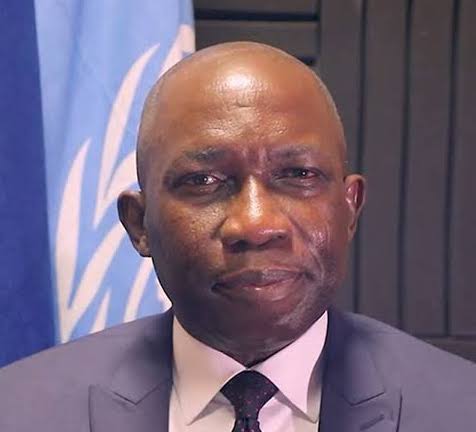
The Director-General of the Nigerian Copyright Commission (NCC), Dr John Asein, has called on journalists to go beyond surface reporting and uncover the economic forces that sustain piracy in the country.
Asein made the appeal in Abuja during the 2026 annual copyright seminar for journalists, organised by the Commission with the theme, “Copyright Protection: Empowering Journalists as Critical Stakeholders in the Creative Industry.”
He described journalists as essential partners, creators and watchdogs, stressing that protecting copyright requires more than laws and enforcement operations.
“We must also build a society that understands the value of creativity and respects the rights of creators, as well as journalism that goes beyond reporting arrests, seizures and court proceedings. We need investigations that expose the economic structures behind piracy, examine unfair exploitation, follow royalty flows and bring the experiences of creators to public attention,” he stated.
“The commission will continue to work with participating institutions to translate these commitments into practical action. We expect the media to remain an important partner in explaining these initiatives, sustaining public attention and holding all participating institutions accountable for the results,” he emphasised.
According to him, the theme of this year’s seminar underscores the Commission’s belief that journalists are not just observers of the creative economy. He noted that they are also creators, owners and users of copyrighted works, as well as powerful agents of change whose reports shape public perception and influence how creative works are valued.
Asein observed that a single, well-researched investigative piece could have greater impact in reshaping public attitude towards piracy than several enforcement exercises.
“The commission considers the media an indispensable partner in building a stronger copyright culture in Nigeria. Copyright is not an end in itself, it is an instrument for encouraging creativity, protecting intellectual effort, promoting investment and generating economic value,” he said.
He further called for increased focus on authors’ rights, the economic realities of creative professionals, the administration of copyright estates and the implications of Artificial Intelligence for human creativity.
The NCC boss said the nation needs more informed coverage on how copyright can drive youth employment, enterprise growth, investment and wealth creation.
“Let me emphasise that our partnership with the media does not mean that journalists should surrender their independence or professional judgment. On the contrary, we expect you to ask difficult questions, scrutinise our activities, hold the commission and other institutions accountable,” he noted.
He further highlighted that, “An informed and independent press strengthens public institutions and promotes better copyright governance. As copyright users, you must equally respect the rights of others. Attribution is important, but it does not always replace the need for authorisation”.
He advised media organisations to uphold sound copyright practices in their operations and to enhance journalists’ capacity to report on intellectual property matters accurately and responsibly.
Asein charged journalists to prioritise creators, place human creativity at the centre of technological advancement, convert creativity into jobs and wealth, make piracy unprofitable and deploy journalism as a catalyst for change.
He reaffirmed the Commission’s commitment to working with relevant institutions to implement these resolutions, and urged the media to continue to publicise the initiatives and hold all stakeholders accountable for outcomes.
He also expressed appreciation to members of the press for their immense contributions to copyright administration and the growth of Nigeria’s creative economy.
Earlier in her welcome address, the Director of Public Affairs at the Commission, Mrs Ijeoma Egbunike, commended journalists for their consistent coverage of the Commission’s activities. She said the seminar was designed to deepen journalists’ understanding of copyright protection and improve reportage of the Commission.
”At the end of the day, we know that the coverage that will be coming out from this event will be massive because it will cover every area,” she stated.
NAN

