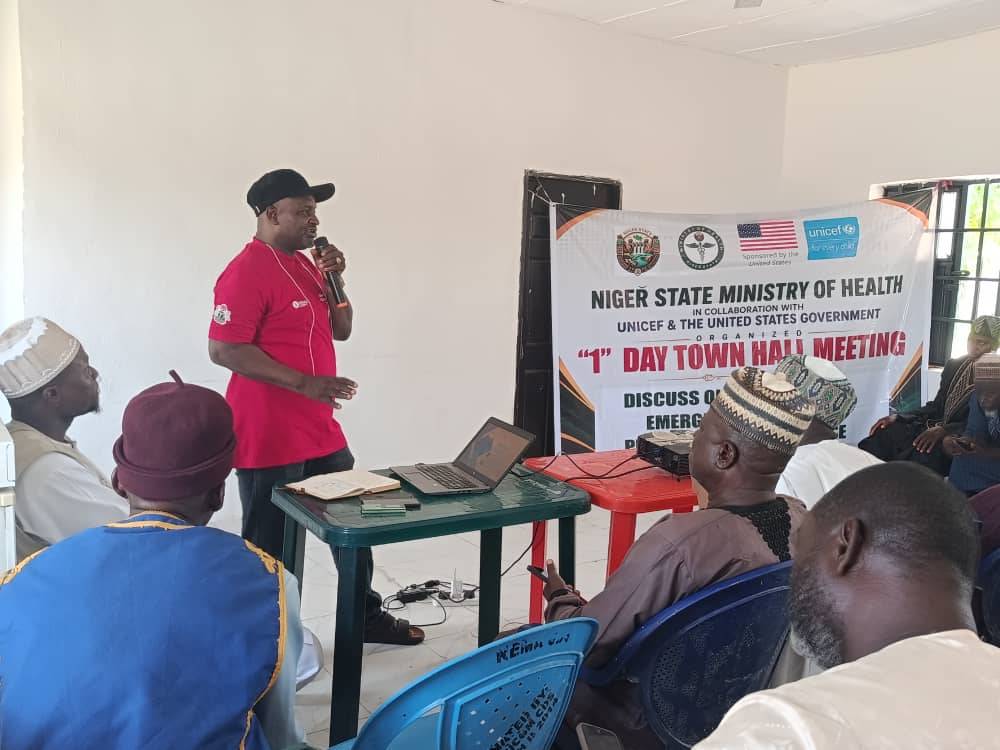
The Niger State Government has stepped up measures to curb the spread of infectious diseases by convening town hall meetings involving 350 traditional, religious and community leaders across selected local government areas.
The initiative is part of efforts to strengthen disease surveillance systems and enhance emergency response capacity following the detection of new polio and diphtheria cases in parts of the state.
Addressing participants at a town hall meeting on public health emergency prevention and response, the State Immunisation Officer, Abubakar Kpantu, disclosed that three new polio cases had been confirmed in Magama and Mariga Local Government Areas.
He also revealed that diphtheria infections had been recorded in Bida, Chanchaga and Suleja LGAs.
The engagement was organized by the Niger State Ministry of Health with support from the United Nations Children’s Fund (UNICEF) and the United States Government.
ALSO READ: Nigeria Seeks Private Investment to Power Healthcare Facilities
Kpantu noted that the return of polio cases after years without any reported infections is a source of concern for health authorities.
He emphasized the need to strengthen routine immunisation, increase public awareness and maintain vigilance to protect children and other vulnerable populations from vaccine-preventable diseases.
According to him, the arrival of the rainy season has also heightened concerns about possible outbreaks of cholera and other communicable diseases, prompting closer monitoring by health officials.
The sensitisation meetings took place in Bida, Bosso, Chanchaga, Gbako, Gurara, Kontagora and Suleja LGAs, bringing together health experts, development partners, traditional institutions, faith-based leaders and community representatives to discuss strategies for disease prevention and emergency response.
“That the discussions focused on improving community readiness to tackle public health threats such as meningitis, measles, cholera, diphtheria, Mpox and other infectious diseases”. Kpantu explained
Speaking during the event, UNICEF Social and Behaviour Change Facilitator, Adamu Mamba, underscored the importance of early detection of diseases, prompt reporting of suspected cases and compliance with public health recommendations.
He highlighted the influential role of traditional and religious leaders in promoting accurate health information, encouraging vaccination and supporting effective communication during health emergencies.
Mamba further stressed that community involvement remains critical to improving vaccine uptake, countering misinformation and strengthening outbreak response efforts.
He urged stakeholders to champion preventive health measures, support immunisation campaigns and encourage community feedback mechanisms to improve public health outcomes across the state.
The meetings are expected to enhance public awareness and strengthen grassroots participation in disease prevention efforts, enabling Niger State to respond more effectively to current and future health challenges.