Nigeria has called for stronger global partnerships to advance women’s political leadership, economic empowerment and equal opportunities, particularly for young women confronting the challenges of digitalisation and artificial intelligence.
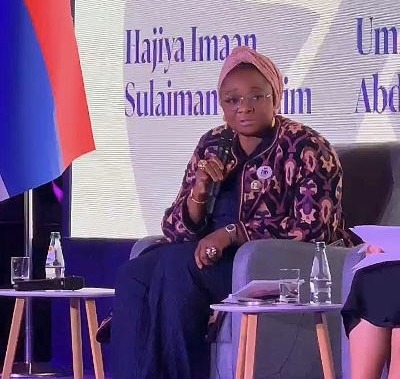
The Minister of Women Affairs and Social Development, Hajia Imaan Sulaiman-Ibrahim, made the call at the Second High-Level International Conference on the Political and Economic Empowerment of Women, RISE 2026, held at the Palace of Serbia in Belgrade, under the theme, “Building Alliances for Generations to Come.”
Speaking on the “Alliances for the Future” panel, Sulaiman-Ibrahim highlighted Nigeria’s women-focused initiatives, including the Nigeria for Women Project Scale-Up (NFWP-SU), Women in Agriculture Value Expansion (WAVE) and the Women in Natural Gas Project, as platforms for strengthening women’s empowerment.
READ ALSO: Nigerian Women Urged to Turn Voices Into Impact
She emphasised that strategic partnerships were critical to expanding women’s economic opportunities and participation in decision-making, while urging stakeholders to ensure that young women were not left behind as digital technologies and artificial intelligence reshape societies.
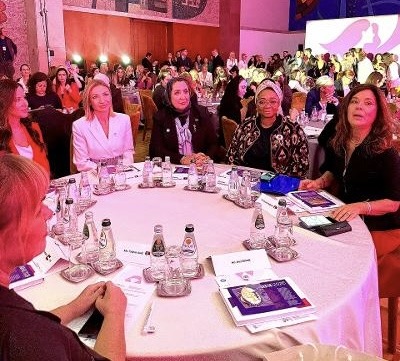
The Minister stressed the need for equal opportunities for young women in education, employment and political participation, noting the importance of collective action in addressing emerging challenges and unlocking opportunities for future generations.
The conference brought together ministers, deputy ministers, ambassadors and other senior officials from Nigeria, Serbia and participating countries to exchange experiences and explore policies, legislation and best practices for advancing women’s political and economic participation.
Stronger Opportunities
Opening the conference, Tamara Vučić, diplomat with the rank of ambassador at Serbia’s Ministry of Foreign Affairs and First Lady of Serbia from 2017 to 2026, called for stronger opportunities and support for future generations of women.
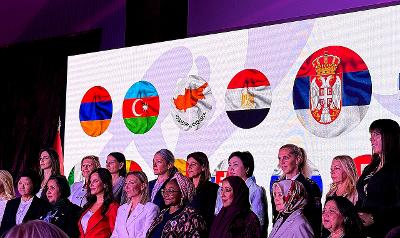
She called for societies where women could participate freely in public life and exercise their rights to education, employment, property ownership, political engagement and independent decision-making without fear of violence, humiliation or discrimination.
Similarly, Serbia’s Minister without Portfolio responsible for Gender Equality, Prevention of Violence Against Women, and Economic and Political Empowerment of Women, Tatjana Macura, underscored the importance of cooperation among generations, institutions and countries in sustaining progress.
She said combining diverse perspectives and experiences would strengthen alliances, expand opportunities for women and girls, and prepare future generations of leaders.
The conference featured a high-level political roundtable and four thematic panels: “Alliances for the Future,” “Her Voice,” “Louder Than Violence,” and “All Women on Board” with discussions focused on intergenerational partnerships, women’s political leadership, violence prevention and economic empowerment.
Nigeria’s participation highlighted the role of international cooperation in advancing gender equality, strengthening women’s representation in decision-making and building sustainable pathways to prosperity for women and girls.