The Nigerian Government has called for stronger health promotion programmes that deliver measurable results, stressing the need to move beyond public awareness campaigns to sustained actions that prevent diseases and improve health outcomes.
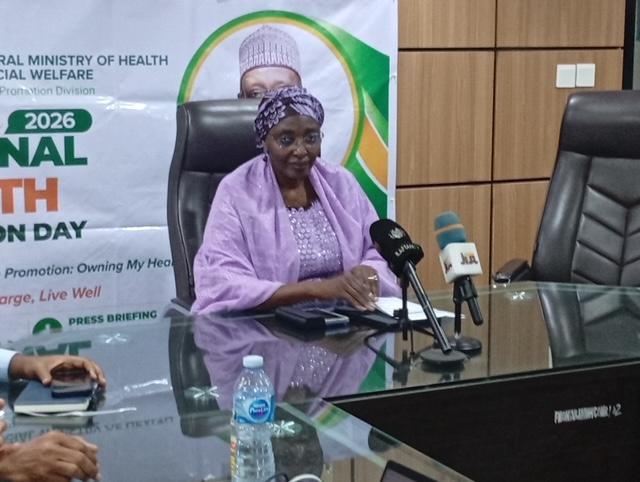
The Coordinating Minister of Health and Social Welfare, Professor Muhammad Ali Pate, made the call on Thursday, October 29, during the commemoration of the 2026 National Health Promotion Day in Abuja, with the theme, “Health Promotion: Owning My Health” and the slogan, “Take Charge, Live Well.”
Represented by the Ministry’s Permanent Secretary, Daju Kachollom, Pate described health promotion as a strategic investment in the health system.
He noted that prevention, early diagnosis and informed health-seeking behaviour were essential to achieving Universal Health Coverage.
READ ALSO: WHO Declares Health Promotion a Global Movement
He cited World Health Organisation (WHO) estimates indicating that Nigeria’s healthy life expectancy at birth stood at 54.1 years in 2023.
The Minister said that under-five mortality declined from 132 deaths per 1,000 live births in 2018 to 110 in 2024, while neonatal mortality increased from 39 to 41 deaths per 1,000 live births within the same period.
“These figures reflect progress in some areas and persistent challenges in others,” Pate said, calling for accelerated efforts to improve health outcomes.
He explained that health promotion remained central to the Nigeria Health Sector Renewal Investment Initiative, which prioritises maternal and child health, primary healthcare, immunisation, non-communicable diseases, HIV, tuberculosis and malaria.
According to him, key interventions include hypertension detection, hepatitis elimination, cervical cancer screening, improved nutrition and immunisation.
Pate stressed that the effectiveness of health promotion should be measured by its impact on people’s lives rather than the number of campaigns conducted.
“Our assessment of progress must extend beyond activities undertaken to the difference they make in people’s lives,” he said.
He emphasised the need to monitor the number of people reached, health risks identified, referrals completed, patients who accessed treatment and illnesses prevented.
Collaboration
The minister also called for stronger collaboration among government institutions, health workers, traditional and religious leaders, schools, the media and private organisations to encourage healthy lifestyles and combat health misinformation.
He urged Nigerians to seek credible health information, participate in recommended screening and immunisation programmes, and access medical care promptly whenever necessary.
Meanwhile, the Director of the Health Promotion Department, John Uruakpa, said more than 20 million Nigerians had been reached with health promotion messages through radio, social media and community outreach.
Uruakpa said Nigeria became the first country in the world to institutionalise a National Health Promotion Day following its approval by the National Council on Health. The inaugural commemoration was held on October 29, 2024.
Stregthened Partnership
According to him, the Ministry had strengthened partnerships, trained health educators and community mobilisers, launched the Healthier Schools, Healthy Communities initiative and developed a draft national monitoring and evaluation framework to assess progress.
Uruakpa urged stakeholders to extend health promotion activities to communities, schools and primary healthcare centres, stressing that “health promotion is not the work of the health sector alone.”
The WHO commended Nigeria for institutionalising the annual observance, describing it as a demonstration of national vision and leadership.
Representing the organisation, Dr Eshetu reaffirmed WHO’s support for the Federal Ministry of Health and Social Welfare, emphasising that health promotion must translate into practical actions that save lives.
“True ownership only happens when health information translates into life-saving actions,” Eshetu said, pledging continued technical support to ensure that health promotion remained a national priority.
Other partners at the event included UNFPA, JHPIEGO, SFH, UNICEF, NI, CCSI, MSI, PPFN, ARFH, CARES INT, AAFP, PCDF, ISMPH and AHBN, all reaffirming their commitment to advancing health promotion in Nigeria.