The Nigerian government has renewed its call for stronger regional cooperation among African countries to accelerate digital transformation, expand connectivity, strengthen cybersecurity and enable the continent to speak with one voice on global telecommunications policies.
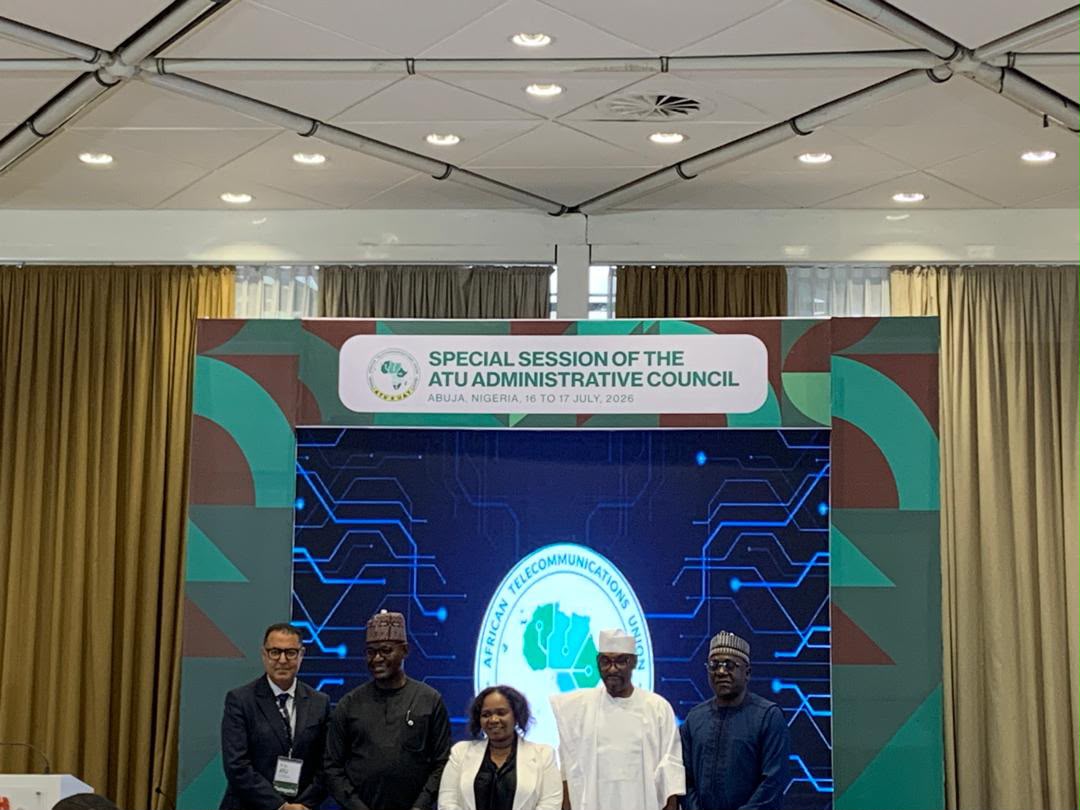
The call was made during the Special Session of the Administrative Council of the African Telecommunications Union (ATU), held in Abuja ahead of the Union’s 2026 Conference of Plenipotentiaries (CPL-26). The meeting brought together government officials, regulators, policymakers and industry stakeholders to prepare Africa’s common position on the future of telecommunications and digital development.
The Permanent Secretary of the Ministry of Communications, Innovation and Digital Economy , Engr Nadungu Gagare represented by Mr. Ahmed Mohammed Alsukun, said Africa’s digital ambitions could only be achieved through closer collaboration among member states.
Welcoming delegates to Nigeria, he described the special session as timely, noting that African countries were preparing for the next Conference of Plenipotentiaries. He added that the resolutions reached during the two-day meeting would shape the future direction of the Union.
According to him, regional cooperation remains critical to expanding digital infrastructure, strengthening cybersecurity, promoting digital skills and creating opportunities for Africa’s growing youth population.
“Nigeria remains fully committed to the vision and objectives of the African Telecommunications Union. We believe that regional cooperation is essential if Africa is to build a strong, inclusive and innovative digital economy. By working together, we can expand connectivity, improve digital infrastructure, promote digital skills, strengthen cybersecurity, protect data and create opportunities for our people, especially our youth.”
While acknowledging the continent’s significant progress in mobile connectivity and digital innovation, he noted that nearly one billion Africans still do not use mobile internet despite living within broadband coverage.
He stressed that infrastructure development must be complemented by affordable services, access to suitable devices, improved digital literacy, trust and locally relevant digital services.
“Almost one billion people in Africa do not use mobile internet despite living within broadband coverage. Infrastructure expansion must therefore be matched by affordability, suitable devices, digital skills, trust and local services.
“These challenges also present opportunities. By working together through the ATU, we can develop common solutions, share experiences, attract investment and ensure that no African country is left behind in digital development.”
The Permanent Secretary also underscored the importance of presenting a united African position ahead of the International Telecommunication Union (ITU) Plenipotentiary Conference scheduled for Doha in 2026.
He said Africa’s common positions must clearly reflect the continent’s priorities and enjoy the full support of member states.
“A united Africa will have greater influence in international decision-making and will be better placed to advance and protect the interests of our continent.”
Earlier, Chairperson of the ATU Administrative Council and Director-General of South Africa’s Department of Communications and Digital Technologies, Ms Nonkqubela Jordan-Dyani, said Africa was meeting at a time of significant economic and geopolitical uncertainty, making deeper regional integration more important than ever.
She observed that disruptions to global trade, supply chains, climate-related disasters and rapid technological advances were compelling countries to rethink economic partnerships and development strategies.
Jordan-Dyani also called for stronger collaboration among governments, development partners, the private sector and academia to accelerate digital transformation across the continent.
“We need to continue building an ATU that maximises its potential to achieve greater regional integration, supports the African Continental Free Trade Area and drives development through ICTs in line with the African Union Agenda 2063 and the Africa we all aspire to.”
She added that the Union must remain at the forefront of shaping Africa’s digital future by working closely with the African Union, the ITU, the United Nations, development finance institutions, the private sector, civil society and academia.
The Chairperson further urged member states to strengthen the financial and institutional capacity of the ATU, stressing that the organisation’s effectiveness depends on sustainable funding, human capital development and the implementation of agreed decisions.
In his opening remarks, ATU Secretary-General John Omo described the special session as a key statutory meeting convened to conclude preparations for the Union’s Seventh Conference of Plenipotentiaries.
He expressed appreciation to the Federal Government of Nigeria for hosting the meeting and commended the Ministry of Communications, Innovation and Digital Economy for its support in organising the event.
Omo explained that the Administrative Council would consider the Union’s report covering activities from 2023 to 2026, review and align its Constitution and Convention, examine reports from preparatory committees and consider other documentation required for CPL-26.
According to him, the sequence of the meeting was deliberate, as the Conference could only discharge its responsibilities effectively when proposals before it were legally sound, procedurally credible and supported by accurate implementation reports.
“The Conference can exercise its authority effectively only when the proposals placed before it are legally sound, procedurally credible and supported by an honest account of implementation. The work completed here will therefore influence the integrity of the Conference process and the meetings that precede it.”
He acknowledged the contributions of member states, the Administrative Council, technical experts and the Union’s development, radiocommunication and standardisation sectors in advancing the organisation’s objectives over the past four years.
The Secretary-General urged delegates to conclude their deliberations with decisions that would strengthen the Union and provide a solid foundation for the 2026 Conference of Plenipotentiaries.