The Nigerian Government has identified 417 grazing reserves nationwide and commenced a pilot ranching programme in Plateau State as part of measures to curb farmer-herder conflicts and reduce the open movement of cattle across the country.
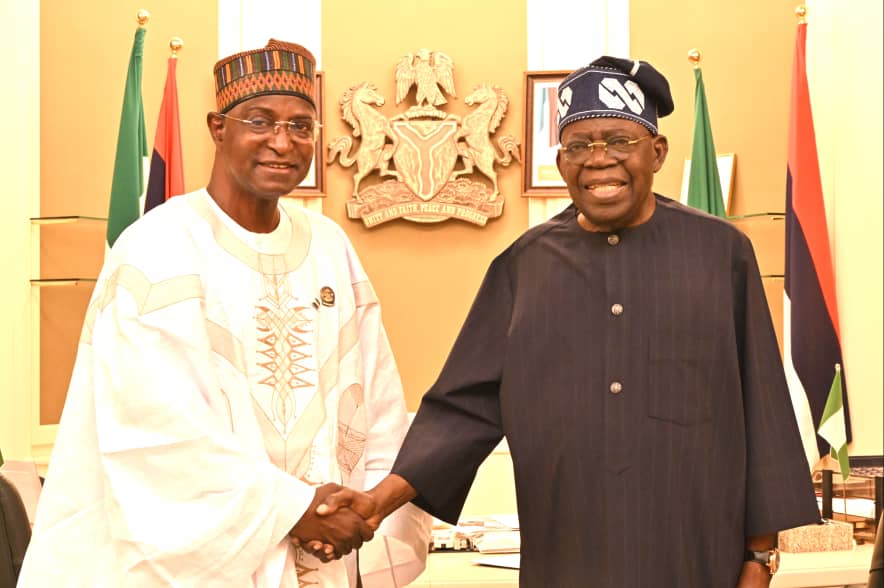
Minister of Livestock Development Idi Mukhtar Maiha disclosed this on Tuesday after briefing President Bola Ahmed Tinubu at the State House, Abuja, on the ministry’s interventions in farmer-herder conflicts and implementation of the National Ranching Policy.
Maiha said the government had intensified consultations with pastoral communities, engaging about 34 organisations under the leadership of the Grand Patron of Miyetti Allah and Sultan of Sokoto, His Eminence Muhammadu Sa’ad Abubakar III, to secure support for the transition from nomadic livestock production to ranching.
He identified Benue, Plateau, Nasarawa, Kaduna and Adamawa states, as well as the Federal Capital Territory, as priority areas because of recurring farmer-herder conflicts, explaining that the Plateau pilot would serve as a proof of concept for a livestock production model aimed at reducing cattle movement and rural conflicts.
Maiha attributed the growing challenges associated with nomadic livestock production to the disappearance of traditional grazing routes as a result of expanding farmlands, rapid urbanisation and increasing demand for land for infrastructure development.
“Large numbers of cattle on the move are crisis-prone because the grazing routes have disappeared. Large farms have come up, aggressive urbanisation and demand for land for infrastructure development have made nomadism unsustainable,” he said.
The minister explained that cattle movement had persisted largely because pastoralists needed access to feed and water, stressing that providing these resources within designated settlements would eliminate much of the need for constant movement. “Why don’t you provide these resources in situ and stop these animals from moving? Human beings can move; they don’t cause crises. It’s the animals’ movement that normally generates this crisis,” he said.
To support the transition, Maiha said the government was promoting commercial pasture cultivation and breed improvement to enable pastoralists to maintain fewer but more productive animals, thereby reducing pressure on land while increasing meat and milk production.
He said the proposed ranching settlements would be developed as integrated economic communities with housing, veterinary clinics, schools, healthcare facilities, solar power and earth dams, while attracting milk processors, modular abattoirs, biodigesters and other livestock-related businesses.
“At the end of the day, each of those grazing reserves will become an economic hub. Imagine what you are going to have if you have 30,000 head of cattle in one area. The milk collection alone will attract milk processors. They will attract modular abattoirs, biodigesters and so many things,” Maiha said.
The Minister said consultations had so far encountered no resistance from pastoral communities, noting that stakeholders increasingly acknowledged the need for a new livestock production system. “The reality on the ground is that nomadism, as it were, is no longer sustainable, and we need a different concept,” he said.
Maiha also disclosed plans to introduce radio frequency identification, with livestock fitted with ear tags for identification, geolocation and proof of ownership. The system would support a national livestock database, help track stolen or stray animals and complement non-kinetic measures to reduce farmer-herder conflicts.
On broader reforms in the sector, the Minister said the government was prioritising modern abattoirs, dairy production, commercial fodder cultivation, veterinary services, vaccine storage and poultry production. He said seven model veterinary clinics had already been built, with plans to establish at least one model veterinary hospital in every state, alongside off-grid cold-chain facilities for vaccine preservation.
Maiha added that discussions were ongoing with local investors and development partners on large-scale dairy projects and modern abattoirs, while commercial fodder production was being encouraged for domestic consumption and export. The government is also considering large-scale importation of hatchable eggs to strengthen poultry production and reduce delays in accessing day-old chicks.
He said the ministry, created in July 2024, was established to modernise livestock production and make the sector sustainable, profitable and globally competitive, adding that about 20 states had since established similar ministries or agencies, creating opportunities for stronger federal-state collaboration.
Maiha said President Tinubu reaffirmed his support for the reforms and encouraged Nigerians to explore investment opportunities in the sector, describing livestock value chains as “fantastic”.
“The President has been very supportive, and we are very grateful for that political support and for the understanding we are getting from Mr President. For us, we need not ask for more but to go back and deliver,” Maiha added