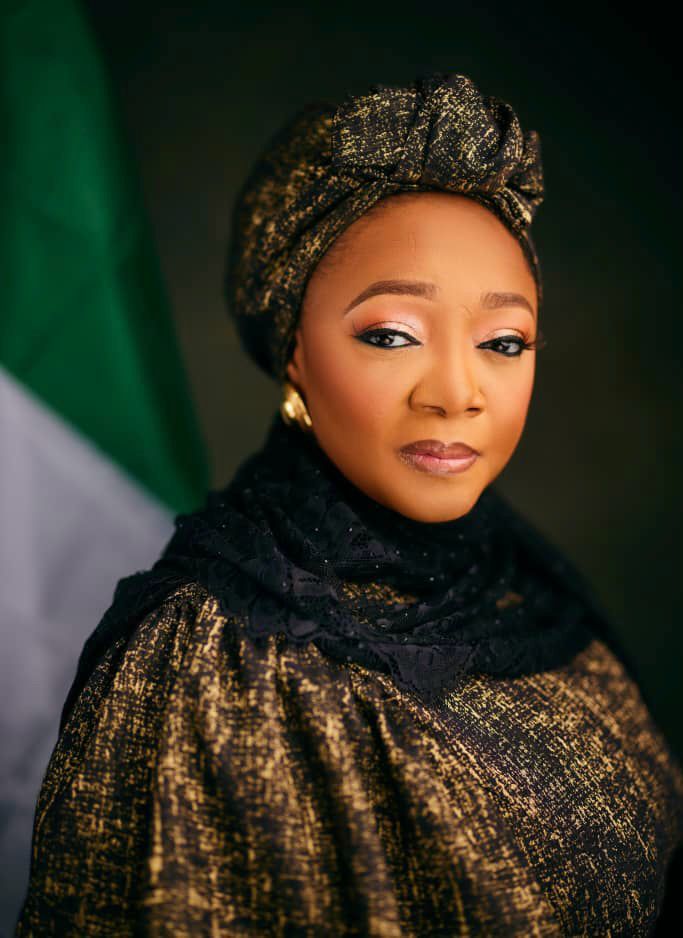
The Minister of Women Affairs and Social Development, Hajiya Imaan Sulaiman-Ibrahim, has reaffirmed the government’s development-driven commitment to justice, dignity and economic empowerment for widows.
As Nigeria joined the global community to mark the 2026 International Widows’ Day, the Minister said the observance underscores a shift from sympathy to measurable action, stressing that widowhood must not translate into exclusion or poverty but be addressed through structured interventions under national policy frameworks.
“Nigeria joins the global community in commemorating the 2026 International Widows’ Day under the theme “Justice, Dignity and Economic Power for Widows.” This year’s theme calls upon governments, institutions, and citizens to move beyond sympathy toward deliberate, measurable, and transformative action that guarantees justice, restores dignity, and expands economic opportunities for widows across all communities.”
On policy context, she highlighted global and national burden indicators:
“Globally, an estimated 258 million women are widows, while Nigeria is home to over two million widows, many of whom shoulder the dual responsibilities of caregiving and breadwinning under difficult socio-economic conditions. Their lived realities reflect a development challenge that demands urgent, coordinated, and sustained policy attention.”
The Minister condemned harmful practices, including degrading mourning rites, forced confinement, disinheritance, property grabbing, accusations of complicity in spousal death, forced remarriage, and other forms of psychological and economic abuse, describing them as a development and human rights challenge.
“These practices are repugnant to natural justice, equity, good conscience, and the dignity of the human person and have no place in a modern society; such practices are criminal.”
She reaffirmed legal enforcement mechanisms: “The Violence Against Persons (Prohibition) Act, 2015 (currently under review) prohibits harmful widowhood practices and prescribes penalties of up to two years’ imprisonment or a fine of up to ₦500,000, or both, for offenders. Government will continue to enforce these provisions and strengthen awareness so that no widow suffers in silence.”
On government interventions, she outlined ongoing empowerment programmes, including health coverage expansion and enterprise support:
“In 2025, the Ministry collaborated with Helpline Support for the Needy to onboard 17 clusters of widows (50 women personality cluster) into the National Health Insurance Scheme, significantly improving access to affordable healthcare and reducing catastrophic health expenditures.”
“In addition, each cluster received a grant of ₦500,000, enabling them to expand cooperative enterprises, strengthen livelihoods, and grow sustainable businesses.”
She stated that broader empowerment initiatives are driving economic transition:
“As a result, we are witnessing a powerful shift, from vulnerability to productivity, from dependence to enterprise, and from survival to economic participation. This is the true meaning of empowerment under the Renewed Hope Agenda.”
Reassuring widows of inclusion, she stated: “As we commemorate this day, every widow must know: you are seen, you are valued, and you are not forgotten. Your strength continues to sustain families, and your contributions remain vital to national development.”
The Minister further paid glowing tributes to the strength and resilience of widows:
“When a husband falls silent into eternity, a thousand burdens often rise upon the shoulders of the woman he leaves behind; yet in that silence, many widows find a voice stronger than grief, a courage deeper than sorrow, and a resolve that refuses to be buried with their loss. They rise each morning not merely to survive, but to sustain families, nurture futures, and keep hope alive where despair once sought to take root. Today, we honour that strength.”
She concluded with a development vision anchored on national reform priorities under President Bola Ahmed Tinubu’s Renewed Hope Agenda:
“Under the leadership of His Excellency, President Bola Ahmed Tinubu, GCFR, Nigeria is building a future where widowhood does not translate into vulnerability but becomes a platform for resilience, dignity, and economic empowerment.”
The 2026 International Widows’ Day, themed “Justice, Dignity and Economic Power for Widows”, underscores a development imperative to move widows from vulnerability to inclusion.
It calls for stronger protection, expanded social support, and sustained empowerment that restores dignity, secures justice, and enables full economic participation.