The Nigerian Government has announced that its highly anticipated Digital Switch-Over (DSO) project is fully prepared for a nationwide launch.
This initiative is regarded as a significant achievement within the administration’s reform agenda and represents a critical step in the country’s transition from analogue to digital broadcasting.
Minister of Information and National Orientation, Mohammed Idris, disclosed this during a tour of facilities at the Nigerian Communications Satellite (NIGCOMSAT) at the Obasanjo Space Centre, Abuja.
Also Read: Nigeria Launches Cooperative Digitalisation, Bank Reform Initiative
Idris explained that the migration would bring significant benefits to broadcasters, advertisers, and television viewers.
“For many years, Nigerians have been grappling with the idea of the Digital Switchover. Now, this has happened and is ready to be commissioned by the 17th of June this year,” Idris said.
He noted that several television channels had already been unbundled on the platform, allowing viewers access to more content while enabling advertisers to make informed decisions through audience measurement technology.
“Science is now at play. If you are viewing any particular station, you know who is viewing what and how many people are watching. The standard measurement that was absent in previous experiments is now available,” he stated.
Implementation of Reforms
Describing the development as a turning point for Nigeria’s broadcasting sector, the Minister said it reflects the practical implementation of reforms promised by the Tinubu administration.
“I think this is a new dawn for our country. The promise that President Tinubu made to reform all sectors is now being seen in action in the broadcast industry,” he said.
Idris reiterated that after years of delays, Nigeria is now set to complete its transition from analogue to digital broadcasting, stating that the DSO platform was scheduled for official commissioning on June 17, 2026.
Speaking on the expected benefits of the new digital broadcasting ecosystem, the Minister said the initiative would significantly improve audience measurement, content delivery, and advertising efficiency.
“This is going to bring a lot of advantages to broadcasters, viewers, and advertisers. If you are viewing any particular station, you know who is viewing, what they are watching, and how many people are watching,” he said.
Accurate Analytics
Idris stressed that the system would provide accurate analytics to guide programming and investment decisions while enhancing viewers’ experience.
Highlighting the broader economic and technological gains, Idris said the platform would deepen competition, expand access to free television services, and improve viewing quality across Nigeria and Sub-Saharan Africa.
“The monopoly has been broken. Everybody is going to compete. Content is going to grow, viewership will grow, and Nigeria is now moving from SD to HD broadcasting,” he added.
He further disclosed that Nigerians would enjoy cleaner television signals through satellite services and mobile applications powered by NIGCOMSAT technology.
He attributed the success of the initiative to collaboration between NIGCOMSAT, the National Broadcasting Commission (NBC), the Ministry of Communications, and the Ministry of Information and National Orientation, commending President Bola Ahmed Tinubu for providing the resources to actualise the project.
“It has been a shame in the past that Nigeria could not achieve this, but now the digital switchover is here. Everybody can now watch whatever they want in real time through free television services,” he added.
On his part, the Director-General of the National Broadcasting Commission, Charles Ebuebu, said the upgraded DSO framework is designed to align with emerging technologies and changing audience habits.
“We’re going to have 100 channels by the day of launch and even more because more content producers are talking to us. We want to create one market and one platform for Nigeria,” he said.
He explained that the new system leverages satellite broadcasting and mobile applications to ensure nationwide accessibility beyond the pilot cities covered in earlier phases.
He also highlighted the establishment of regional production studios and multilingual customer support centres across the country.
Also speaking during the tour, the Managing Director and Chief Executive Officer of NIGCOMSAT, Jane Egerton-Idehen, described the partnership between NIGCOMSAT and NBC as strategic and transformative for Nigeria’s digital broadcasting ecosystem.
“The work has only just started. The work has only just begun. The ongoing investments and satellite expansion plans under the current administration would guarantee reliable and uninterrupted service delivery,” she said.
She noted that the new system would provide Nigerians with free-to-air television services with improved accessibility and quality.
Egerton-Idehen further disclosed that the platform would move from Standard Definition (SD) to High Definition (HD), with future upgrades already being planned.
She added that competition among broadcasters is expected to increase as more channels and content providers join the platform, creating greater opportunities for local content development and advertising revenue generation.
She explained that the service would not be limited to a few cities as in earlier pilot phases, as satellite technology and mobile applications would ensure wider coverage across Nigeria and parts of Sub-Saharan Africa.
Regional studios have been established to support content creators, while a multilingual national call centre offering support in English, Hausa, Yoruba, Igbo, and Pidgin English is also being introduced.
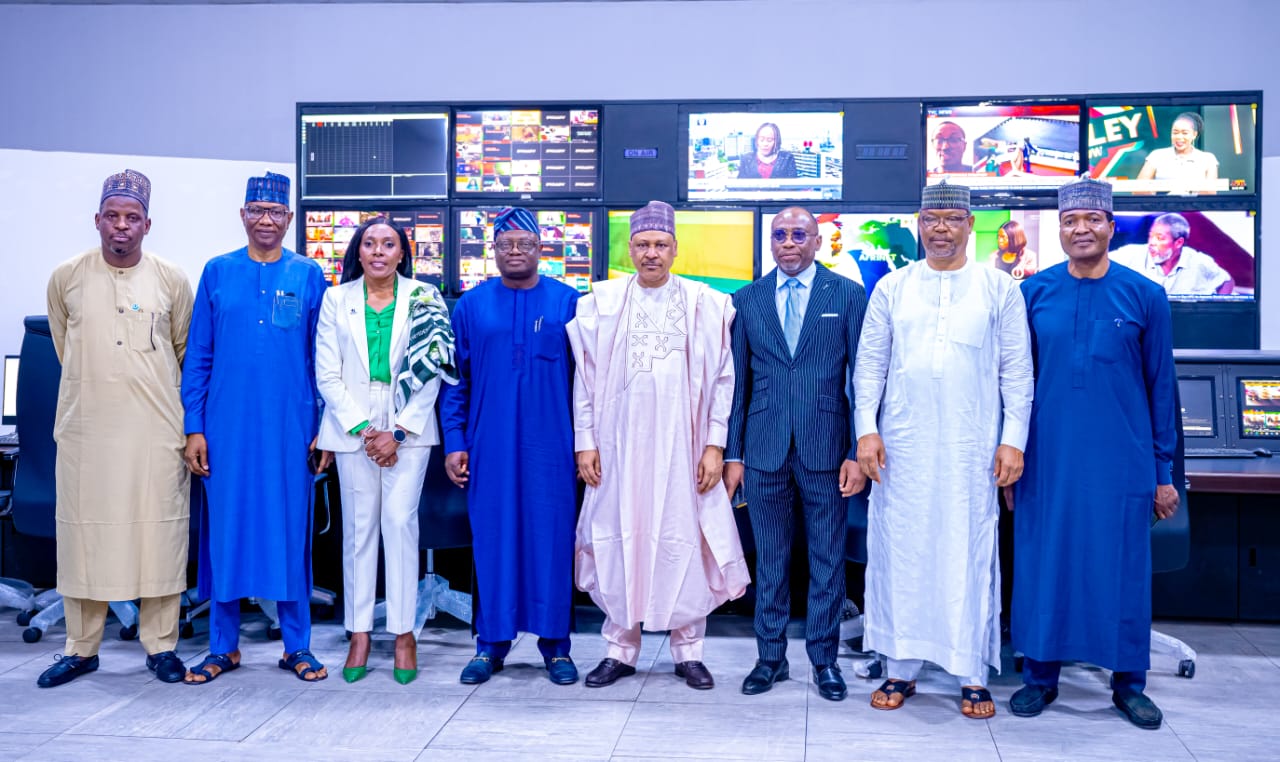
Among those who accompanied the Minister on the tour were the Director-General of Voice of Nigeria, Jibrin Baba Ndace; Director-General of the Nigerian Television Authority, Salihu Abdullahi Dembos; Director-General of the Federal Radio Corporation of Nigeria, Mohammed Bulama; and Director-General of the National Orientation Agency, Lanre Issa-Onilu, alongside other senior officials and dignitaries.