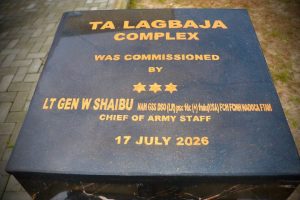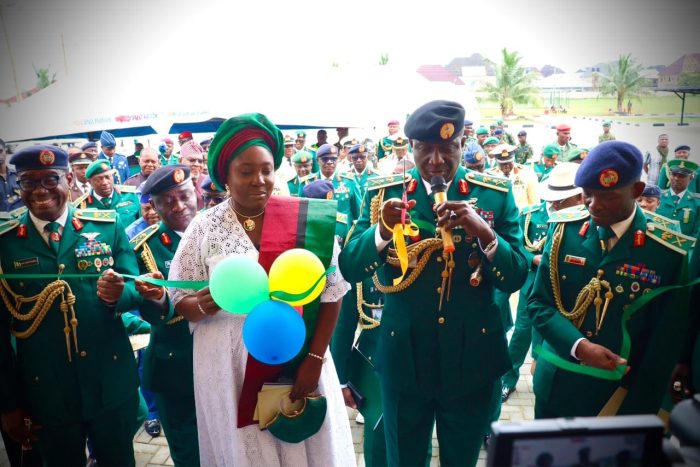
The Nigerian Army has commissioned the Lieutenant General Taoreed Lagbaja Complex at the Nigerian Army College of Logistics and Management (NACOLM), reinforcing its commitment to strengthening military logistics, professional education and institutional capacity.
The facility was inaugurated by the Chief of Army Staff, Lieutenant General Waidi Shaibu, during a ceremony in Lagos. According to the Acting Director of Army Public Relations, Colonel Appolonia Anele, the complex is designed to enhance professional military education, improve administrative efficiency and promote personnel welfare in line with the Army’s institutional development agenda.
Named after the late former Chief of Army Staff, Lieutenant General Taoreed Lagbaja, the complex is expected to expand NACOLM’s capacity to train logistics professionals whose expertise is essential to sustaining military operations and enhancing operational readiness across the Nigerian Army.
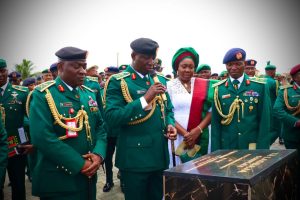
Beyond providing additional administrative infrastructure, the facility strengthens the institutional framework for developing personnel responsible for logistics planning, resource management and operational support, underscoring the critical role of logistics in modern military operations.
Speaking at the event, Lieutenant General Shaibu described the late Lagbaja as an outstanding military leader whose professionalism, integrity, selfless service and commitment to national duty continue to inspire officers and soldiers.
He said naming the complex after the late Army Chief reflects the Nigerian Army’s appreciation of his contributions to leadership, force development and operational excellence while preserving his legacy within one of the army’s premier training institutions.
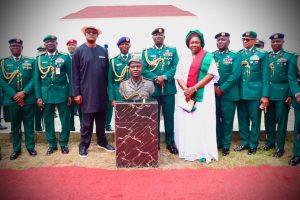
The Chief of Army Staff urged officers, instructors and students of NACOLM to emulate the discipline, professionalism and dedication exemplified by the late General Lagbaja in carrying out their responsibilities.
He reaffirmed that sustained investment in training institutions, modern infrastructure and personnel welfare remains central to his vision of building a more professional, adaptive, combat-ready and resilient Nigerian Army capable of effectively fulfilling its constitutional responsibilities within a joint and multi-agency security environment.
The commissioning of the complex highlights the Nigerian Army’s continued focus on strengthening the institutional foundations that support operational effectiveness, leadership development and long-term national security preparedness.