The Nigerian government says savings from the removal of the petrol subsidy are being redirected towards economic renewal, infrastructure development and improved public welfare.
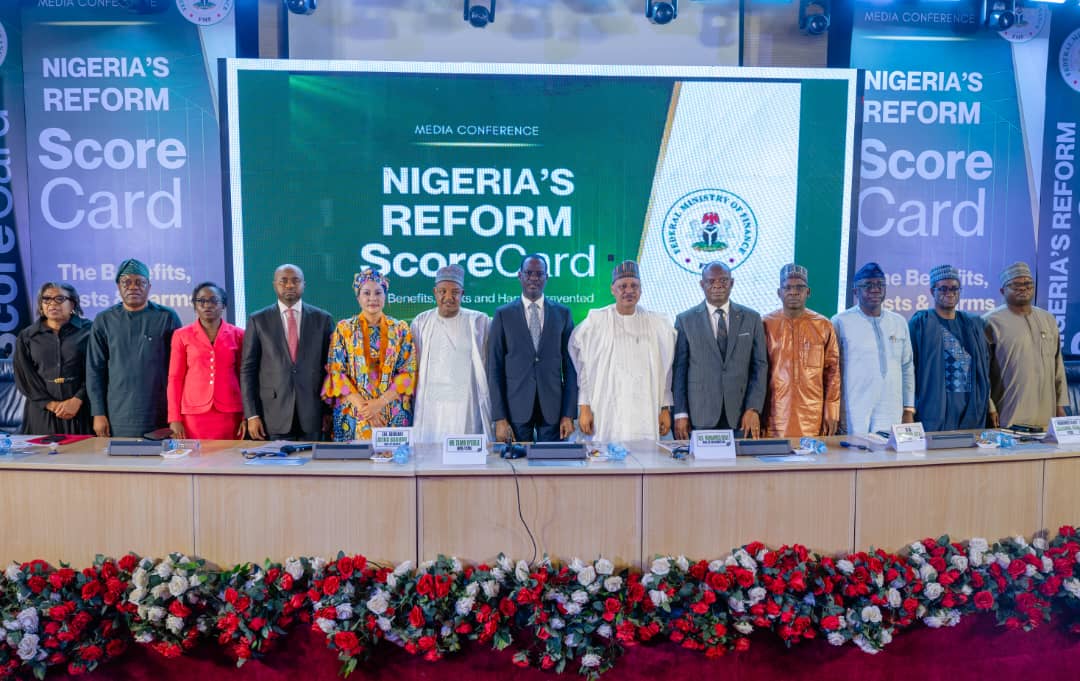
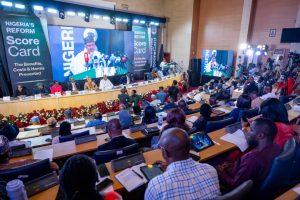
The Minister of Information and National Orientation, Mohammed Idris, stated this at a press conference at the Federal Ministry of Finance Conference Hall in Abuja, where he outlined the financial implications of the subsidy removal and the administration’s broader economic reform programme.
Idris said the briefing was intended to provide Nigerians with “clear and factual information” on the savings generated by the policy and how the resources were being deployed.
He acknowledged that subsidy removal had imposed significant sacrifices and adjustments on individuals, families, businesses and communities, describing it as one of the most difficult economic reforms undertaken by the Tinubu administration.
The minister said the government decided to redirect resources previously committed to subsidising fuel consumption towards investments capable of delivering greater and more sustainable benefits to Nigerians.
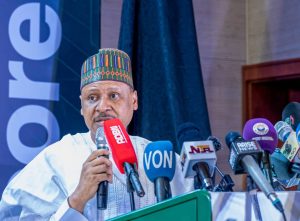
He stressed that citizens had the right to know the financial implications of major economic decisions and how resources freed by the reform were being utilised.
“This is fundamentally about transparency and accountability. The conversation around subsidy removal should not end with the policy decision. Nigerians deserve to know what the reform has achieved, the resources that have accrued from it and how those resources are supporting economic renewal, infrastructure development and public welfare,” Idris said.
According to him, President Bola Tinubu’s administration remains committed to open and continuous engagement with Nigerians, particularly on the outcomes and challenges associated with its economic policies.
“Our responsibility is not merely to announce policies but also to explain them, acknowledge the challenges associated with them, account for their outcomes, and demonstrate how difficult decisions taken today are laying the foundations for a stronger and more sustainable economy,” he said.
Idris also commended the media for its role in informing the public and urged journalists to continue to report accurately on the government’s reforms.
Also speaking, the Minister of Budget and Economic Planning, Atiku Bagudu, provided further context on the rationale behind the reform programme, saying Nigeria had historically struggled with low revenue mobilisation and inadequate public expenditure relative to its population.
Bagudu said Nigeria had one of the world’s lowest revenue-to-GDP ratios and, consequently, one of the lowest expenditure-to-GDP ratios.
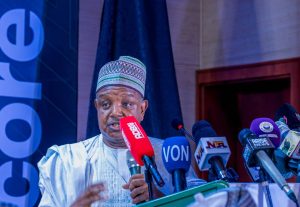
He noted that although Nigeria is among the world’s 10 most populous countries, it has the smallest GDP and budget among the group.
Comparing Nigeria with Brazil, a country with a roughly similar population, Bagudu said Brazil’s federal budget was at least 25 times larger than Nigeria’s.
He said the situation required the government to confront the country’s fiscal realities and take difficult decisions without engaging in a blame game.
According to him, the administration’s reform strategy was informed by the experiences of other countries, particularly in sequencing and prioritising economic reforms.
“First and foremost, let’s stop the bleeding,” Bagudu said, quoting President Tinubu on the decision to tackle subsidies and other policies that were limiting government revenue and undermining confidence in the economy.
He argued that the subsidy regime had constrained government revenue and weakened investor confidence.
Bagudu further disclosed that the government inherited more than six billion dollars in unpaid petroleum import obligations, describing the discovery as an indication of the financial pressures confronting the country.
He said the government had faced a situation in which funds had to be borrowed to finance petroleum imports because of inadequate foreign exchange.
The minister said the reforms were therefore aimed at restoring confidence in the economy, strengthening public finances and creating the fiscal space required to finance development.
The Federal Government maintains that, although subsidy removal has been painful, it represents a fundamental shift in the management of public resources, from sustaining a costly fuel subsidy regime to creating fiscal space for development.
The briefing formed part of the government’s broader effort to explain the outcomes of its economic reforms and account for how resources freed by the removal of the petrol subsidy are being deployed to support national development.