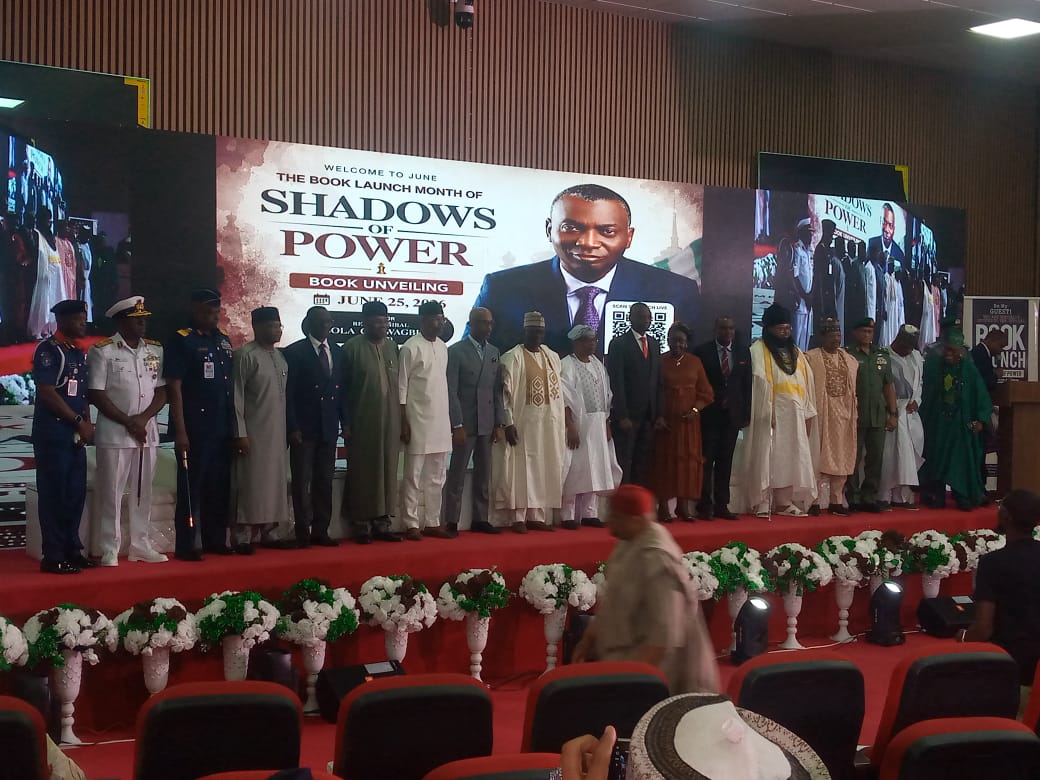
The Nigerian Government has reaffirmed its commitment to a citizen-centered foreign policy, declaring that every diplomatic engagement and international action must directly advance the interests, security, and prosperity of Nigerians.
The Minister of State for Foreign Affairs, Ambassador Sola Enikanolaiye stated this in Abuja during the launch of Shadows of Power, a book authored by retired Rear Admiral Sola Oluwagbire.
Ambassador Enikanolaiye explained that the Federal Executive Council had adopted a policy framework that places Nigeria and Nigerians at the centre of all foreign policy engagements, in line with President Bola Tinubu’s vision of “Nigeria First.”
According to him, “the doctrine, originally adopted in April 2007, seeks to ensure that Nigeria’s foreign policy efforts produce tangible benefits for citizens by prioritising national interests, economic prosperity, security, and development.”
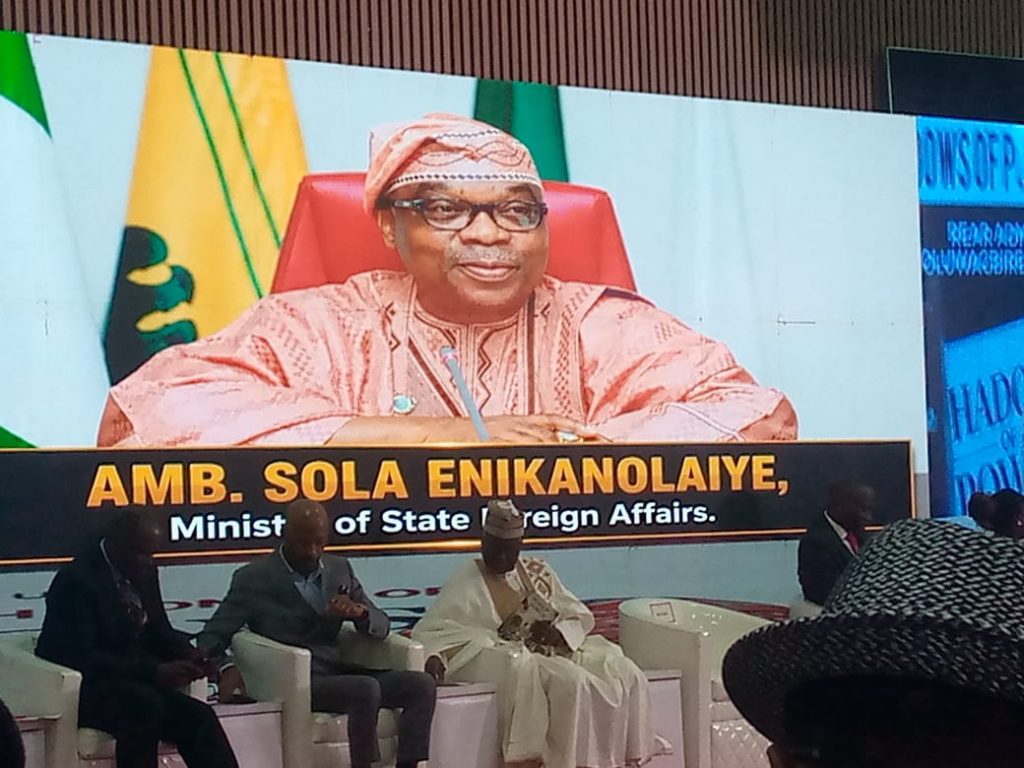
He said “the Ministry of Foreign Affairs had restructured its traditional foreign policy framework around four key pillars demography, development, democracy, and diaspora with the Nigerian people occupying the foremost position”.
The Minister stressed that citizen diplomacy, national security, economic prosperity, and defence policies must ultimately serve Nigerians, noting that democracy should be viewed as a means of delivering benefits and improving human security.
Ambassador Enikanolaiye further said that Nigeria’s immediate neighbours remain the country’s first sphere of foreign policy engagement, as the security and prosperity of contiguous states are intrinsically linked to Nigeria’s stability.
He noted that while Africa remains the cornerstone of Nigeria’s foreign policy, the government is focusing on strengthening domestic institutions and economic resilience to enhance the country’s effectiveness in global affairs.
On relations with major world powers, the Minister explained that Nigeria’s policy of strategic autonomy means aligning with national interests rather than any geopolitical bloc, maintaining balanced relations with countries such as China, Russia, the United States, Turkey, Saudi Arabia, and Brazil.
He emphasised that no domestic policy can succeed without recognising and pursuing its external dimensions, adding that diplomats and security officials must strike a balance between domestic priorities and international engagements.
Ambassador Enikanolaiye also acknowledged institutional challenges within the Ministry of Foreign Affairs and disclosed ongoing efforts to rebuild capacity, strengthen professionalism, and restore confidence in Nigeria’s diplomatic service.
The Chairman of the occasion and former President Olusegun Obasanjo, represented by former Chief of Defence Staff, General Martin Luther Agwai (rtd.), commended the author for documenting his experiences, noting that the military continues to contribute not only to national security but also to intellectual discourse and policy development.
Reviewing the book, the Deputy Chairman of the House of Representatives Committee on National Security and Intelligence, Adetoro Adeogu, described Shadows of Power as a compelling blend of memoir, geopolitical analysis, and national security assessment.
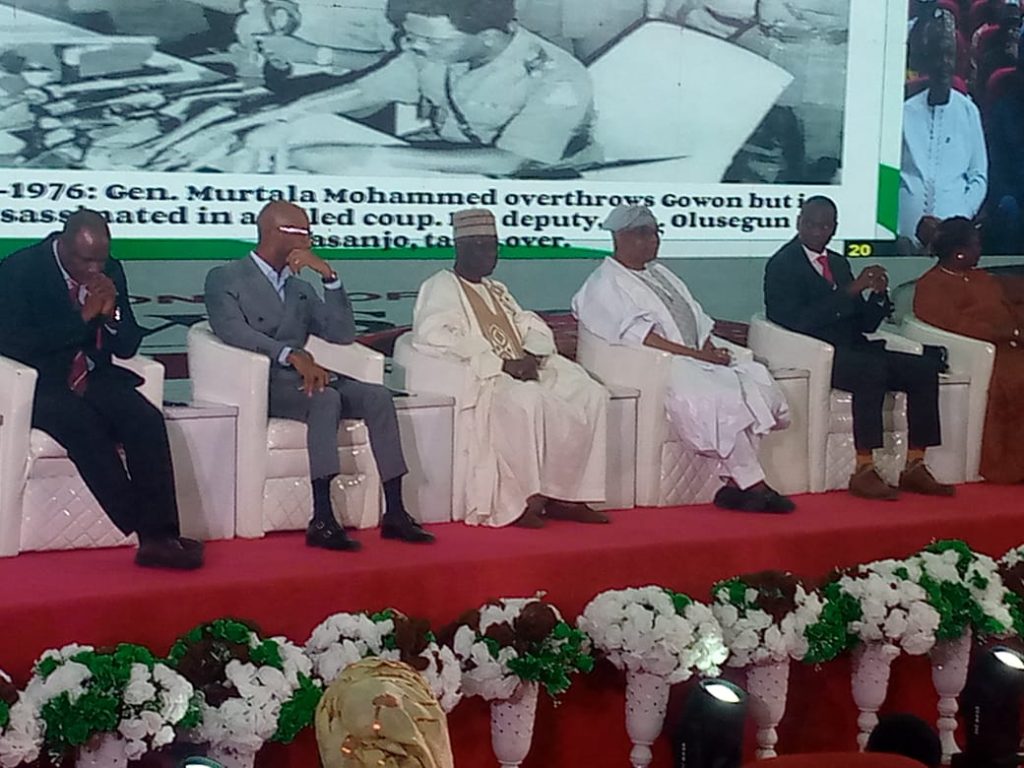
The 157-page publication argues that Nigeria must pursue strategic autonomy, rebuild institutions, industrialise deliberately, and place national interests above sentiment in navigating an increasingly complex global order.
The author of the book, Rear Admiral Sola Oluwagbire, rtd, said “it is his hope that Shadows of Power will contribute, even in a modest way, to a deeper understanding of Nigeria’s national security environment and inspire with that strategic thinking in our service to our nation”.