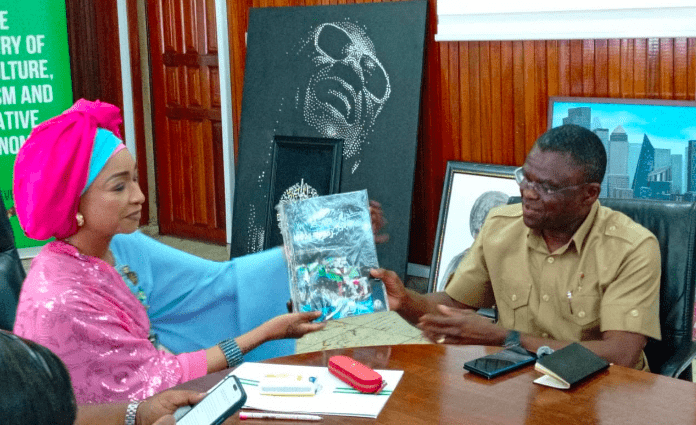
The Nigerian Minister of Art, Culture and Tourism, Hannatu Musa Musawa, has described President Bola Ahmed Tinubu’s appointment of Philip Shaibu as Director-General and CEO of the National Institute for Sports (NIS) as the right decision.
Musawa spoke during an engagement involving the NIS, Bodyline Fitness and the Ministry ahead of the forthcoming LIFEFIT programme. She expressed confidence in Shaibu’s ability to reposition the institute and drive transformation in Nigeria’s sports sector.
The minister said Shaibu’s understanding of the transformative potential of sports, coupled with his approach to repositioning the NIS, made him well suited to lead the institute at a time when Nigeria is seeking to expand opportunities in the sports and creative economies.
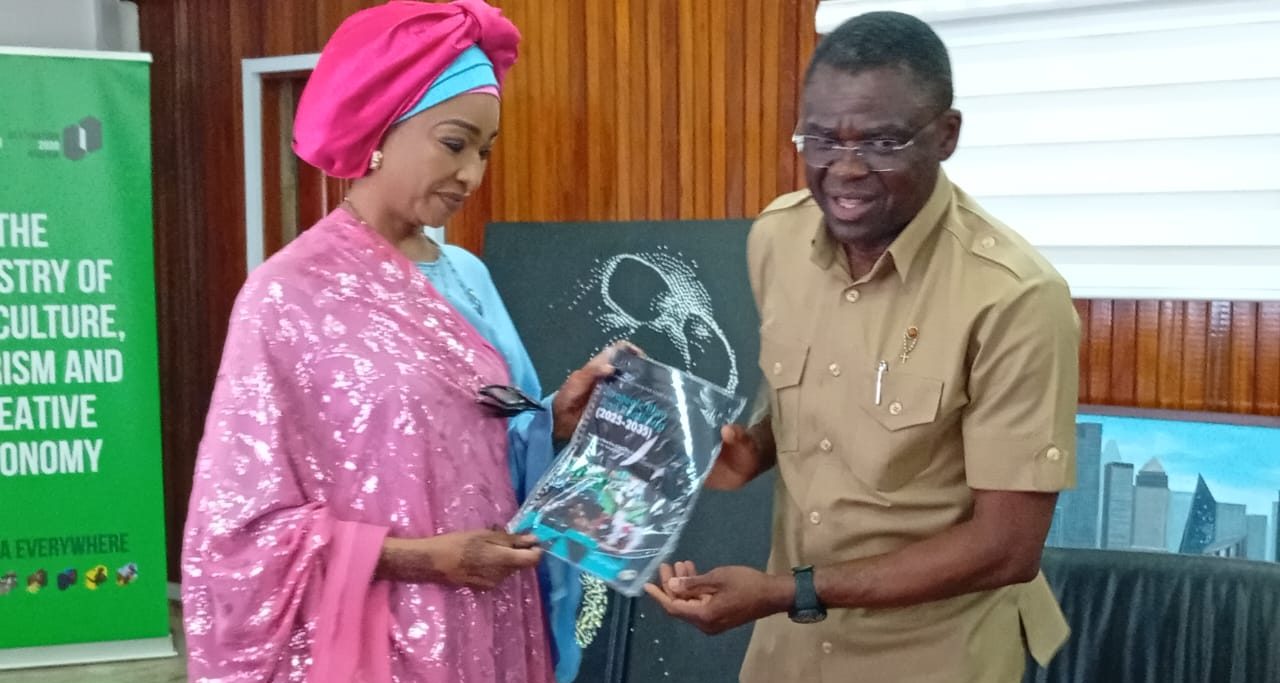
“I don’t think the President made a mistake in your appointment,” Musawa told the NIS Director-General, stressing that the institute was fortunate to have a leader who understood the broader potential of sports beyond competition.
She identified the creative and sports economies as two sectors with significant potential to create jobs, empower young Nigerians and contribute to the socio-economic transformation of the country.
According to her, developing competent teachers and coaches must remain a priority, as young people can only receive the right training and mentorship when those responsible for developing them are adequately equipped.
Musawa expressed optimism that Nigeria’s sports sector would witness significant transformation in the coming years under Shaibu’s leadership, citing the direction and initiatives being pursued by the NIS.
“In the next few years, Nigeria’s sports is going to completely change,” she said, while assuring the institute of the Ministry’s readiness to work closely with it to achieve the desired transformation.
Responding, Shaibu called for stronger private-sector participation and investment in sports development, stressing that government’s role should increasingly focus on creating an enabling environment for private investors, organisations and other stakeholders to contribute to the sector.
He said sustainable sports development could not depend solely on government funding, noting that strategic partnerships with private-sector organisations could unlock new opportunities for athletes, coaches, sports institutions and young Nigerians.
The engagement also underscored the complementary relationship between the sports and creative sectors, with participants highlighting opportunities for greater collaboration in promoting youth development, fitness, creativity and economic growth.
Musawa assured the NIS that the Ministry was willing to collaborate with the institute and engage private-sector organisations interested in supporting initiatives that would create meaningful opportunities for young Nigerians.
“We are more than willing to work together,” the minister said, adding that the Ministry would reach out to relevant private-sector stakeholders to support the initiative.
The planned partnership ahead of the LIFEFIT programme is expected to further strengthen collaboration between government institutions and private-sector stakeholders, while positioning sports, fitness and the creative economy as important drivers of youth empowerment and national development.