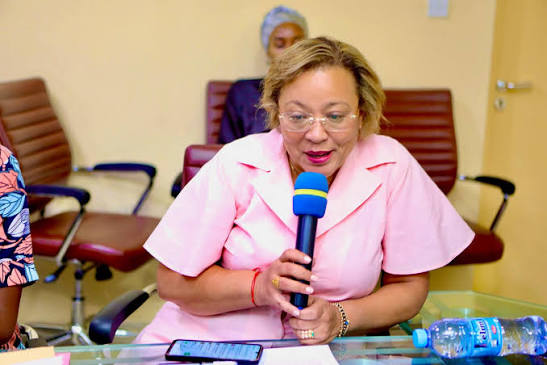
The Ambassador of Cuba to Nigeria, Mariam Palmero, called the Yoruba Tennis Club’s centenary celebration an important event that highlights the strong historical, cultural, and brotherly ties between Nigeria and Cuba.
Palmero, the special guest of honour at the Yoruba Tennis Club’s Centenary Jazz Festival in Lagos, said the event went beyond celebrating 100 years of the historic club, but also a chance to honour the lasting impact of Africans especially Yoruba culture, across the Atlantic.
Speaking at the colourful festival held as part of activities marking the club’s 100th anniversary, the Cuban envoy said the event symbolised the historical relationship between Nigeria and Cuba, countries united by cultural heritage, shared traditions and a common history shaped by the African experience.
She stated that the Yoruba contribution to Cuba’s cultural identity remained profound, describing African heritage as a living force that continues to manifest itself in Cuban religious, musical and social practices.
According to her, the historical ties between Africa and the Caribbean, particularly Cuba, are reflected in cultural traditions that have survived generations and continue to shape contemporary Cuban identity.
READ ALSO: Vice-Chancellor Commends Learning of Yoruba Language by Foreigners
Palmero acknowledged the lasting impact of Yoruba culture in Cuba, pointing out that Yoruba traditions are still evident in practices like Regla de Ocha, as well as in Cuban music, percussion, and other cultural forms.
She emphasised that this connection shows cultural heritage is not just a fixed memory of the past but a vibrant force that helps build solidarity, identity, and mutual understanding among different peoples.
She said the African heritage preserved in Cuba demonstrated the depth of the historical relationship between the two sides of the Atlantic, adding that the Yoruba legacy had become an important part of Cuba’s national and cultural identity.
Palmero emphasised the Yoruba ethical value of “Omoluabi,” describing it as a philosophy focused on good character, integrity, responsibility, and social justice.
She noted that these principles remain important today and can serve as a moral basis for creating communities built on dignity, mutual respect, and accountable leadership.
Palmero expressed profound gratitude to the leadership and members of Yoruba Tennis Club for the honour extended to her and for recognising the cultural connections between Nigeria and Cuba through the centenary jazz celebration.
She described Yoruba Tennis Club as an institution that had preserved dignity, culture and continuity over the past century, saying the celebration was also a tribute to the enduring power of traditional and contemporary music to unite people across geographical boundaries.
Palmero said the presentation and celebration of Cuban music at the festival reaffirmed the continuing cultural links between Nigeria and Cuba, noting that music remained a powerful instrument of friendship, cultural diplomacy and international solidarity.
She stated that the Yoruba Tennis Club’s centenary should be seen not just as a celebration of the club’s long history, but also as a tribute to African identity and its ongoing impact on communities across both sides of the Atlantic.
The Envoy congratulated the club members on achieving this significant milestone and expressed her hope that the values of brotherhood, cultural preservation, and friendship will continue to guide the club as it moves into its second century. “Happy centenary to the brothers and sisters of the Yoruba Tennis Club,” She said.
The Nation