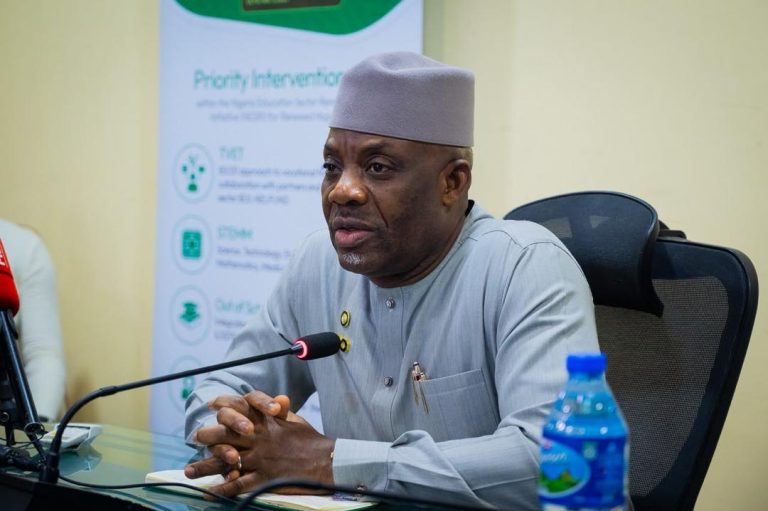
The Minister of Education, Dr Maruf Tunji Alausa, says President Bola Ahmed Tinubu has fulfilled nearly 100 per cent of the commitments made during the 2023 presidential campaign, stressing Nigeria is witnessing significant improvements.
Dr Alausa spoke in Abuja during the presentation of the 2025 Nigeria 2050 Child Foresight Analysis for Futures Literacy and Intergenerational Equity.
The initiative is a flagship component of the Anticipatory Governance and Foresight Capacity Programme under the Office of the Vice President, with technical support from UNICEF.
In a statement by his Special Adviser on Media and Communications, Ikharo Attah, the Minister said “the changes under Tinubu were not mere political rhetoric but reflected in tangible reforms and outcomes across sectors, particularly education.”
“I can assure you of that one fact because today we have a President who is leading the country, managing this country from the front, with the highest level of integrity, commitment, patriotism and determination to change the face of this country.
“And these are not just rhetoric we are hearing now. These are things we are seeing, with a lot of tangible benefits and tangible change in the country,” Dr Alausa said.
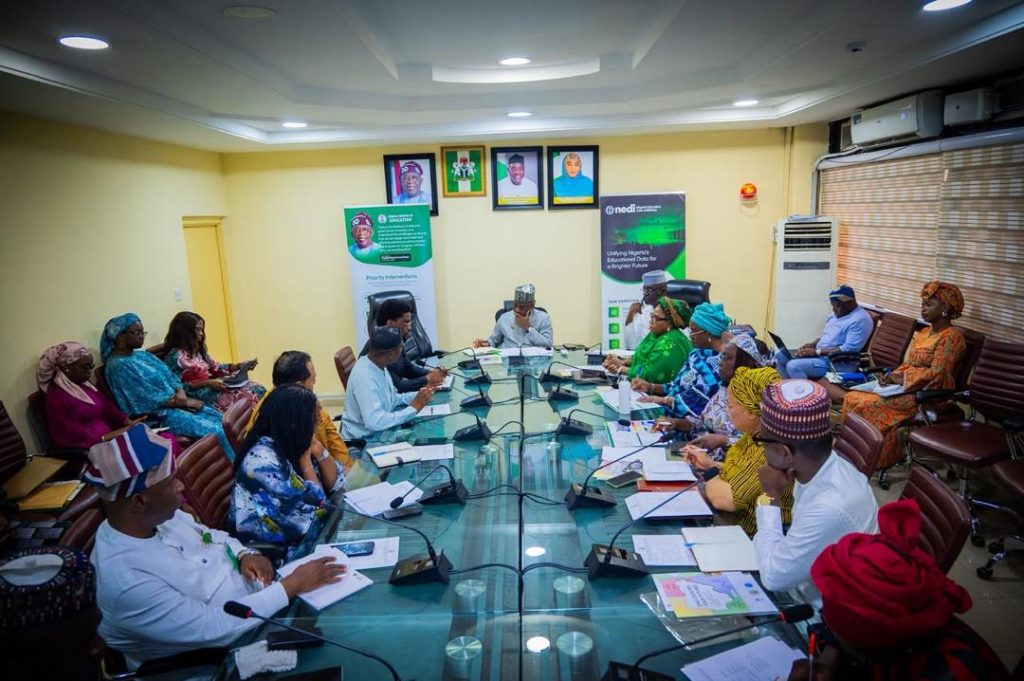
Dr Alausa said three years into the administration, Nigeria has moved beyond earlier uncertainty and is now focused on consolidating gains while addressing remaining challenges.
“The country is not at a crossroads again. We have a lot of catching up to do,” he said.
The Minister said the President’s commitment to education is evident in support for reforms under the Renewed Hope Agenda, noting that the sector remains central to the administration’s goal of building a $1 trillion economy.
Dr Alausa said; “the analysis is significant given Nigeria’s youthful population, with about 70 per cent of its estimated 220 million people under 30.”
He said this presents both an opportunity and a responsibility, stressing the need to convert the youth population into a demographic dividend through quality education, relevant skills and long-term planning.
According to Dr Alausa, the Nigerian Education Sector Renewal Initiative is driving reforms across the system, focusing on Technical and Vocational Education and Training, STEM education, teacher quality, reducing out-of-school children, and strengthening data and digitalisation.
He said renewed emphasis on technical education is creating pathways for skills acquisition, entrepreneurship and employment.
Dr Alausa said “the government is restoring technical education to the centre of the system after years of neglect.”
He also linked investment in medical education to efforts to address skills shortages and migration pressures.
Dr Alausa explained that “the government is expanding access to nursing education and increasing training capacity in existing institutions.”
The Minister said the aim is to build a skilled workforce while giving Nigerians access to quality training at home.
On data, Dr Alausa said “the government is adopting a data-driven approach to determine the actual number of out-of-school children.”
He cited Kaduna State, where a survey reportedly recorded fewer than 190,000 out-of-school children against earlier estimates of about 585,000, and another estimate of 1.2 million later reduced to less than 100,000.
Dr Alausa stated that Jigawa State has also recorded significant differences between earlier estimates and household-level assessments.
The Minister said accurate data will help target interventions and monitor progress.
“Even if there’s significant reduction, any child out of school is still too many,” he said.
Dr Alausa disclosed that more than one million children have been enrolled in school nationwide over the past two and a half years, with Jigawa alone accounting for over 180,000 in two years.
He said the next priority is to sustain enrolment and prevent new cases of exclusion.
According to him, “digital data systems are supporting this effort, with progress recorded in the 2026 Annual School Census through the Nigerian Education Management Information System.”
The Minister said a national assessment has been conducted to establish baseline data for literacy, numeracy and cognitive development, stressiing that the results will help measure learning outcomes and track progress.
Dr Alausa said; “the reforms align with the Child Foresight Analysis, which promotes long-term planning, innovation and youth participation.”
He commended the Office of the Vice President, the Office for Strategic Preparedness and Resilience and UNICEF for supporting the initiative.
Dr Alausa urged stakeholders to connect foresight outcomes with ongoing reforms, saying“Nigeria has changed, and it has changed for good.”
The initiative examines risks, opportunities and trends shaping the lives of children and young people towards 2050, with a focus on futures literacy, anticipatory governance and intergenerational equity.