
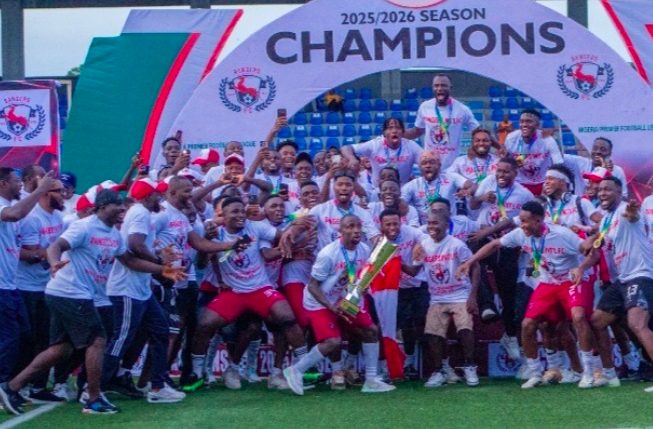
The Champions of the 2026/2027 Nigeria Premier Football League (NPFL), will receive a minimum prize money of N1 billion, the highest financial reward in Nigerian domestic football.
The Chairman of the National Sports Commission (NSC), Shehu Dikko, stated this while addressing newsmen after a high-level strategic meeting of the commission and the Nigeria Football Federation (NFF), at the National Sports Commission Headquarters in Abuja.
Dikko, who also disclosed a series of landmark decisions aimed at strengthening Nigerian football, said the leadership of the NSC and NFF have reaffirmed their commitments to the development of Nigerian football.
He said that these decisions are aimed at improving the welfare of players and coaches, and enhancing the competitiveness of the NPFL.
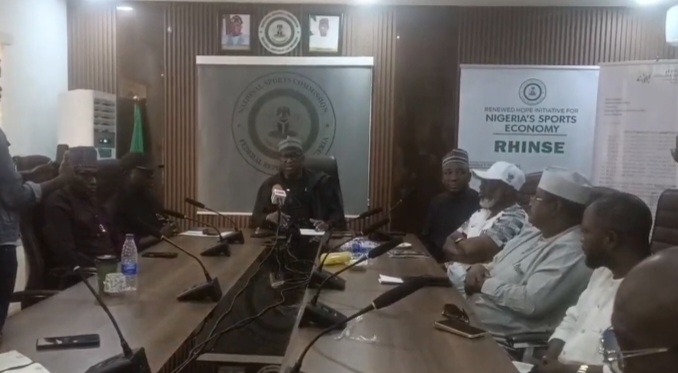
“Major highlight of the meeting was that the champions of the 2026/27 NPFL season will receive a minimum prize money of ₦1 billion,” he said.
“The runners-up will receive ₦500 million, while the third-placed team will earn ₦300 million, subject to official confirmation by league authorities.”
Dikko described the new prize structure as part of broader efforts to improve the commercial value, professionalism, and competitiveness of the domestic league.
“I want to thank the NFF President, Ibrahim Gusau, and the General Secretary , Dr. Mohammed Sanusi, for a very productive engagement,” he mentioned.
“The issues discussed today are fundamental to the growth and development of Nigerian football. Collectively, we share the same ambition and vision of moving Nigerian football forward and ensuring sustained success at every level.”
The NSC and NFF also reviewed preparations for the Super Falcons ahead of the upcoming Women’s Africa Cup of Nations (WAFCON). The parties agreed on a framework to strengthen funding, improve player welfare, and support the team’s preparation programme.
The Super Falcons will commence camping in Nigeria before proceeding to Morocco for international friendly matches ahead of the continental championship.
Issues relating to players. welfare and remuneration were also addressed during the meeting. The NSC, NFF, and NPFL leadership agreed that maximum club licensing requirements not merely minimum standards must be strictly enforced.
“Professional football must be run professionally. If strict enforcement means fewer clubs qualify initially, then so be it. What is important is raising standards across the board,” Dikko said.

To support the reform process, the NSC and league authorities agreed on a substantial intervention package, with the ₦1 billion championship prize serving as a major incentive for compliance.
Director-General of the NSC, Bukola Olopade, praised the collaboration between football stakeholders and reiterated the commission’s commitment to sports development.
“Together, we are transforming the way sports are administered in this country, and today’s meeting demonstrates our collective determination to build a stronger future for Nigerian football,” he said.
NFF President Ibrahim Gusau emphasised the importance of collaboration in achieving the federation’s objectives.
“With the Women’s Africa Cup of Nations coming up in July and AFCON qualification matches beginning in September, it is important for us to engage with the NSC leadership to discuss the way forward,” he said.
“Whatever we intend to achieve in Nigerian football requires collaboration, and today’s meeting was both timely and productive.”
In a related development, stakeholders agreed to introduce a minimum wage of ₦2 million for NPFL players, a move aimed at improving player welfare, promoting professionalism, and strengthening the domestic football ecosystem.
The increased financial incentives and welfare reforms are expected to enhance competition among clubs while elevating the profile and commercial attractiveness of Nigerian football.

, will receive a minimum prize money of N1 billion.)