The National Youth Service Corps (NYSC) is set to strengthen its partnership with the European Union (EU) to enhance digital skills development and expand opportunities under its Skills Acquisition and Entrepreneurship Development (SAED) programme.
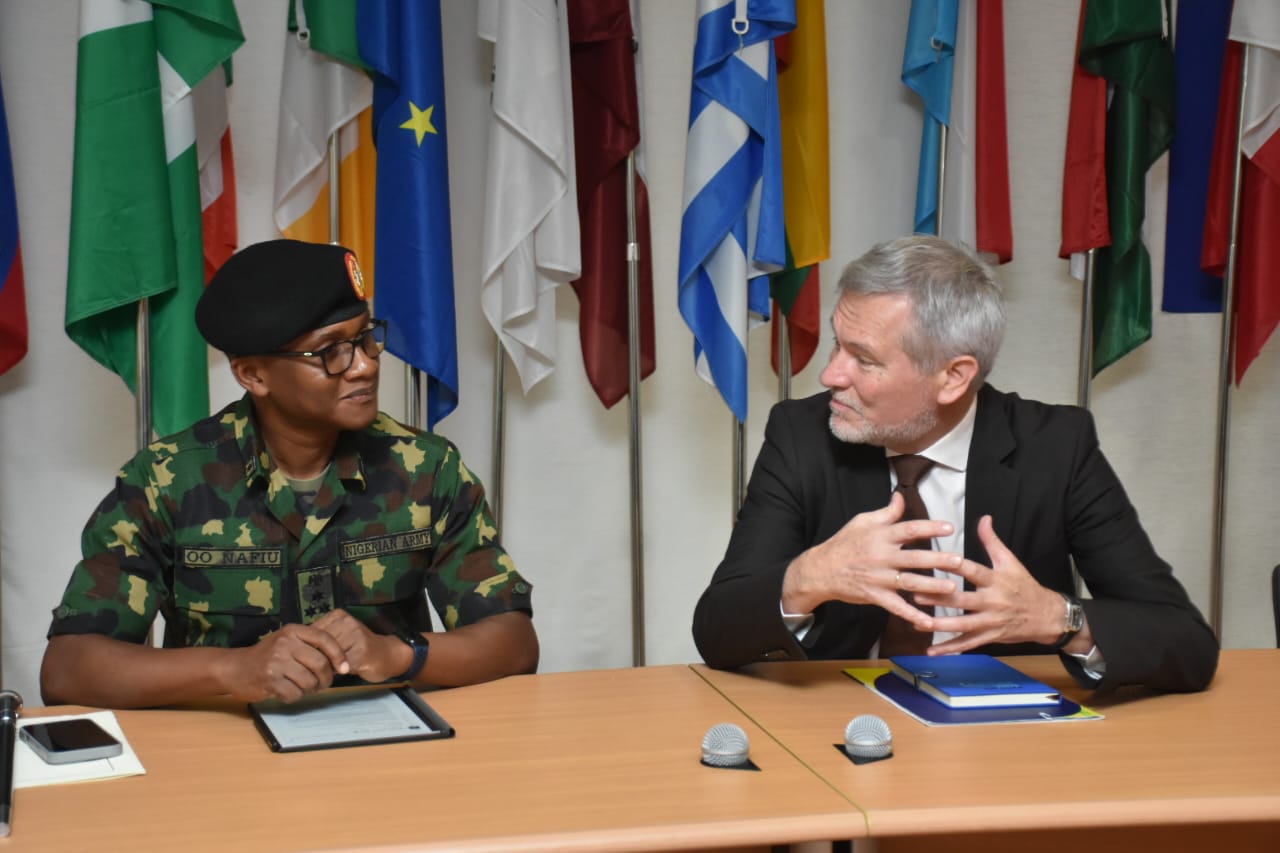
Director General of NYSC, Brigadier General Olakunle Oluseye Nafiu disclosed this during a courtesy visit to the European Union Ambassador to Nigeria and ECOWAS, Mr. Gautier Mignot, at the EU Mission in Abuja.
According to a statement issued by the NYSC Director of Information and Public Relations, Caroline Embu, the collaboration will focus on equipping Corps Members and NYSC personnel with relevant digital and entrepreneurial skills to improve service delivery and boost youth empowerment.
READ ALSO: NYSC Reaffirms Commitment to Youth Economic Transformation

- Brig. General Nafiu described staff capacity development as critical to the effective implementation of the Scheme’s mandate, noting that the NYSC is committed to partnerships that promote professional development through seminars, workshops and other training programmes.
He commended the European Union for its consistent support for Nigerian youths, particularly through initiatives that promote skills development, innovation and economic empowerment.
The NYSC Director General explained that the SAED programme was introduced in 2012 to tackle graduate unemployment by providing Corps Members with practical vocational and entrepreneurial skills capable of making them self-reliant and employers of labour.
According to him, the programme has produced thousands of successful entrepreneurs and has continued to attract grants and support from local and international development partners.
In his remarks, the European Union Ambassador to Nigeria and ECOWAS, Mr. Gautier Mignot, lauded the NYSC for institutionalising the SAED programme, describing it as a strategic intervention with significant potential to drive national development.
He said the European Union remains committed to supporting programmes in digital technology, youth and women empowerment, agriculture, renewable energy, healthcare and child development as part of its broader agenda for inclusive growth.
Mignot also revealed that some European financial institutions have commenced operations in Nigeria to improve access to funding for small and medium-sized enterprises (SMEs), noting that limited access to finance remains one of the biggest obstacles facing entrepreneurs.
The European Union Ambassador to Nigeria and ECOWAS said the EU continues to invest in educational and academic programmes aimed at improving the employability of young Nigerians and easing their transition into the labour market.