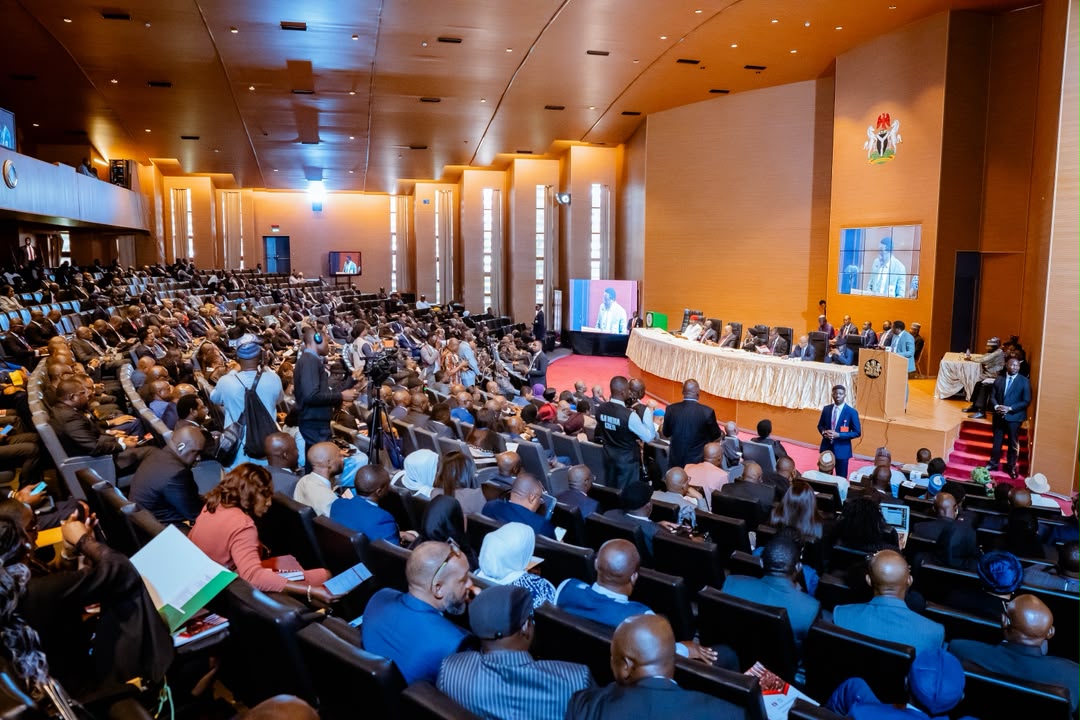
President Bola Tinubu says the judiciary in Nigeria must continue to upscale its capacity in order to address current challenges affecting the dispensation of justice in the country.
President Tinubu gave the advice in Abuja on Tuesday, when he declared open the 8th capacity building workshop for Justices and Judges, organized by the Economic and Financial Crimes Commission (EFCC) and the National Judicial Institute of Nigeria.
The 2026 workshop for Justices and Judges themed Investigation and Prosecution of Economic and Financial Crimes in a Digital Age, bought together Justices and Judges of Nigeria’s upper and lower courts, with the aim of enhancing their capacity as they carry out their task of dispensing justice.

Declaring the conference open, President Bola Tinubu, represented by Vice President Kashim Shettima, said the capacity of Justices and Judges must be continually enhanced in line with current digital age, so as to boost their efficiency.
“My Lords, we confront a rapidly shifting criminal landscape. Technology has amplified the audacity and reach of illicit actors, ushering in sophisticated crimes driven by destructive ingenuity. The rise of blockchain technology and artificial intelligence has introduced unprecedented layers of complexity to traditional illicit activities.
“Because these modern crimes constantly mutate, law enforcement and judicial authorities must continuously build capacity to adapt and respond effectively,” he said.
He commended the courage and patriotism of the Judiciary and the nation’s anti-graft agencies in tackling corruption and financial crimes.
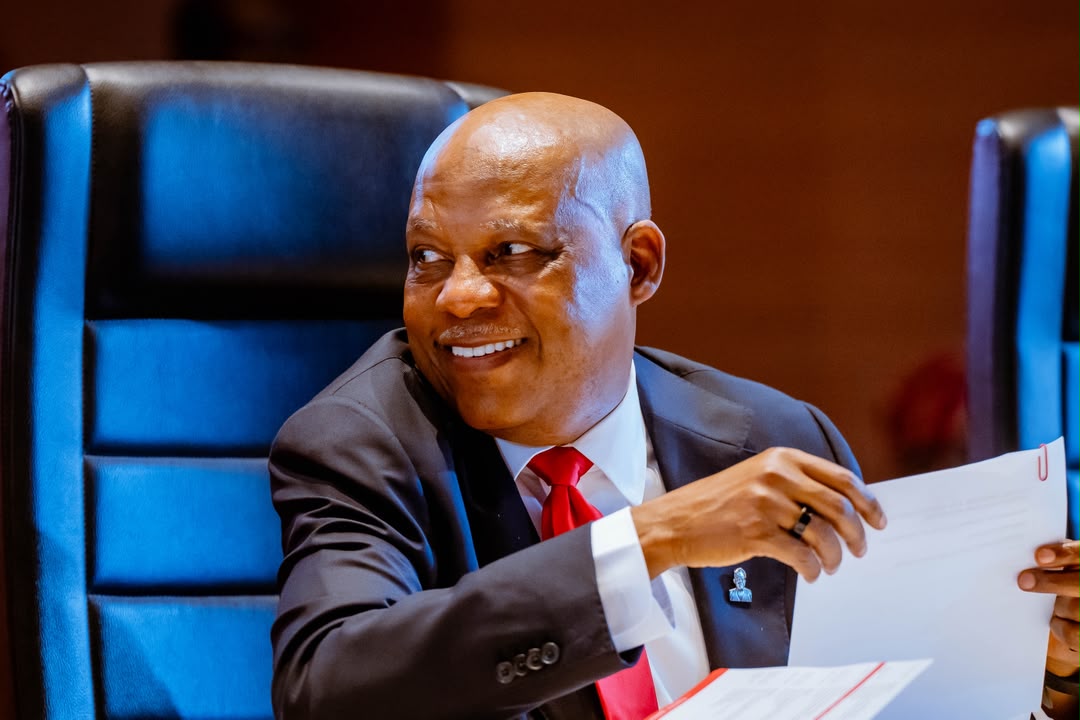
The Nigerian leader observed that while EFCC’s actions shows agency that is proactive, forward-looking and resolved not to be outpaced by technological innovation, the judiciary “must complement law enforcement by rapidly upscaling its capacity.”
“We are already on the right trajectory. The EFCC’s recent momentum in tackling cryptocurrency fraud and its commendable strides in recovering virtual assets are highly reassuring. The agency has recovered billions of naira in cryptocurrency investment-related fraud cases.
“In 2025, the agency secured the forfeiture of $22,417.91 (Twenty-Two Thousand, Four Hundred and Seventeen Dollars, Ninety-One Cents) worth of Bitcoin; 1,001,301.87 USDT (One Million, One Thousand, Three Hundred and One USDT and Eighty-Seven Cents) in digital assets; and US$5.6 million linked to the CBEX scheme, while 192 foreigners arrested for cyber-terrorism and cryptocurrency fraud were successfully prosecuted and deported afterwards,” he said.
The President assured the judiciary in particular, of more support from government, in order to further strengthen them and further ensure their independence.
President Tinubu asked the Judiciary to dismantle the procedural loopholes and flawed prosecution tactics that allow for the escape justice.
He demanded an aggressive overhaul of the justice system to ensure that no well-connected individual can manipulate technicalities to evade the full, crushing weight of the law.

“Probe prosecution strategies, dismantle outdated precedents, and seal procedural gaps that politically exposed persons and organised crime actors exploit to delay or frustrate trial,” he stated.
The Nigerian leader warned that while financial and economic crimes pose an existential threat to Nigeria, corruption has no respect for status and spares no arm of government.
He said framing the anti-corruption campaign as purely an executive agenda is a fundamental error because compromised public services equally affect the executive, legislature, judiciary, and ordinary citizens.
Noting that corruption is a battle for the nation’s collective survival, President Tinubu said, “We must no longer permit legal pyrotechnics and procedural pedantry to shelter criminality. The Bench is not merely a mechanical arbiter of rules, but an active guardian of moral order and social equity.”
“Law is, by design, an instrument of social engineering; it must invariably priorities the public good over narrow, selfish interests shielded by technical maneuvers. Our courts must embody the spirit, and not just the arid letter, of the law.”
He said the workshop with the theme, “Investigation and Prosecution of Economic and Financial Crimes in a Digital Age,” was timely and necessary in fostering the institutional cohesion required to confront corruption’s ever-changing architecture in Nigeria.
President Tinubu acknowledged efforts by the Chief Justice of Nigeria (CJN) in reforming the judiciary, even as he pledged the full support of the executive arm of government to ensure that the Nigerian judiciary is adequately equipped to meet the demands of justice delivery in the digital age.
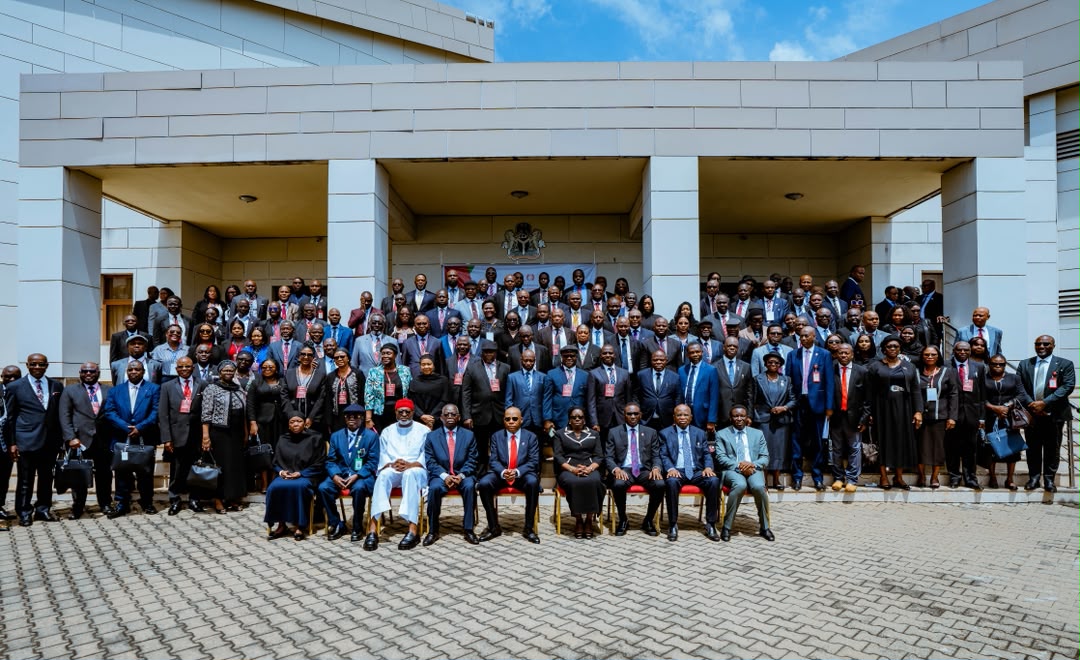
Chief Justice of Nigeria, Justice Kudirat Kekere-Ekun, said the 8th edition of the event reflects the commitment of the NJI and EFCC to sustain efforts aimed at addressing challenges confronting stakeholders in Nigeria’s justice system.
Kekere-Ekun said the trend in technology has impacted how digital evidence is obtained and recorded, noting that the effective administration of criminal justice in the digital era require firm and disciplined case management which, according to her, capacity building programmes such as the EFCC and NJI collaboration, aims to strengthen.
The CJN noted that sustained judicial education and capacity development in the justice sector was yielding positive results with the improved conduct of judicial officers especially judges in case management and the dispensation of justice in recent years.
Senate Committee Chairman on Anti-Corruption and Financial Crimes, Sen. Emmanuel Udende, said the timing of the workshop was apt given the increasing sophistication of financial crimes and corruption particularly cases involving politically exposed persons, which directly impact timely case management and the dispensation of justice.
He assured the stakeholders that the National Assembly remained committed to supporting the enhancement of the war against corruption and financial crimes in Nigeria through proactive legislation.
Minister of Justice and Attorney General of the Federation, Lateef Fagbemi, who was represented by the Director of Public Prosecution, Mr Rotimi Oyedepo, urged synergy among stakeholders in addressing emerging challenges in Nigeria’s fight against corruption, stating that one arm of government alone could not effectively address the problem.
In his welcome address, the Administrator of the National Judicial Institute, Justice Babatunde Adejumo, said the collaboration between the EFCC and the NJI in enhancing the capacity of judicial officers has become an integral part of government’s efforts to frontally tackle the dynamics and scale of financial crimes in the digital age.
He said; “the presence of the Vice President at the event was a practical demonstration of the commitment of the Tinubu administration to boost Nigeria’s war against corruption.”
Chairman of the Economic and Financial Crimes Commission (EFCC), Mr. Ola Olukoyede, said the event was a national imperative that has become an important component of the annual programme of both the EFCC and the NJI.
He said the commission under his leadership was reform minded and has recorded unprecedented convictions as well as financial recoveries over the past three years, assuring that transparent and judicious handling of recovered money and property.
The EFCC Chairman also regretted the impact of advanced technology on financial crimes as well as other forms of corruption, noting that digital innovation was fast outpacing legal instruments and provisions for prosecution.