


The Head of the Civil Service of the Federation (HCSF), Mrs Esther Didi Walson-Jack, has admitted that her office approved requests based on documents later established to be fake.
She made the disclosure during her resumed appearance before the House of Representatives Ad-hoc Committee investigating the alleged creation of the Presidential Economic Advisory Council (PEAC) and the Presidential Foreign Investment Promotion Council (PFIPC) in Abuja.
Mrs Walson-Jack said the purported Establishment Act submitted by the agency was neither genuine nor an authentic Act of the National Assembly.
“I requested to see the documents myself and I saw that the Establishment Act was not really an authentic Act. I have almost 30 years of legal practice experience and immediately I saw it, I knew it was not,” she said.
She acknowledged that her office relied on the fake documents in granting an authorised establishment and recruitment waiver to the purported agency.
The Head of Service explained that officials of the purported agency presented themselves as representatives of a newly established federal body during the 2025 Annual Manpower Budget Defence exercise, accompanied by what appeared to be an Establishment Act and a letter appointing a Director-General.
According to her, “under established civil service procedures, newly created agencies seeking to recruit staff are expected to present an enabling Act, the appointment letter of the chief executive and other supporting documents before an authorised establishment and provisional recruitment waiver are issued.”
She said her office processed the request based on the documents presented, noting that the case was unprecedented.
“We now, having seen all the facts and observed all the documents, concede that we ought to have carried out more due diligence in the discharge of the duties of the office in issuing an authorised establishment and a recruitment waiver to the PEAC/PFIPC,” she told Lawmakers.
She further acknowledged discrepancies in the appointment letter purportedly issued by the Office of the Chief of Staff to the President after comparing it with genuine correspondence.
“I’m not a forensic expert, but I can clearly see that the signatures are not the same,” she stated.
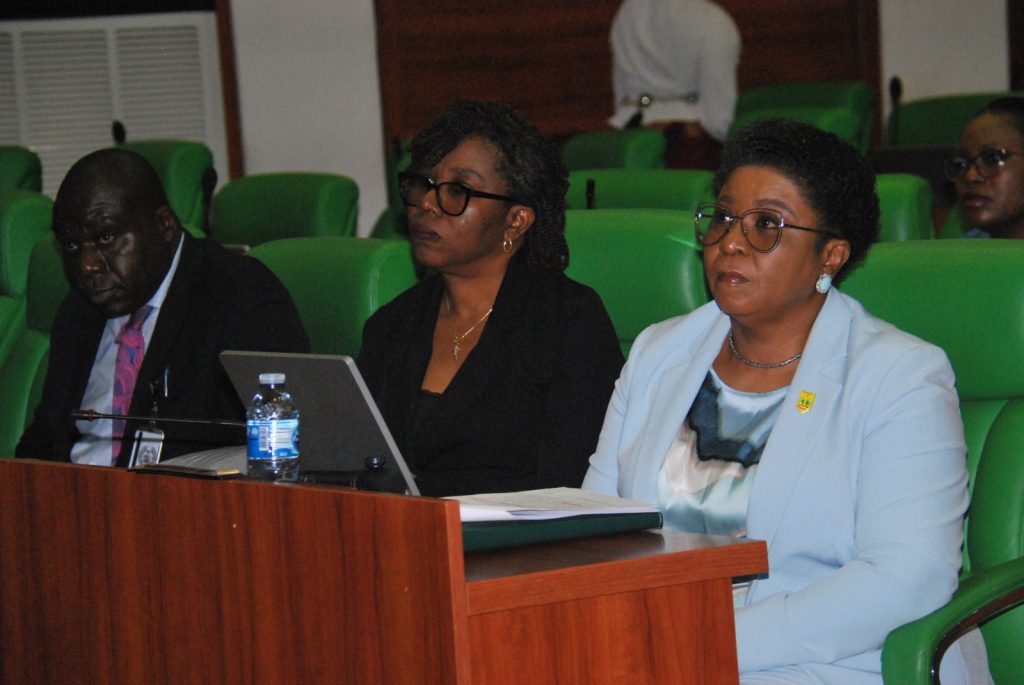
The committee also questioned officials from the Office of the Accountant-General of the Federation over the issuance of an administrative code to the purported agency.
A former Director, Consolidation Account, and Director Federal Projects, Mr. Joshua Patmi Luka, explained that his office received what appeared to be an official request from the State House for an administrative code for the agency.
“As part of our due diligence, what we did was to convey the administrative code to the Permanent Secretary, State House, and not to the so-called agency. The idea was that if it was not genuine, the whole thing would be unravelled,” he said.
However, the committee faulted the process after evidence showed that the response letter never reached the Permanent Secretary but was instead collected by the alleged fake Director-General.
The Chairman said investigations had said that the purported Directorate of Administration and Support Services referenced in the correspondence did not exist within the State House.
He accused the officials of allowing the suspect to intercept official correspondence addressed to the Permanent Secretary.
“You allowed the fraudulent DG to come and pick the letter from your office instead of allowing someone from the Permanent Secretary’s office to receive it. If the letter had reached the Permanent Secretary, the fraud would have been unravelled immediately,” the Chairman said.
Responding, Luka insisted the lapse was not institutional but attributable to an individual officer responsible for dispatching the correspondence.
The committee maintained that evidence before it showed a coordinated use of fake appointment letters, forged legislative documents and fictitious State House offices to obtain official government approvals and budgetary processes.
It said its final report would detail the findings and recommendations after concluding the investigation.
Representing the Inspector-General of Police, Deputy Commissioner of Police, DD NPF National Cybercrime Centre,
Olufemi Akinola, informed the committee that Prince Adeyemi could not be produced because he remains in lawful custody under a subsisting court order.
The police assured lawmakers of their continued cooperation with the National Assembly but explained that any production of the suspect would require an order from a court of competent jurisdiction.
The committee is to conclude its investigation next week.


, Mrs Esther Didi Walson-Jack, has admitted that her office approved requests based ..)