

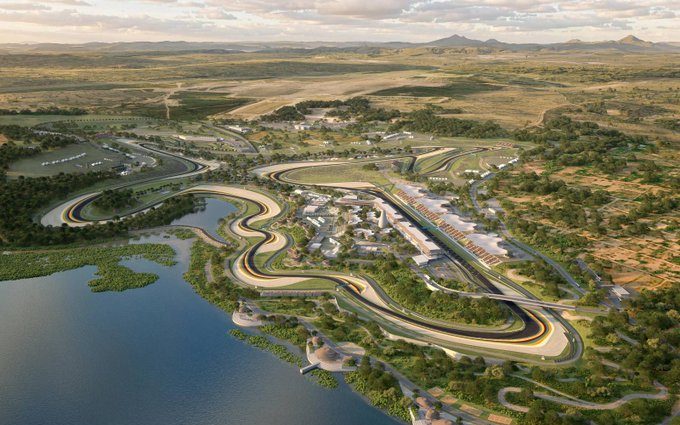
Rwanda will host Africa’s first Formula One (F1) Grand Prix in more than three decades in the early 2030s, following a decade-long agreement announced by the sport’s organisers.
The race will take place at a new purpose-built circuit in Bugesera, Rwanda, once construction is completed, marking the return of the world’s premier motorsport championship to the continent for the first time since the 1993 South African Grand Prix.
Rwandan President Paul Kagame formally announced the country’s bid in December 2024, when Rwanda hosted a gathering of the Federation International de Automobile (FIA), the governing body of motorsport.
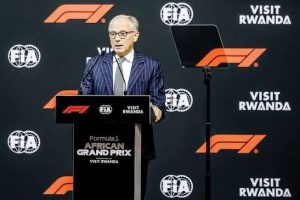
F1 President Stefano Domenicali described the agreement as a landmark moment, saying it would enable the championship to race on every inhabited continent from the next decade.
He said the decision reflected the sport’s commitment to returning to Africa through a long-term partnership and a vision to create meaningful impact.
Milestone for Africa
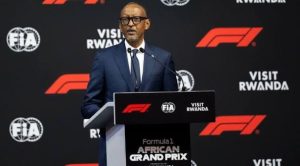
Kagame welcomed the agreement, describing it as a milestone for the continent and African motorsport fans.
“Today belongs to Africa,” he said, noting that Formula One had raced for more than three decades without an African venue.
The president expressed hope that the agreement would pave the way for other African countries to host races, adding that the Rwanda deal demonstrated that the goal was achievable.
READ ALSO: Rwanda Set to Host Formula 1 in 2030
Rwanda has increasingly used international sporting events and partnerships to promote tourism, attract investment and strengthen its global image.
The country has secured football sponsorship partnerships with clubs, including Arsenal and Paris Saint-Germain, and worked with the National Basketball Association (NBA) to establish itself as a hub for the Basketball Africa League.
It also hosted the UCI Road World Championships in 2025, further boosting its profile as a destination for major international sporting events.
However, Rwanda’s sports investments have attracted criticism from rights campaigners, who accuse the government of using high-profile events to distract from allegations of human rights abuses and restrictions on political opposition.
Others have described the criticism as selective, arguing that countries hosting major sporting competitions should be judged by consistent standards.
The announcement is also expected to please seven-time Formula One world champion Lewis Hamilton, who has repeatedly advocated for the return of the sport to Africa.
Hamilton backed Rwanda’s bid in 2024 and described the country as one of his favourite places.
South Africa, which hosted the last African Grand Prix in 1993, had also been seeking to return to the Formula One calendar.
South African Sports Minister Gayton McKenzie said last week that his country should not be ruled out, noting that Italy hosts two Grand Prix races in some seasons.
He argued that Africa, with its 55 countries, should have opportunities to host more than one race. McKenzie also expressed confidence that South Africa could secure a Formula One race before 2030.
The 1993 South African Grand Prix was won by French driver Alain Prost, marking the last time the championship held a race on African soil.

 Grand Prix in more than three decades following a decade-long agreement announced by the sport’s organisers.)