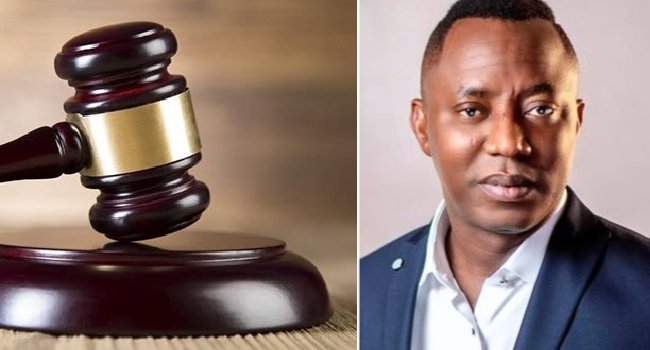
A lawyer representing online publisher and African Action Congress (AAC) presidential candidate, Omoyele Sowore, has admitted being unfamiliar with a provision of Nigeria’s Evidence Act during proceedings in his alleged cyber-bullying trial at the Federal High Court in Abuja.
The lawyer, Treasure Adefisoye, made the admission while responding to questions from the lead prosecution counsel, Akinlolu Kehinde (SAN), over the admissibility of printed copies of online media reports the defence sought to tender as evidence.
The reports purportedly indicated that the Department of State Services (DSS) was considering suspending Sowore’s cyber-bullying trial until after the presidential election scheduled for 16 January 2027.
The defence sought the court’s permission to tender the printouts, but Kehinde objected to their admissibility and asked Adefisoye whether she was familiar with Section 83(3) of the Evidence Act.
Adefisoye replied that she was not aware of the provision and admitted that she was not very conversant with the Act.
Kehinde subsequently asked her to read the relevant provision, which addresses the admissibility of documents made during the pendency of proceedings in certain circumstances.
Adefisoye is a member of Sowore’s legal team, led by Olumide Fusika, SAN.
Sowore recently opened his defence in the case instituted by the DSS over a social media post published in August 2025, in which he allegedly described President Bola Tinubu as a “criminal”.
READ ALSO: Court Rejects Sowore’s Application to Compel DSS DG’s Appearance
The prosecution is challenging the defence’s attempt to introduce the media reports as evidence in the ongoing trial.
Meanwhile, the court adjourned proceedings until Tuesday to rule on the DSS’s objection to a subpoena issued by the defence seeking to compel Kehinde, the prosecution’s lead counsel, to testify as a defence witness.
The prosecution argued that the subpoena was issued in bad faith, was diversionary and contravened the law and established judicial practice.
After hearing arguments from both parties, Justice Muhammad Umar adjourned the matter for a ruling on the objection.