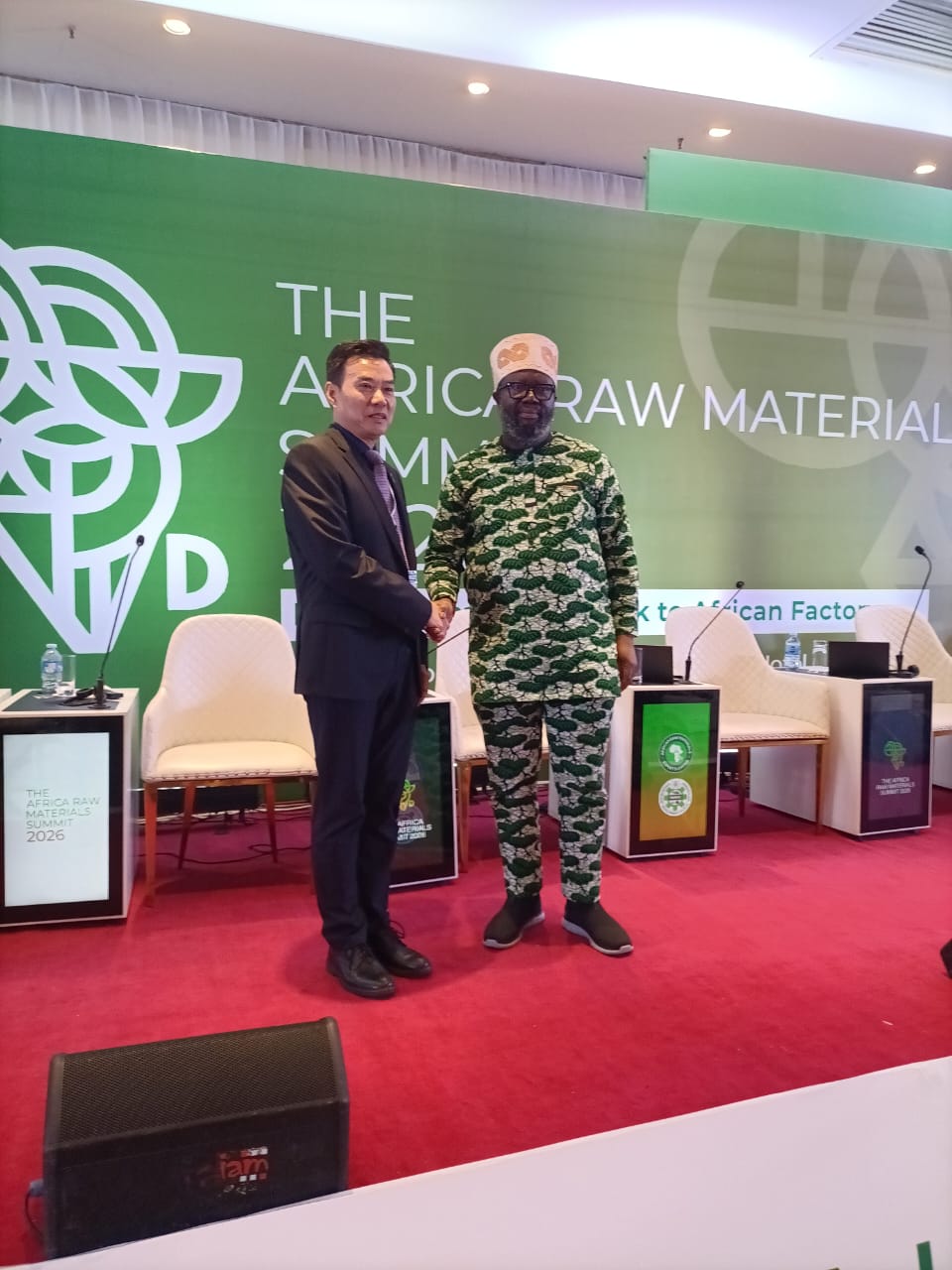
African stakeholders in science, technology and industry have called for increased investment in local processing, research and innovation to transform the continent’s raw materials into finished products, create jobs and accelerate economic growth.
The call was made at the second Africa Raw Materials Summit 2026 in Abuja, where government agencies, researchers, financial institutions and industry experts stressed the need for African countries to move away from exporting raw commodities towards resource-based manufacturing.
The Director-General of the Raw Materials Research and Development Council (RMRDC), Professor Nnanyelugo Ike-Muonso, said the continent must seize the opportunity to accelerate industrial development by maximising the value of its natural resources.
He said the continued export of unprocessed raw materials was depriving Africa of employment opportunities, wealth creation and economic benefits that could improve the livelihoods of its growing population.
Ike-Muonso also expressed concern over the underutilisation of Africa’s raw materials, urging stakeholders to ensure that the continent derives greater economic value from its resources.
He further highlighted the need for broader participation in the summit, with Kenya expected to host the 2027 edition, according to the announcement made at the event.
READ ALSO: Nigeria Showcases Investment Opportunities as Africa Seeks Unity Boost
An industrial technology expert and Secretary-General of the World Association of Industrial and Technological Research Organisations (WAITRO), Dr Benjin Luo, said Africa could accelerate its industrial transformation within 10 to 20 years by building a strong innovation ecosystem and learning from the industrial experiences of countries such as China.
Luo, who spoke at the summit, said Africa’s large population, expanding market and abundant natural resources offered significant advantages for industrialisation if supported by appropriate policies and partnerships.
“Technology alone cannot realise this transformation. You need an ecosystem to close the loop,” he said, emphasising the need for cooperation among governments, universities, industries, start-ups, research institutions and investors.
He explained that effective collaboration would enable stakeholders to test policies through practical projects, assess their outcomes and improve their approaches to industrial development.
Luo also identified electric tricycles as a potential area of industrial collaboration between China and Africa, citing a Chinese industrial cluster that produces more than one million units annually and accounts for about 60 per cent of global production, according to his presentation.
He said the cluster demonstrated how an established local supply chain could support large-scale manufacturing, offering lessons for African countries seeking to develop competitive industries.
The WAITRO secretary-general called for stronger international research partnerships, technology transfer and commercialisation of innovations, urging African stakeholders to move beyond discussions and develop pilot projects that could be replicated across relevant industrial sectors.
Also speaking, the Director-General of the National Centre for Technology Management (NACETEM), Dr Olushola Odusanya, highlighted the role of Nigeria’s youthful population in driving industrial development, particularly as artificial intelligence and other emerging technologies reshape production.
Odusanya said Nigeria’s young population could become a major economic asset if equipped with the appropriate skills and technological tools.
“We see human beings as also raw materials,” he said.
He also commended the RMRDC’s advocacy for at least 30 per cent value addition to raw materials before export, describing the initiative as an opportunity to strengthen local industries and develop human capacity.
Similarly, the Chief Executive Officer of the National Board for Technology Incubation (NBTI), Dr Kazeem Kolawole-Raji, called for closer collaboration among government agencies, researchers and investors to accelerate innovation and industrial growth.
“The era of agencies working in silos is gone forever,” he said, stressing the need for institutions to work together to maximise the economic benefits of Nigeria’s natural resources.
Kolawole-Raji also highlighted the potential of young Nigerian innovators, disclosing that 298 young people from the 36 states and the Federal Capital Territory had recently travelled to London to showcase their innovations to an international audience.
He said the initiative had generated more than 600 million dollars in prospective direct investment.
The Chairman of the RMRDC Governing Board, Dr Isa Sadiq Achida, said Africa must move beyond supplying raw materials to building industries capable of producing competitive finished goods.
“The time has come for Africa not only to supply its own factories but also to build and own factories that create value, generate employment and drive inclusive development,” he said.
Achida urged governments, private investors, research institutions and development partners to strengthen cooperation and invest in local processing, infrastructure, skills development and innovation.
Representing the management of the Bank of Industry (BOI), Dr Uche Nwachukwu said the bank was supporting local sourcing and manufacturing through its financing activities.
He disclosed that the bank linked nearly 50,000 farmers to processing plants in 2025, helping farmers secure markets for their produce while providing factories with a steady supply of raw materials.
Nwachukwu said collaboration among government, researchers, entrepreneurs and financial institutions was essential to translating research and innovative ideas into viable businesses and employment opportunities.
The summit, themed “From African Feedstock to African Factory,” seeks to strengthen partnerships across the continent and promote resource-based industrialisation.
Participants emphasised that Africa’s challenge was no longer simply the availability of natural resources, but the need to develop the industrial capacity to process them locally, generate employment and improve the living standards of its people.