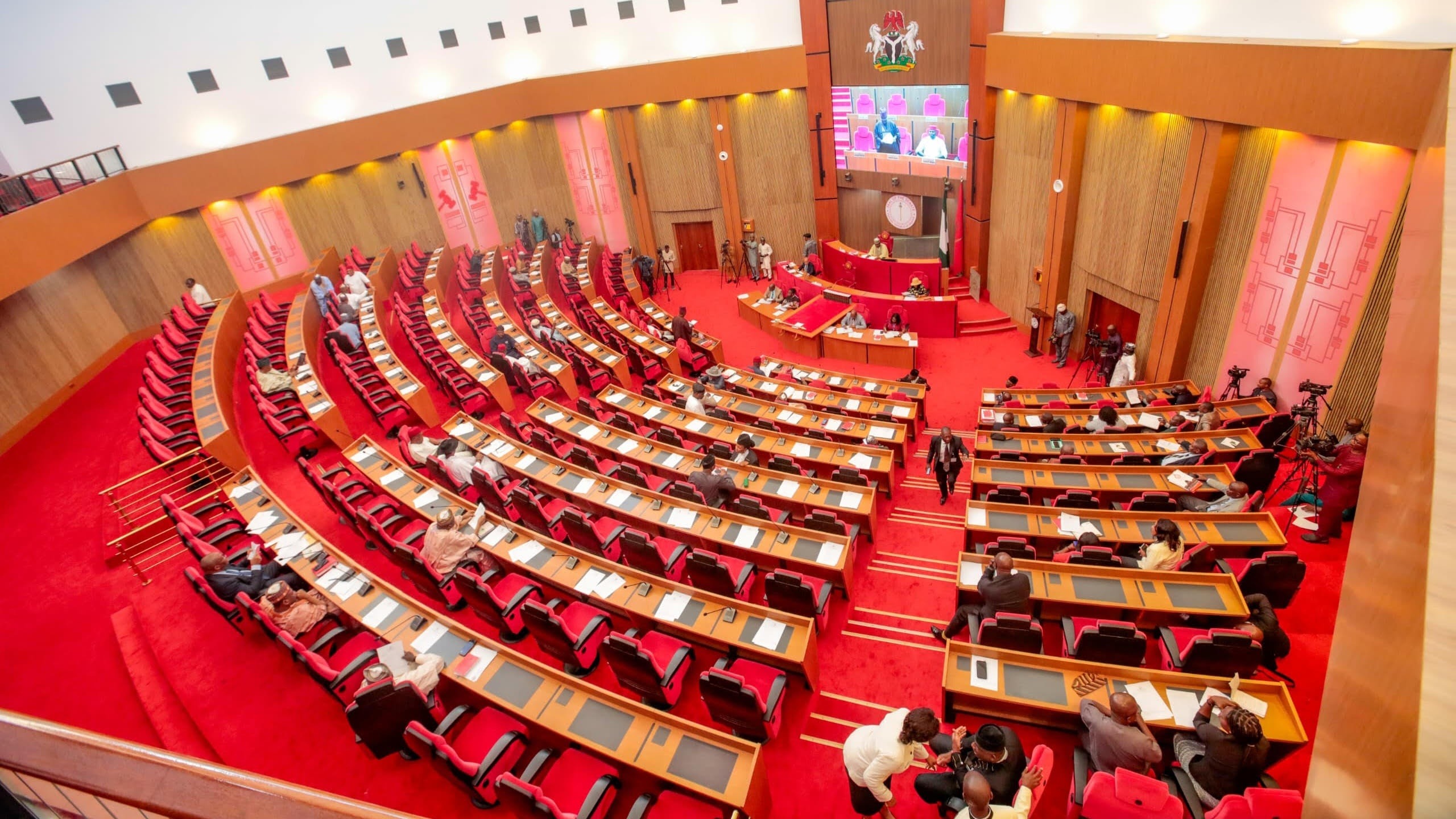
A bill seeking to establish state police and transfer policing powers to subnational governments to strengthen Nigeria’s internal security architecture has scaled second reading in the Senate.
Leading the debate on the bill, Senate Leader Senator Opeyemi Bamidele said the proposed legislation seeks to modernise Nigeria’s security framework through the creation of federal and state police structures.
He said the bill defines the responsibilities of both policing tiers, establishes State Police Service Commissions, provides oversight mechanisms, transfers policing from the Exclusive Legislative List to the Concurrent Legislative List and strengthens cooperative federalism in security administration.
READ ALSO: BREAKING: Reps Pass Bill to Establish State Police
According to Bamidele, the proposed amendment would strengthen the federation by enabling each level of government to effectively discharge its constitutional responsibilities.
He acknowledged concerns that state governments could abuse state police structures but said the bill contains safeguards to prevent such occurrences.
The safeguards, he said, include the establishment of State Police Service Commissions, federal oversight through the Federal Police Service Commission, uniform national policing standards and legislative confirmation of senior appointments.
Other safeguards include constitutional procedures for the removal of state commissioners of police, periodic certification and review of state police operations, and federal intervention mechanisms in cases of a complete breakdown of law and order.
Bamidele said the measures were designed to balance operational autonomy with accountability and constitutional oversight.
He argued that security is most effective when it is local, noting that those who understand the terrain, language, culture and security dynamics of a community are often best positioned to detect criminal activities before they escalate.
According to him, state police would improve intelligence gathering because local officers are better equipped to obtain actionable information from communities through their understanding of local languages, customs and social structures.
“Modern policing relies heavily on intelligence rather than force. State Police will significantly strengthen Nigeria’s intelligence architecture,” he argued.
The Senate Leader also said state police would facilitate quicker responses to security threats by reducing delays associated with a centralised command structure.
He added that the system would promote community policing by fostering stronger partnerships between law enforcement agencies and local communities, thereby improving public confidence in policing institutions.
Bamidele further stated that state police would relieve pressure on the Federal Police, allowing it to focus on interstate crimes, terrorism, organised criminal networks, border security, cybercrime, protection of federal assets and other national security operations.
He maintained that the proposal aligns with Nigeria’s federal system of government, where responsibilities should be appropriately shared among different levels of government.
Drawing comparisons with other federations, Bamidele noted that the United States, Canada, Australia and Germany operate multi-layered policing systems that combine federal and subnational law enforcement agencies.
He said Nigeria should not remain an exception among federal systems.
Following the lead debate, senators across party lines, including several lawmakers from the North, expressed support for the bill, describing state police as a potential long-term solution to the country’s security challenges.
Chief Whip of the Senate, Senator Tahir Monguno, said the proposed legislation would provide a legal framework for the establishment and operation of state police while ensuring effective regulation and accountability.
“The bill provides a legal framework for the establishment and operation of state police, enabling them to effectively discharge their responsibilities while ensuring proper regulation and accountability,” he stressed.The
President of the Senate subsequently referred the bill to the Senate Ad-hoc Committee on the Review of the 1999 Constitution for further consideration and scrutiny.