
The Tertiary Education Trust Fund (TETFund) has urged beneficiary institutions to ensure that increased funding translates to measurable results, as its annual budget allocation hits N1.6trn.
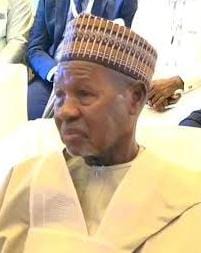
Chairman, Board of Trustees, TETFund, Aminu Bello Masari, made the call at the 2026 TETFund Board of Trustees National Town Hall Meeting held in Abuja, with the theme: “Investing in Nigeria’s Future: Tertiary Education, Human Capital and National Development.”
He said the budget grew steadily from N320.3 billion in 2023 to N1.6trn in 2025, stressing that the increase reflected President Bola Tinubu’s commitment to strengthening tertiary education and developing Nigeria’s human capital through the Renewed Hope Agenda.

“TETFund’s budget rose from N320.3 billion in 2023 to N683.4 billion in 2024 before reaching N1.6 trillion in 2025, representing approximately five times the 2023 allocation. The increase in resources must produce tangible results in academic performance, research output and graduate employability.
“Investment in tertiary education is investment in the people whose knowledge and enterprise will determine Nigeria’s future,” he said.
READ ALSO: TETFund Establishes Innovation Hubs in 45 Tertiary Institutions
He explained that for the 2026 annual direct intervention alone, 271 beneficiary institutions are covered, with “allocations of approximately N2.526bn to each university, N1.871bn to each polytechnic and N2.057bn to each college of education.”
He said the Fund had committed N10 billion in 2026 to developing skills acquisition centres in polytechnics nationwide, while supporting innovation and entrepreneurship facilities in 12 universities, adding that N48 billion had also been approved for upgrading engineering and technology facilities.
Masari further informed that presidential approval had been secured for six additional Centres of Excellence in robotics, coding, artificial intelligence, machine learning and cybersecurity, bringing the total number of TETFund-supported centres to 36.
Masari emphasised that funding alone is not enough, noting that institutional leadership, prudent management, transparency and proper maintenance are essential.
“These resources are supporting improvements in infrastructure, academic programmes, research capacity and the conditions under which our students learn. Their value must ultimately be reflected in the quality of our graduates and their contributions to society,” he said.
Minister of State for Education, Prof. Suwaiba Said Ahmad, commended TETFund for its role in strengthening public tertiary institutions.
She revealed that ongoing curriculum reforms were funded by TETFund, explaining that the reforms are shifting learning to “80 percent practical training and 20 percent learning” to make graduates more hands-on and industry-ready.
“The curriclum reforms were funded by TETFund, and we thank the leaders at TETFund for giving these funds to curriculum reforms. Infrastructure development, staff training, laboratory equipment, without the necessary and adequate curriculum may not lead to the transformation we want to see,” she said.
The minister disclosed that the reforms had produced 36 new and reviewed National Diplomas, 10 National Diplomas in additional programme areas, 30 National Certificates in Education in additional areas, and 21 National Occupational Standards, comprising 27 newly developed and four reviewed standards.
She said the government would continue to align academic programmes with technological developments and labour market demands.
Suwaiba also emphasised the need to expand access to quality education through initiatives such as the Nigerian Education Loan Fund (NELFUND), stressing that financial hardship, disability and geographical disadvantages should not prevent qualified Nigerians from accessing and completing their education.
Also speaking, the Executive Secretary of TETund, Arc. Sonny Echono, said the increase in funding facilitated by the President has enabled the Fund to support key federal policies beyond its traditional mandate.
For example, he said: “I can confirm to you that nearly all the funds that we release to Nigeria’s student loans, over N300b of it, were provided by TETFund.”
He said TETFund also funded credible education data, student innovation, and welfare programmes.
“For the first time, we are now having credible, accurate data about how many students are going to school, how many are out of school, and how many teachers they have. That data is fully funded by TETFund,” he said.
Echono announced that the Fund is advancing six Central Multipurpose Laboratories across geopolitical zones and has secured approval for six additional Centres of Excellence in robotics, coding, AI and cybersecurity, bringing the total to 36.
“As I speak, tomorrow, we will be commissioning 14 projects in one institution. Over 418 projects are ready for commissioning across the country,” he said, adding that in 42 institutions the Fund is providing transport support, with 38 schools now producing electric vehicles for students.
Delivering the keynote titled “From Degree to Development: Are Nigerian Universities Producing the Human Capital Nigeria Needs?,” the Vice-Chancellor of Bayero University Kano, Prof. Sagir Adamu Abbas, said digital competence is required across all disciplines.