Nigerian journalists must simplify complex scientific and technological developments to help citizens understand emerging innovations and their impact on everyday life.
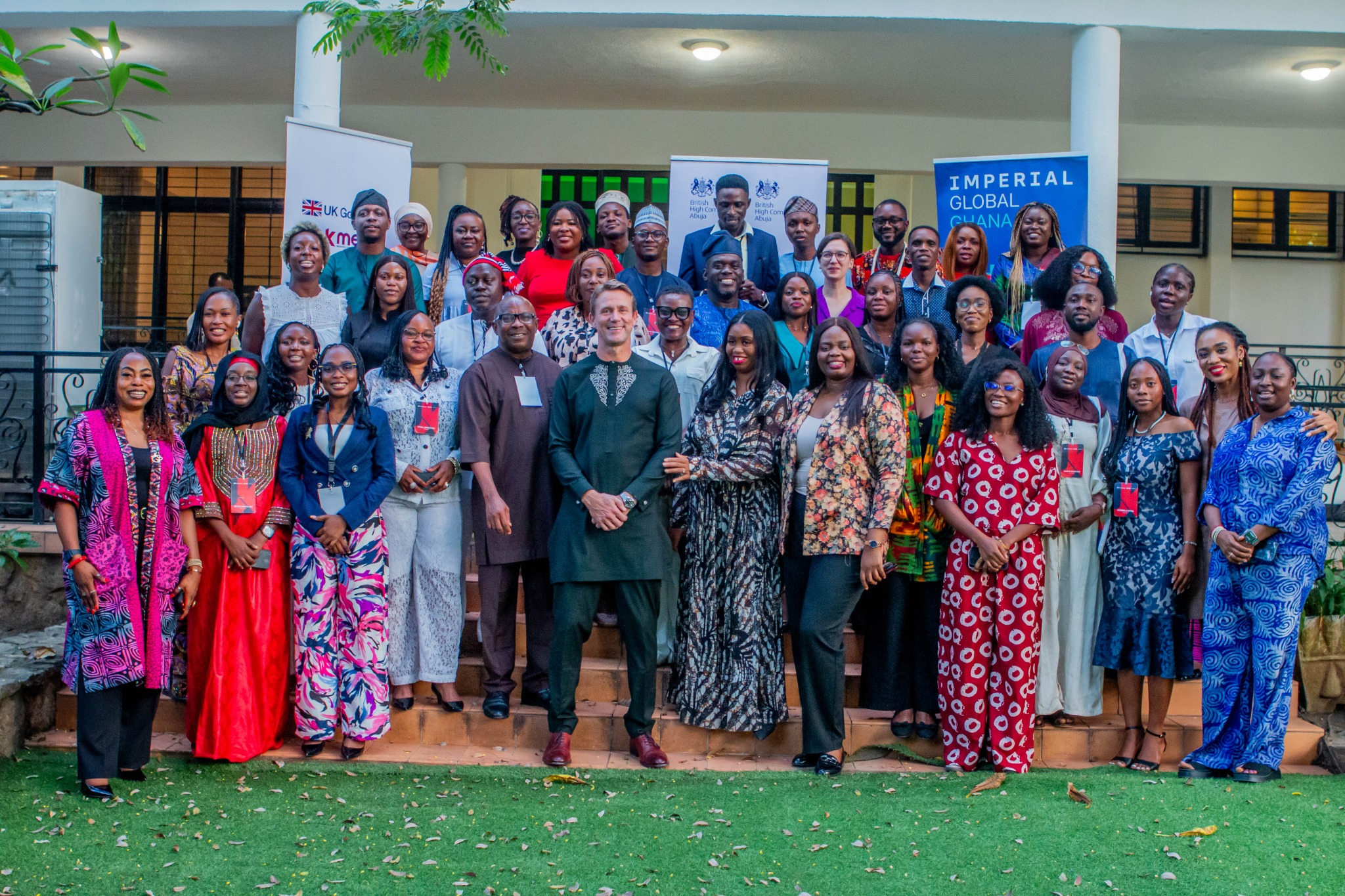
Pete Vowles High Commissioner of the United Kingdom (UK), made the call while hosting Nigerian journalists selected for the 2026 UK Media Excellence for Emerging Technologies (UK MEET) Fellowship at his official residence in Abuja.
He said journalists had a critical responsibility to communicate developments in artificial intelligence (AI), digital health, biomedical innovation, climate risk and the digital economy in ways that ordinary citizens could understand.
“This week you’re covering AI, digital economy, biomedical innovation, digital health, climate risk — all lots of difficult-sounding subjects. And the real challenge is how you put them into kind of plain English, into ways that people can engage with,” he said.
The British envoy explained that rapid technological advancements, particularly artificial intelligence, were fundamentally transforming societies, workplaces and communication.
“Our lives are going to change fundamentally every month and year from now. Our jobs will be different in three years’ time. Everything will be different,” he stated.
Read Also: UK, Nigeria Strengthen Cooperation on Migration, Security, Visa Fraud
He emphasised the importance of responsible journalism in addressing misinformation, particularly as AI-generated content becomes increasingly difficult to distinguish from human-created material.
“Being able to tell that story in a way that is positive and engaging, whilst managing risks of misinformation, risks of how do we know when something is real or being produced by AI?” he asked.
He acknowledged that the British High Commission also faced similar challenges in identifying and managing AI-generated content.
UK–Nigeria Technology Partnerships
Highlighting the growing technological cooperation between Nigeria and the United Kingdom, the High Commissioner described both countries as strategic partners with strong historical and economic relationships.
He encouraged journalists to explore innovation stories that demonstrate how bilateral partnerships are delivering practical solutions to economic and environmental challenges.
“Particularly Nigeria and the UK, we’re deep partners. We have strong connections between our two countries. So how do we tell those stories and tell them in an engaging way?” he said.

The envoy cited Hinckley Recycling in Lagos, a British-Nigerian enterprise supported through Innovate UK, as an example of cooperation in lithium battery recycling and electronic waste management.
He also highlighted Greenage Technologies, a Nigerian company receiving UK support to develop clean energy solutions aimed at reducing dependence on generators.
“Again, massive issue for Nigeria, for the climate, for the world. A good technology story,” he remarked.
Other examples included collaborations involving Afric Sable, Flybox and Ekiti State University in developing alternative protein sources for animal feed to improve agricultural productivity.
The High Commissioner said the fellowship, organised in collaboration with Imperial College London, provided an opportunity to strengthen science journalism, promote professional networking and deepen UK–Nigeria cooperation in emerging technologies.
Innovation, Investment
Also speaking, the Associate Director of Imperial Global Ghana at Imperial College London, Amma Boakye-Danquah, emphasised the global influence of Nigerian journalism in shaping international perceptions, investment decisions and technological partnerships.
She explained that stories published by Nigerian journalists often reached international audiences, including policymakers, researchers and businesses seeking opportunities for collaboration with Nigeria.
“There are people around the world, including in the UK, who are using those stories to determine what kind of relationships they can build with Nigeria,” she said.

Boakye-Danquah urged the fellows to recognize the wider implications of their reporting, stressing that science journalism could stimulate investment, trade and commercial partnerships.
“That’s such a powerful thing to think about, to reflect on as an outcome of whatever pitch you do and whatever stories you write,” she added.
She noted that Imperial College London had established platforms dedicated to science communication, entrepreneurship and the commercialisation of scientific research.
“We have already elevated and recognised the value of science communication, and that’s an extension of what we believe science and research can do,” she explained.
Citing the university’s Enterprise Lab, Enterprise activities and White City innovation ecosystem, she said scientific discoveries could generate commercially viable solutions when effectively communicated.
Boakye-Danquah referenced Polymateria, a company whose innovation attracted media attention and subsequently contributed to business engagement and a memorandum of understanding in Nigeria.
“So it should tell you, again, the potential of your stories to really catalyse innovation, catalyse export and trade, really change the face of how people understand and believe in Nigerian innovation,” she stated.
“So you have an incredible responsibility,” she added.
Solutions Journalism
Boakye-Danquah further encouraged participating journalists to move beyond conventional reporting focused primarily on political controversies and government shortcomings.
She urged them to develop forward-looking, interdisciplinary stories that explore how scientific research and emerging technologies could address societal challenges and contribute to economic development.
She expressed optimism that the fellowship would inspire innovative story ideas connecting scientific discoveries with public policy, entrepreneurship and international cooperation.
“Really imagining a future where science and research and innovation drive the economy, and we drive that together, you know, as global bodies in collaboration,” she said.
The 2026 UK MEET Fellowship brings together selected Nigerian journalists to strengthen their capacity to report accurately and effectively on artificial intelligence, digital innovation, biomedical technologies, climate-related risks and other emerging scientific developments.
The programme also seeks to promote evidence-based reporting, improve public understanding of scientific innovations and strengthen professional collaboration between Nigerian journalists and UK research institutions.