The United Nations, international development partners, key stakeholders and governments have called for a shift from short-term humanitarian interventions to sustainable urban integration and development frameworks to address the protracted displacement crisis in Northern Nigeria.
They said the approach is necessary to ensure long-term solutions that promote stability, resilience and self-reliance among displaced populations.
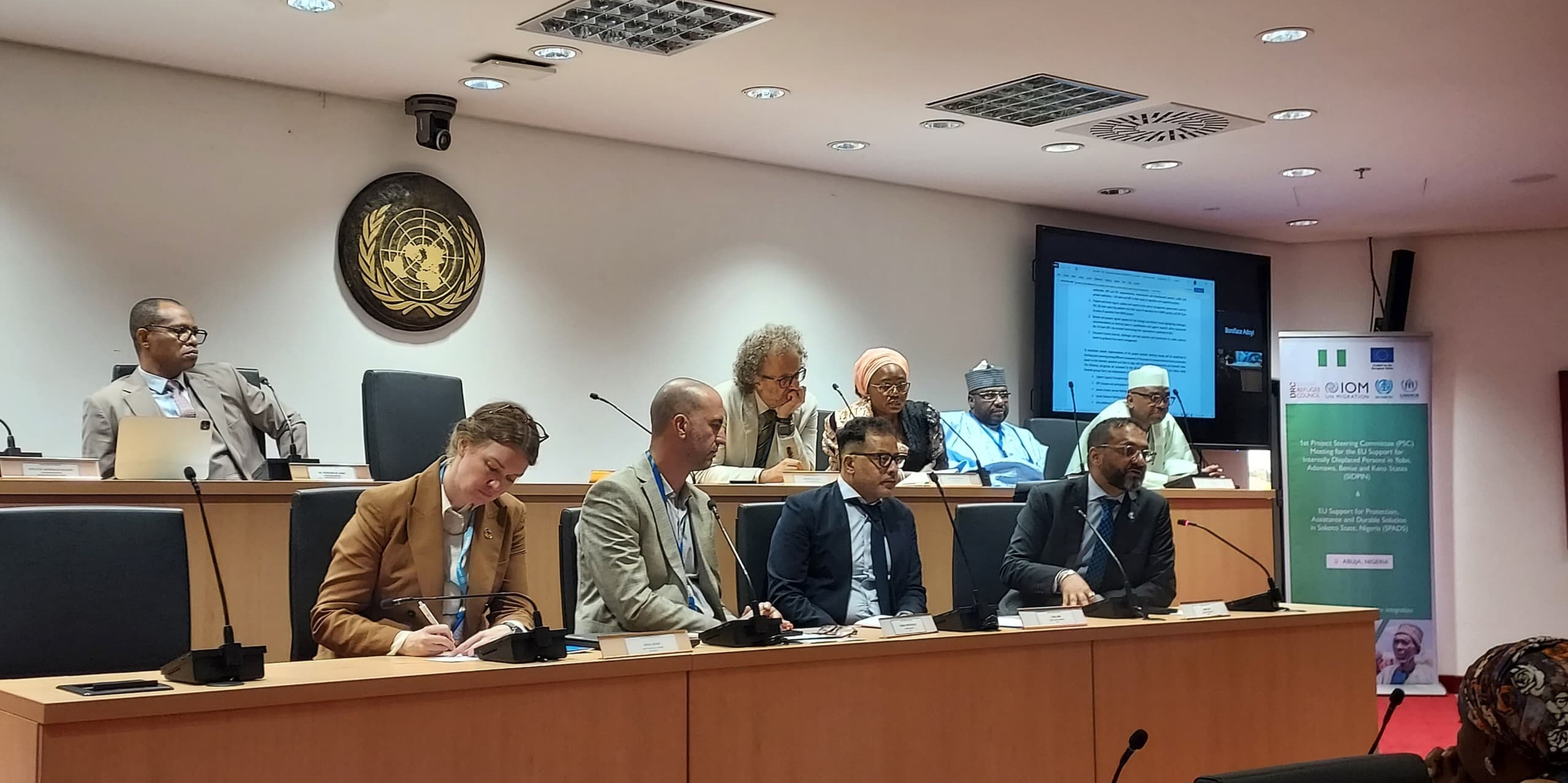
The call was made during the inaugural Project Steering Committee meeting of the Sustainable Urban Integration of Displaced Populations in Adamawa, Yobe and Kano States (SIDPIN) project and the EU Support for Protection, Assistance and Durable Solutions in Sokoto (SPADS) initiative held in Abuja, Nigeria.
The meeting brought together representatives from Nigerian and State Governments, Humanitarian Agencies, Development Organisations, and donor partners to review progress, address implementation challenges, and strengthen collaboration, aimed at improving the lives of internally displaced persons (IDPs) and host communities.
Speaking at the event, the United Nations Resident and Humanitarian Coordinator in Nigeria, Mohammed Fall said the scale and duration of displacement in Northern Nigeria require a fundamental shift in approach.
According to him, with approximately 3.5 million internally displaced persons across areas covered by the International Organisation for Migration (IOM) Nigeria, displacement should no longer be treated solely as a humanitarian emergency.
“With around 3.5 million displaced people in the region, we must recognise that displacement is not only a humanitarian issue. It is also a development, peacebuilding, and human rights challenge that requires long-term solutions,” Fall stated.
Highlighting achievements under the UN Common Programme in 2025, Fall disclosed that nearly 200,000 children had received education and skills training, about 150,000 people had benefited from sustainable livelihood opportunities, while 40,000 individuals had regained access to critical legal documentation.
“As the UN Secretary-General has reminded us constantly, we must move from managing crises to solving them, from short-term relief to long-term solutions rooted in dignity and in human rights,” he said.
Fall added that : “Durable solutions are not achieved by one sector alone. They are built when humanitarian action meets development planning. Durable solutions are not only about ending displacement; they are about beginning the future”, he added.
Also speaking, the Ambassador and Head of the European Union Delegation to Nigeria and ECOWAS, Gautier Mignot, urged stakeholders to adopt more ambitious and sustainable approaches to development financing.
While acknowledging the significant impact donor interventions have had on stabilizing affected communities, Mignot emphasized the need to move beyond traditional livelihood support programmes toward larger-scale investments capable of delivering lasting economic transformation.
“I personally don’t think that livelihood assistance is part of our mission. Let us review all our livelihood interventions and development projects to see how they can contribute to the purposes of durable solutions. When we look at development, we need to have a scale-up attitude in the way we use our funding. Let us scale up ambition on the way forward”, he added.
Representing the Permanent Secretary of the Federal Ministry of Humanitarian Affairs and Poverty Reduction, Mr. Olubunmi Olusanya noted that Nigeria’s displacement crisis is driven by multiple factors, including insecurity, climate-related shocks, and socio-economic vulnerabilities.
He stressed the importance of integrating humanitarian assistance with development and peacebuilding efforts to achieve lasting results.
“While humanitarian interventions remain indispensable, experience has shown that durable solutions require a more integrated approach that bridges humanitarian action, development efforts, and peacebuilding initiatives,” he said.
Describing the SIDPIN and SPADS initiatives as transformative interventions, Olusanya added that : “This project is a modern development project. It embodies our collective aspiration for dignity, stability, resilience, and self-reliance for some of the most vulnerable members of our society”, he added
The initiatives funded by the European Union, the SIDPIN and SPADS initiatives form part of a broader multi-agency effort aimed at addressing displacement through sustainable urban integration and inclusive development approaches, with a strong emphasis on improving the living conditions and resilience of women, children, and other vulnerable groups affected by displacement and related socio-economic challenges.
It is also expected to strengthen efforts toward achieving durable solutions for displacement through improved urban integration, economic empowerment, and enhanced access to essential services for affected populations.
Participants at the meeting expressed optimism that the renewed emphasis on governance, inclusion, institutional accountability, and strategic coordination would help deliver tangible and sustainable improvements for displaced populations and their host communities across the targeted states.