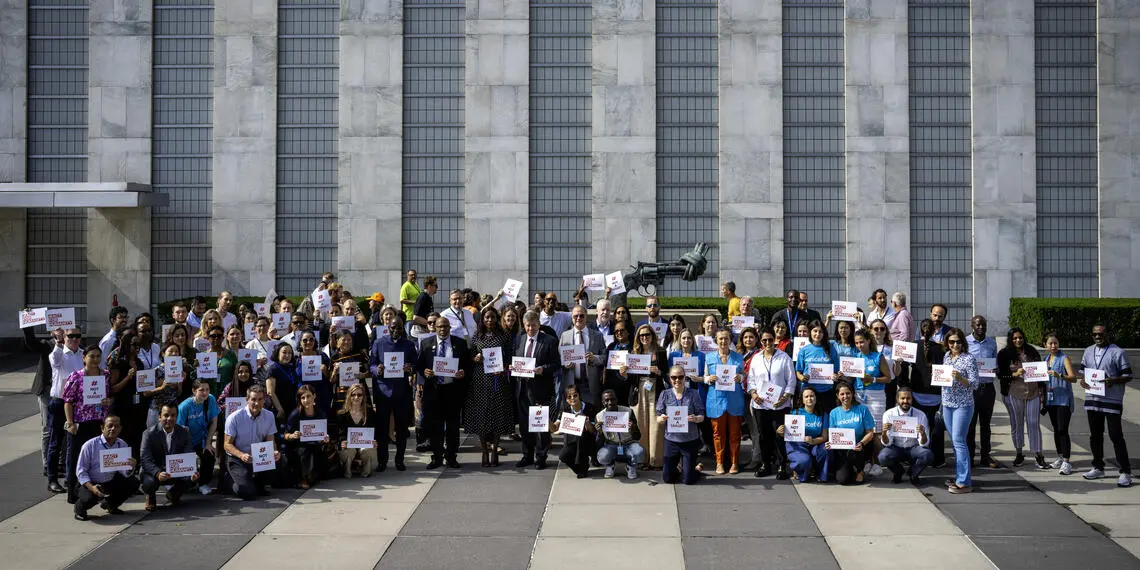
The United Nations has highlighted the growing risks faced by humanitarian workers, many of whom are killed, injured, abducted, detained or obstructed while delivering life-saving assistance in crisis zones.
The UN raised the concern as the world marks World Humanitarian Day on August 19, with humanitarian personnel, most of them national staff serving their own communities, continuing to work in dangerous conflict environments.
International humanitarian law requires civilians, including humanitarian and medical personnel, “to be respected and protected. Parties to armed conflicts are also required to allow and facilitate humanitarian relief for people in need.”
The UN Office for the Coordination of Humanitarian Affairs (OCHA), in its 2026 World Humanitarian Day campaign, said: “Concern is not protection. Condemnation is not accountability.”
The campaign called on states and parties to armed conflicts to ensure safe, rapid and unimpeded humanitarian access, prevent arbitrary detention and release humanitarian workers who are unlawfully held.
It also urged prompt and impartial investigations into alleged violations, accountability under international law, support for survivors and affected families, and stronger safety measures for humanitarian personnel, including security training, appropriate equipment and psychosocial support.
The campaign further stressed that international law and humanitarian principles must be upheld in practice.
Attacks on humanitarian workers can disrupt the delivery of food, healthcare, protection services and other critical assistance, worsening conditions for vulnerable populations affected by conflicts and other crises.
World Humanitarian Day is observed annually on August 19 to honour humanitarian workers and commemorate those who have lost their lives while providing assistance.
The date marks the 2003 bombing of the Canal Hotel in Baghdad, which killed 22 people, including the UN humanitarian coordinator for Iraq, Sergio Vieira de Mello.