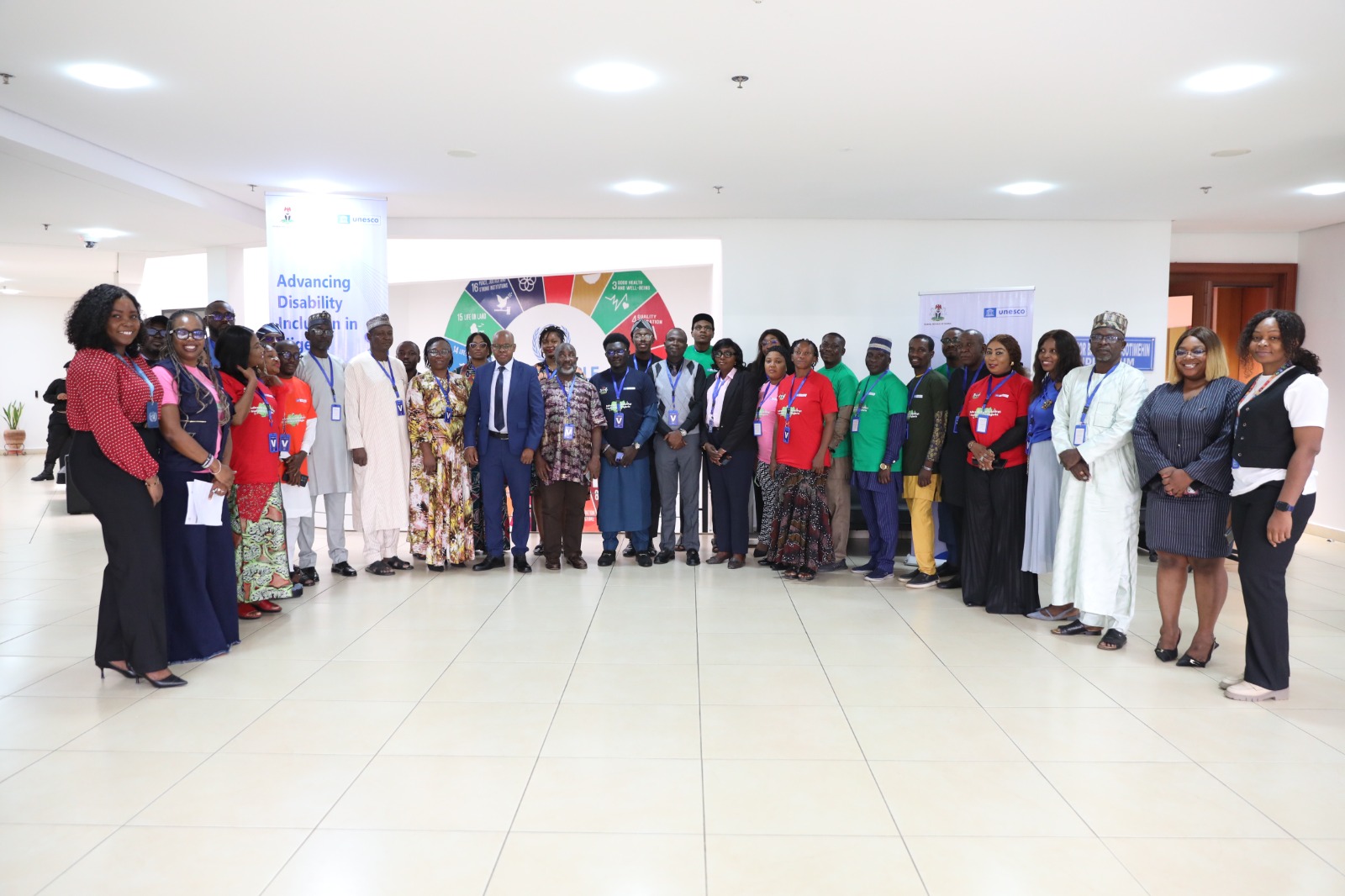
The United Nations Educational, Scientific and Cultural Organisation (UNESCO) and stakeholders in Nigeria’s disability sector have called for urgent action to close gaps in disability data, policy implementation, institutional coordination and financing.
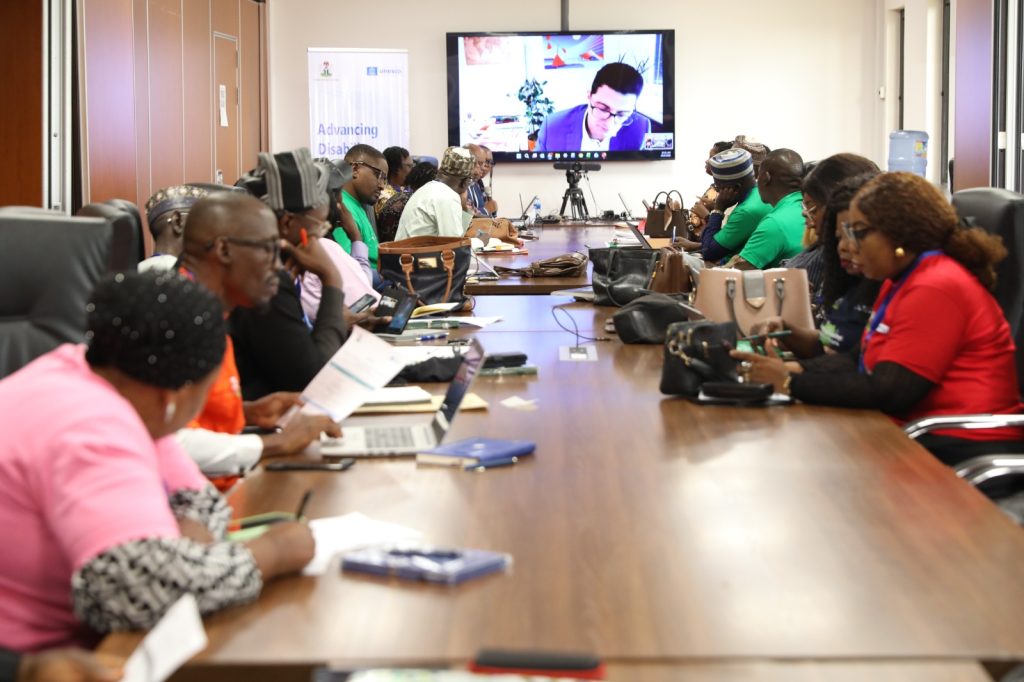
The call was made in Abuja at a stakeholders’ consultation on Disability Policy, Data and Institutional Landscape in Nigeria, organised to assess the country’s progress, identify gaps and develop practical recommendations for strengthening disability inclusion.
The UNESCO Representative to Nigeria, Dr Isaias Barreto da Rosa, said disability inclusion should no longer be viewed solely as a human rights or social welfare issue, but as an important development concern.
“Disability inclusion is a developmental issue as well. Barriers to education limit human capital. Barriers to employment constrain productivity and livelihoods. Inaccessible transport restricts mobility. And digital platforms that are not designed with accessibility in mind can create new forms of exclusion even as they seek to expand access,” Barreto da Rosa explained.
The UNESCO representative stressed that disability considerations must be incorporated into policies and programmes from the design stage rather than treated as an afterthought.
“Inclusion must therefore be built in from the beginning. Not added as an afterthought. It has to be included from the beginning. When we promote inclusion, we’re promoting human rights, we’re promoting social issues, but we are promoting development as well,” he emphasised.
He noted that UNESCO’s Management of Social Transformations (MOST) programme could support Nigeria’s efforts by strengthening the link between research, evidence and policymaking.
“MOST is founded on a simple but very powerful conviction: that knowledge must inform policy, and policy must improve people’s lives. Through MOST, UNESCO supports the use of evidence-informed policymaking to promote more inclusive, more participatory, and more sustainable approaches to addressing emerging social challenges, including disability inclusion,” Barreto da Rosa said.
He urged government institutions, organisations of persons with disabilities, civil society, researchers, academia, development partners, the private sector and the media to contribute to the process.
“Each one has knowledge to contribute and each has a responsibility to act,” he stated.
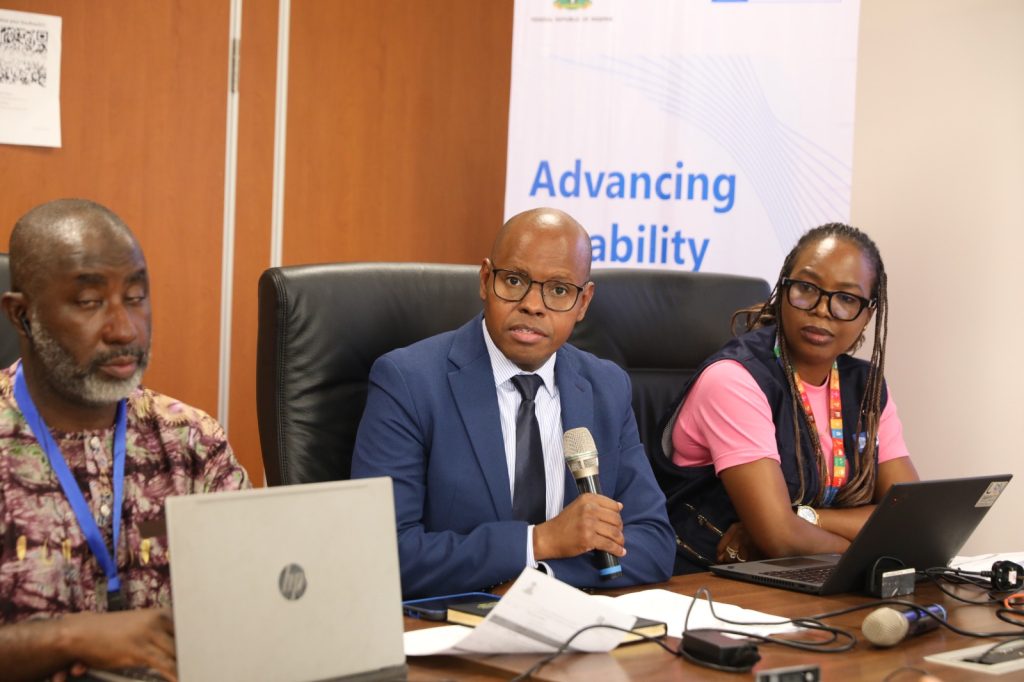
Barreto da Rosa identified data, participation and shared responsibility as key principles for advancing disability inclusion, stressing the importance of reliable data and meaningful participation by persons with disabilities in policymaking.
“Data is visibility. Participation is legitimacy. And inclusion is everyone’s responsibility. We cannot adequately address what we do not properly see and measure. When it comes to disability inclusion, we need data. Data is visibility, Policies concerning persons with disabilities must be shaped with them, not merely for them. Participation is legitimacy,” he maintained.
He also challenged institutions and individuals to take responsibility for advancing inclusion rather than shifting the responsibility to others.
Barreto da Rosa urged stakeholders to ensure that the consultation produced concrete measures capable of translating policy commitments into meaningful change.
“Let us therefore use this consultation not only to identify gaps, to identify problems, but to help build a stronger, evidence-based and clearer pathway for action. At the end, we need action. Talking is good, but I believe that action is even better,” he urged.
Also speaking, the Chief of Section, SCS/SPI/Management and Social Trust Fund at UNESCO Headquarters, Khodéli Iraku, said UNESCO was supporting member states to understand, anticipate and manage social transformations in ways that would ensure that all sections of society benefited.
Iraku explained that MOST promotes policy-relevant knowledge, futures literacy and foresight, stressing that inclusive policies must be deliberately designed to achieve inclusion.
“If you do not deliberately look for the indicators in the policies that would promote social inclusion, then you will most certainly be excluding a lot of people from that policy, social inclusion should be considered from the earliest stages of policy development, with the participation of the people directly affected,” Iraku said.
She particularly welcomed the emphasis on the principle of “nothing about us without us”, stressing that the participation of persons with disabilities was critical to the legitimacy of policies affecting them.
Meanwhile, a consultant on the project, Dr Adebayo Adeyemi, said the exercise would go beyond a review of Nigeria’s disability laws to conduct a comprehensive diagnostic assessment of the entire disability policy, data and institutional system.
He explained that the study would examine the implementation of laws and policies, institutional mandates and coordination, financing, procurement, capacity, data systems and the participation of persons with disabilities.
“Rather than just looking at existence of policy alone like we saw in the previous study, we want now to go further and look at policy to implementation chain. So, how are we moving from paper to practice?” he asked.
According to Adeyemi, financing remained a major area where evidence was lacking, particularly regarding how disability inclusion was reflected in government budgets and procurement.
“How are we ensuring that when we prepare our budgets, we have disability in mind, and when we are releasing monies, and of course not just releasing monies, when we are doing procurements, how are our procurements responding to concerns of persons with disabilities as well?” he asked.
The consultant also raised concerns about capacity gaps within ministries, departments and agencies, noting that some institutions still approach disability through charity-based models rather than the rights-based and social inclusion approaches promoted by current legislation.
He said the research would examine the quality, interoperability, accessibility and usability of disability data, stressing that reliable data was essential for evidence-based policy and service delivery.
“The study will also examine Nigeria’s compliance with international and regional commitments, including the Convention on the Rights of Persons with Disabilities (CRPD), the Sustainable Development Goals and the African Disability Protocol,” he disclosed.
Adeyemi also explained that emerging issues such as climate change, gender and urban development would also be considered, with inclusive urban development identified as one of the areas where the project could contribute to practical change.
“We want to see that transformation happen in the city, enabling persons with disabilities to move safely and independently around urban areas,” the consultant stressed.
He further disclosed that the exercise would identify priority reforms, clarify institutional responsibilities, examine financing and accountability, and assess how disability policies were communicated and implemented across different levels of government.
“This is just the beginning of a fairly long relationship,” Adeyemi said, adding that the project team would continue engaging institutions and gathering evidence needed to strengthen disability inclusion in Nigeria.
The consultation is expected to move beyond identifying gaps to delivering a clear, evidence-based pathway for action, strengthening institutional coordination, giving persons with disabilities a meaningful voice and translating policy commitments into tangible change.