

The United Nations Children’s Fund (UNICEF) has called for sustained investment in Nigerian children, describing them as the country’s greatest asset and warning that economic pressures could undermine recent gains in child health, education and social protection if urgent action is not taken.
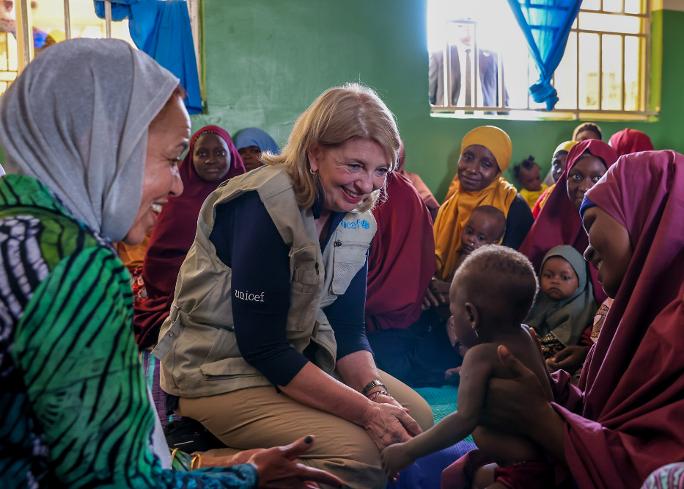
The appeal followed the conclusion of a mission to Nigeria by UNICEF Executive Director, Catherine Russell, who said the country’s youthful population presents a unique opportunity to drive future economic growth, innovation and national development.
In a statement issued by UNICEF’s Acting Chief of Communication and Advocacy, Susan Akila, Russell noted that Nigeria’s estimated 105 million children and adolescents represent nearly half of the country’s population and constitute one of its greatest development strengths.
“As rising prices continue to put pressure on vulnerable households, investing in children has become more important than ever. Everywhere I visited in Nigeria, I saw the resilience, ambition and enormous potential of children and young people despite the challenges they face,” Russell said.
She commended ongoing government efforts to improve children’s welfare, citing visits to a UNICEF-supported health facility in Sokoto where malnourished children were receiving treatment and digital learning centres providing educational opportunities for out-of-school children.
Russell acknowledged progress in areas such as birth registration, social protection and school enrolment, saying the achievements demonstrate what can be accomplished when governments and partners prioritise children.
Challenges
However, she warned that global economic pressures, including funding constraints, the impact of the Middle East crisis and other economic shocks, alongside insecurity, displacement and climate-related challenges, continue to threaten children’s wellbeing.
“The progress recorded so far shows what is possible when children are placed at the centre of development, but much more remains to be done to ensure every child has an equal opportunity to thrive,” she said.
The UNICEF Executive Director emphasised the need to sustain investments in healthcare, nutrition, education, safe water and child protection services, noting that early childhood remains a critical period for lifelong development.
“Good nutrition, quality healthcare, early learning and protection during the first years of life provide the foundation for healthier communities and stronger economies,” Russell added.
She welcomed the commitment shown by federal and state governments towards improving children’s welfare and reaffirmed UNICEF’s readiness to continue working with governments, development partners and the private sector to expand opportunities for every Nigerian child.
“Nigeria’s future will be shaped by the decisions made for children today. UNICEF remains committed to supporting efforts that will enable every child to survive, learn, grow and realise their full potential,” she said.


 has called for sustained investment in Nigerian children, describing them as the country's greatest asset and warning that economic pressures could undermine recent gains in child health, education and social protection if urgent action is not taken.)