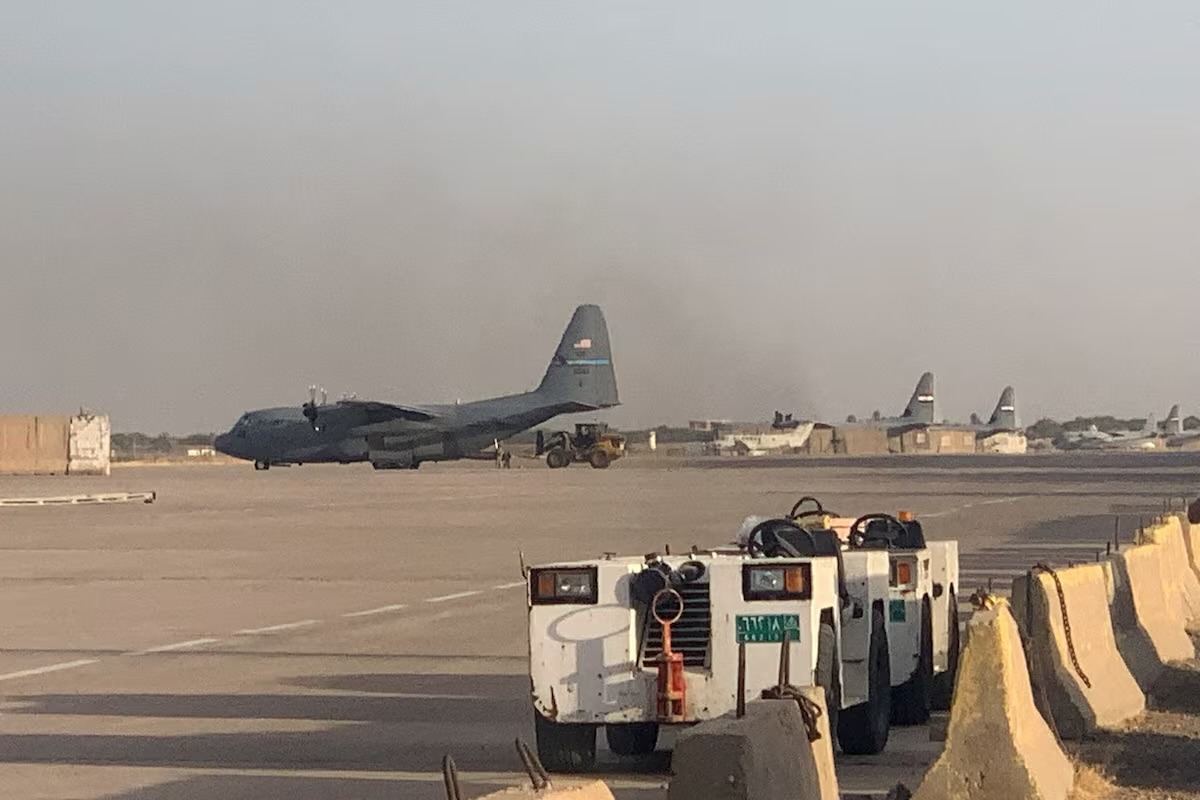
The United States forces have ended their mission in Iraq, raising concerns that the withdrawal could create a security vacuum, embolden Iranian-backed militias and give the Islamic State group an opportunity to regroup.
The withdrawal, mainly from an airbase in Erbil in the semi-autonomous Kurdish region, was celebrated as a victory by Tehran and its allies.
The agreement was reached in 2024 under former US President Joe Biden and is being carried out by President Donald Trump’s administration, even as it wages war against Iran.
The Pentagon said; “the United States and its coalition partners had formally concluded Operation Inherent Resolve, adding that Washington would continue to provide targeted training and intelligence support to Iraqi partners.”
Iran has described the withdrawal as a victory for its network of allied armed groups, known as the “axis of resistance.”
However, the US forces had provided Iraqi forces with intelligence on Islamic State movements, as well as aerial surveillance and reconnaissance.
Retired Iraqi Army General Mohammed al-Jubouri said Iraq’s security institutions must now demonstrate that they are prepared for the post-coalition phase.
“One of the worst-case scenarios would be Islamic State obtaining armed drones or improvised explosive drones at a time when Iraq still lacks sufficient air defence capabilities to counter such threats effectively,” he said.
The US invaded Iraq in 2003 and withdrew in 2011, but returned in 2014 to support Iraqi forces against Islamic State.
Reuters