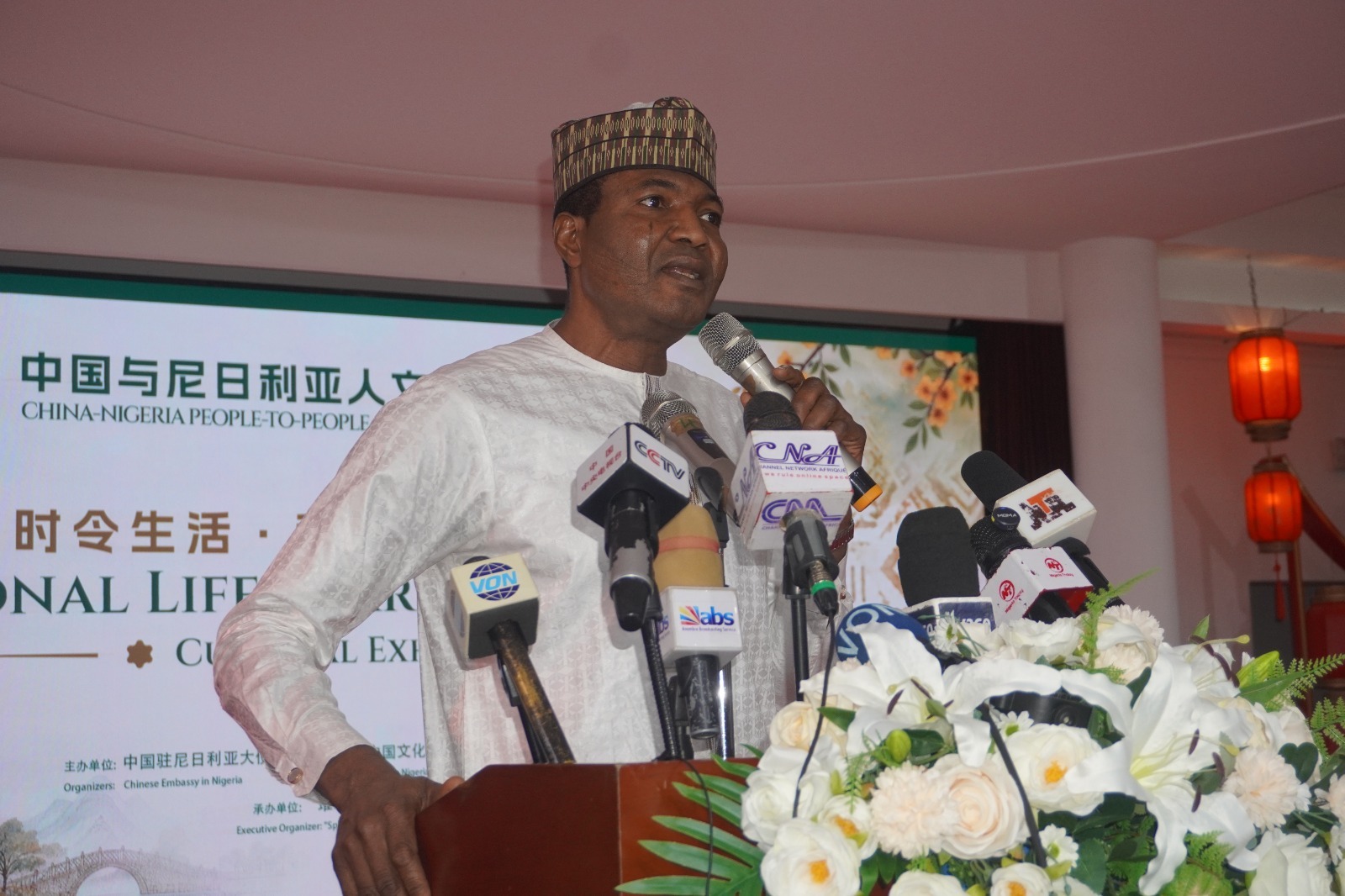
The Director-General of Voice of Nigeria (VON), Mallam Jibrin Baba Ndace, has called for stronger cultural and media cooperation between Nigeria and China, stressing that cultural exchange remains a powerful tool for deepening understanding and friendship between the two countries.
Ndace made the call at the Seasonal Life and Harmonious China Cultural Exhibition organised by the China Cultural Centre in Abuja, Nigeria.
The exhibition, which featured Chinese traditional costumes, music, dance, crafts and other cultural displays, was organised as part of the China-Nigeria people-to-people and cultural exchange series.
READ ALSO: VON DG Promotes Technology-Led Advertising Industry Growth
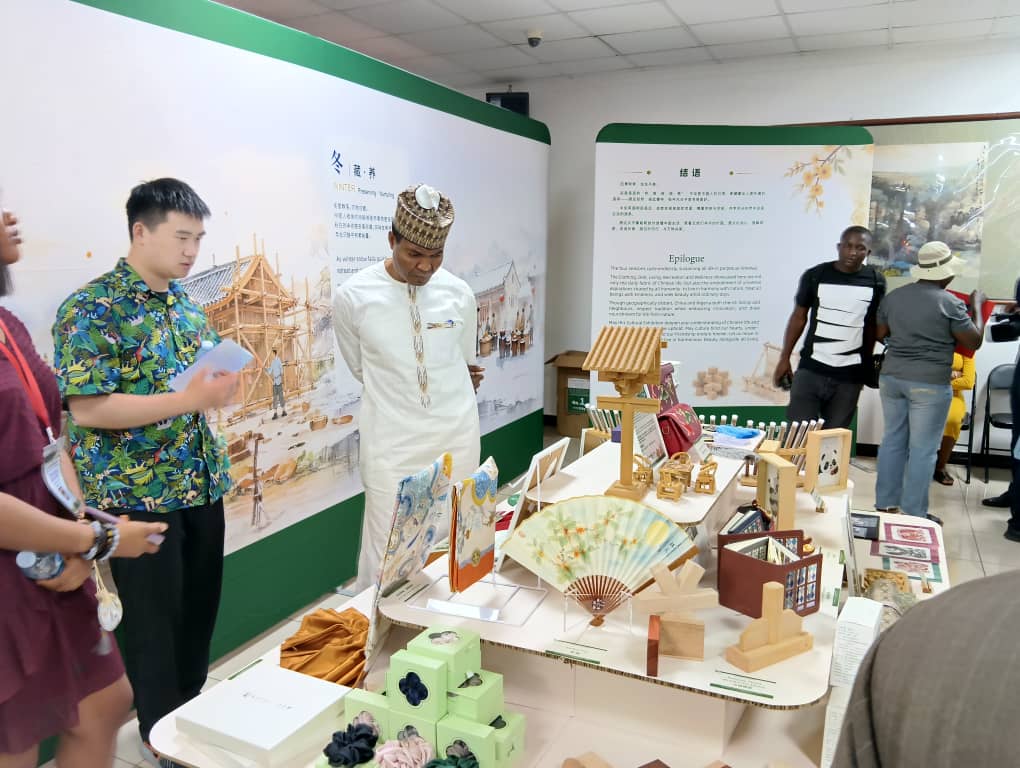
The VON Director-General said the cultural performances at the event demonstrated how nations could embrace development without losing their cultural identity.
“Every performance, every dance, song, costume, display, and the catwalk serve as a poetic rendition of the power of people-to-people connections. It’s an indication of how music and culture can break barriers,” he emphasised.
Ndace urged Nigerians, particularly young people, to learn from the discipline, concentration and dedication displayed by the participants during the event.
“We can become what we want to become by being who we are. We should be proud of being Nigerians,” the DG stated.
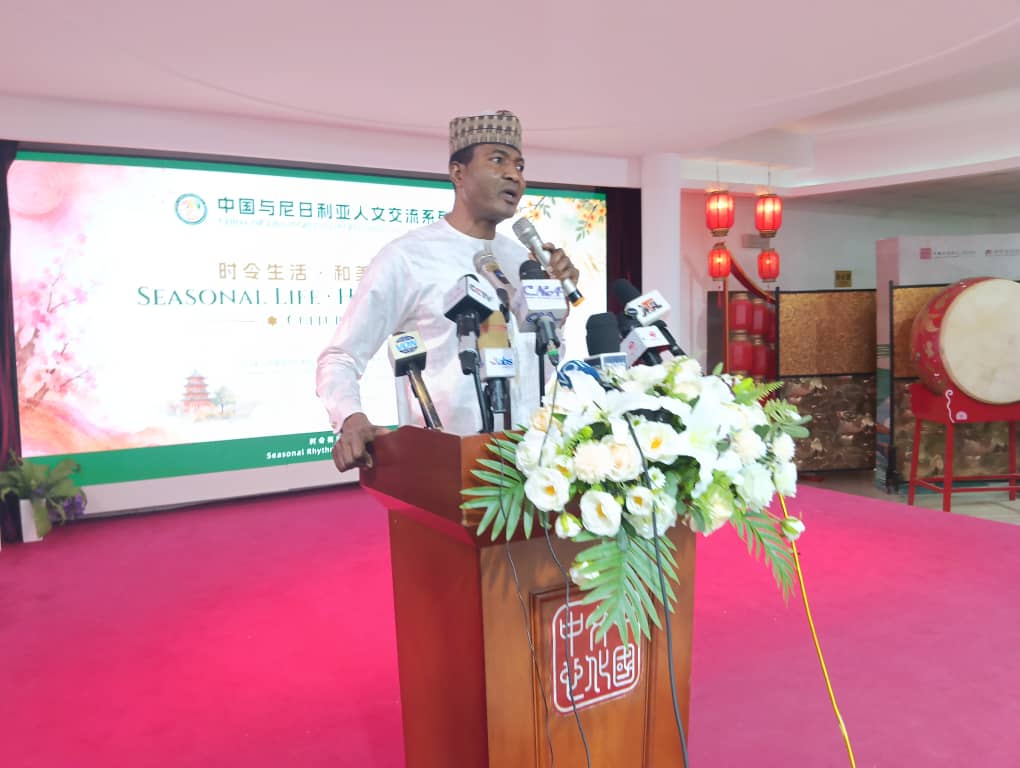
According to him, VON remains committed to using broadcasting and strategic partnerships to promote Nigeria and Africa to the rest of the world while strengthening mutual understanding between Nigeria and China.
“At the Voice of Nigeria, we remain very committed to using this power of broadcasting and partnership to deepen mutual understanding and tell the story that brings our people closer together,” Ndace said.
He disclosed that VON had strengthened its partnership with the Chinese Embassy through a new Memorandum of Agreement that would support broadcasting cooperation.
According to him, the partnership would enable VON to further disseminate information and programmes across different languages, noting that the organisation broadcasts in several Nigerian and international languages.
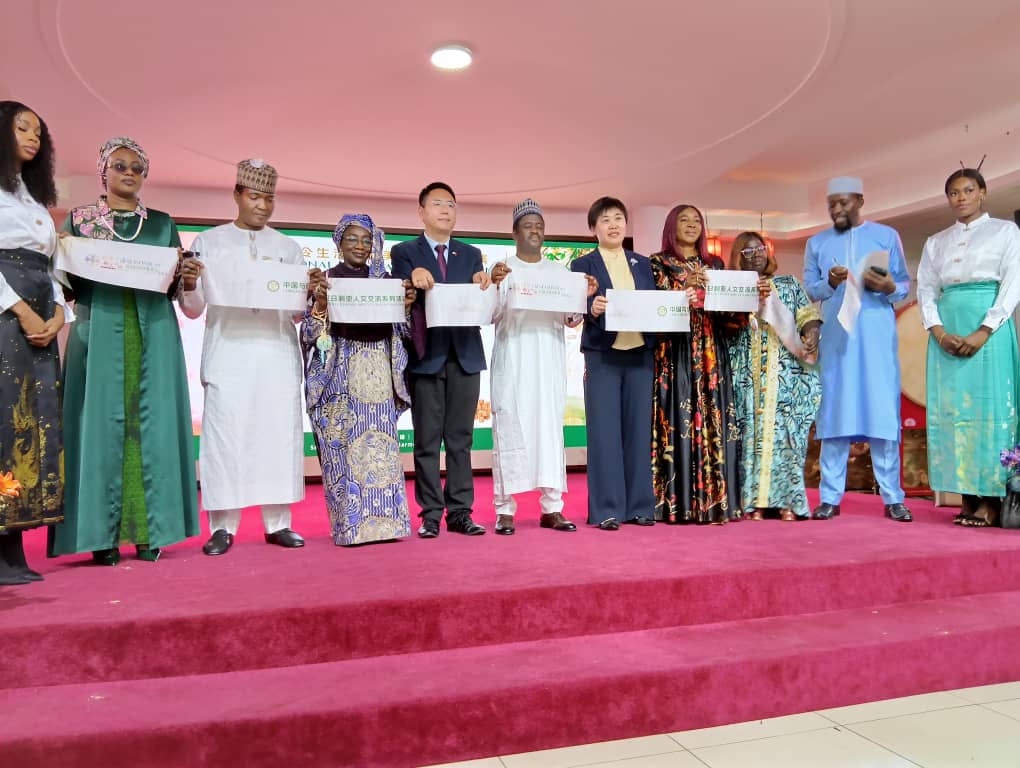
The VON Director-General also recalled the high-level engagements between Nigeria and China, including the Nigerian delegation’s visit to Beijing, saying media cooperation was an important component of the growing bilateral relationship.
Also speaking, the Director of the China Cultural Centre in Nigeria, Yang Jianxing, said cultural exchange was an important bridge for promoting mutual understanding and friendship between the peoples of Nigeria and China.
Yang said the year 2026 was particularly significant as it marks the China-Africa Year of People-to-People Exchanges as well as the 55th anniversary of the establishment of diplomatic relations between Nigeria and China.
“Cultural exchange is a vital component of China-Africa friendly cooperation and serves as an important bridge for fostering mutual understanding and affinity between our peoples, as well as for promoting dialogue and mutual learning among civilisations,” he disclosed.
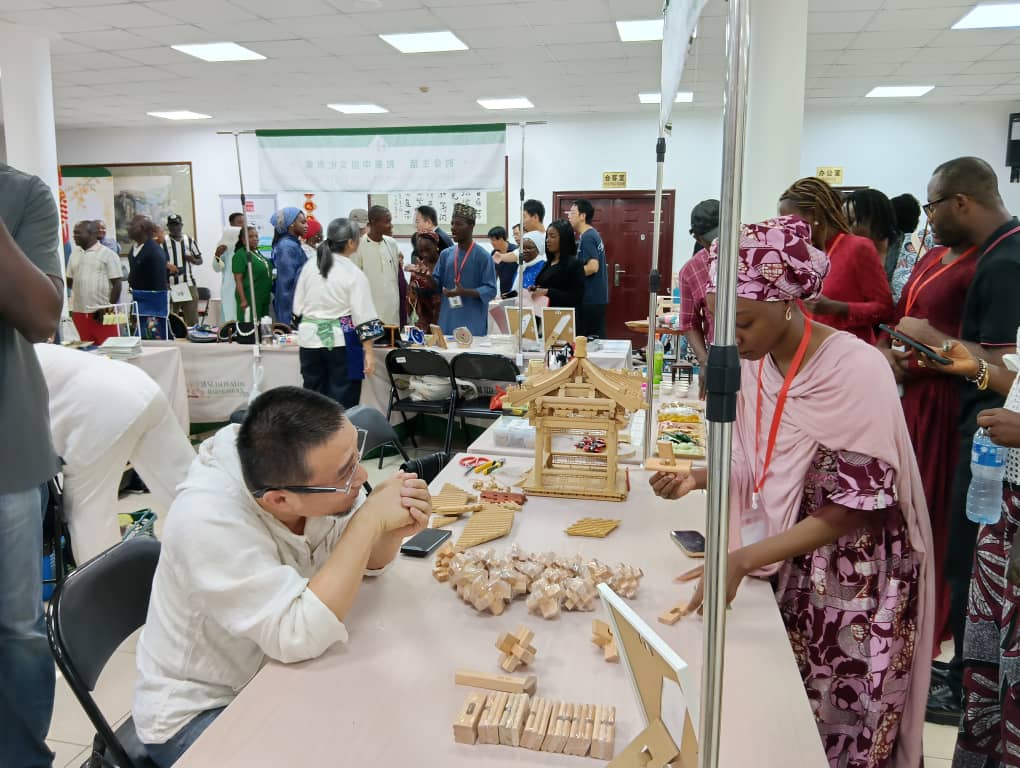
He explained that the Seasonal Life and Harmonious China exhibition was inspired by the traditional Chinese concept of seasonal living and the Twenty-Four Solar Terms.
According to him, the activities were designed to allow Nigerian visitors to experience Chinese culture through traditional food, crafts, costumes and interactive cultural activities.
“The Twenty-Four Solar Terms represent not only the crystallisation of wisdom gained by ancient Chinese people through long-term observation of nature but also an element of Intangible Cultural Heritage recognised by UNESCO,” Yang said.
He noted that the Chinese philosophy of living in harmony with nature had similarities with Nigerian values that emphasise respect for nature, tradition, family and community.
The Permanent Secretary, Federal Ministry of Innovation, Science and Technology, Dr Mukhtar Yawale Muhammed, said the Nigeria-China relationship was increasingly moving beyond trade to include science, technology, agriculture and innovation.
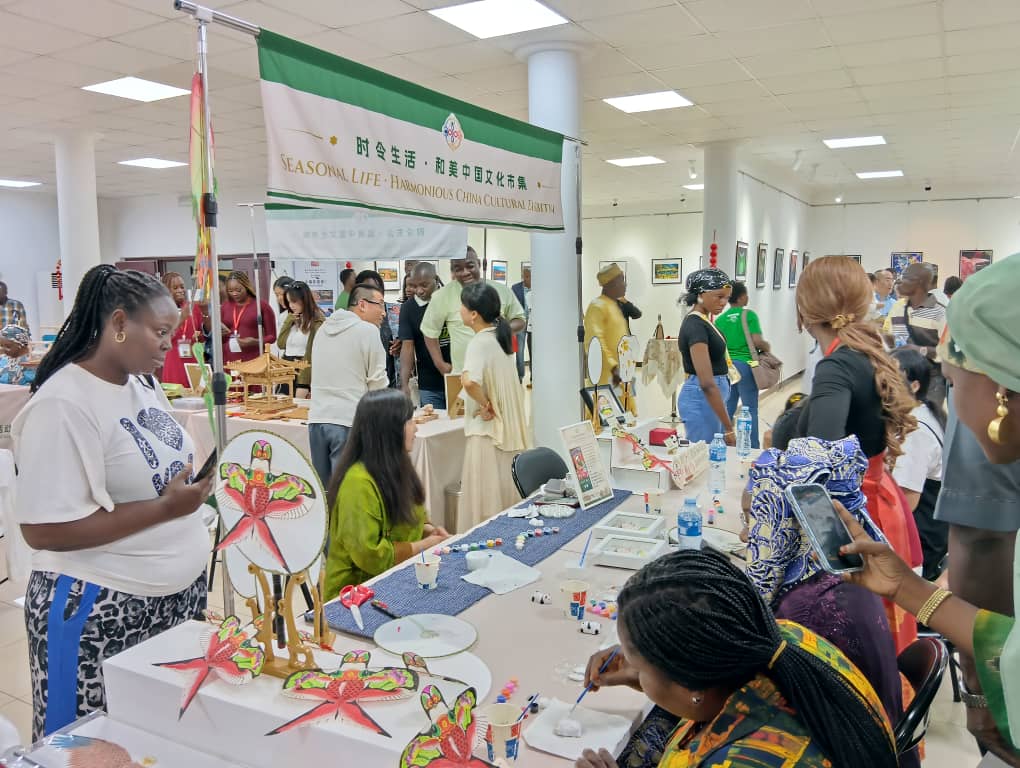
Muhammed, who spoke at the event, said Nigeria could benefit significantly from China’s experience in agricultural technology and sustainable development.
He referred to his recent technical visit to the Yangling High-tech Agricultural Demonstration Zone in Shaanxi Province, China, where he witnessed the application of technology to improve agricultural productivity and conserve water.
“We are witnessing the fruits of a strategic relationship that is moving beyond trade into deep agricultural, technological and scientific transformation.” The Permanent Secretary emphasised.
He also highlighted China’s zero-tariff policy for products from African countries, saying it could provide new opportunities for Nigerian agricultural commodities such as sesame, ginger, cashew nuts and cocoa.
The Permanent Secretary, however, said Nigeria must improve its production standards, packaging and supply chains to take full advantage of the opportunities presented by increased access to the Chinese market.
“To meet the strict quality, packaging and supply chain standards required by the Chinese market, we must deepen our scientific innovation,” he noted.
Muhammed said the Federal Ministry of Innovation, Science and Technology was exploring greater cooperation with Chinese institutions in areas including post-harvest loss reduction, agro-processing, sustainable agriculture, water management and scientific training.
He said the ministry would seek partnerships for the development of affordable solar-powered cold storage facilities, technology transfer for agro-processing and expanded STEM training for Nigerian scientists.
“The Federal Ministry of Innovation, Science and Technology is committed to ensuring that this new season of trade openness is matched by a new season of scientific enlightenment and technological advancement,” Muhammed said.
The exhibition provided participants with opportunities to experience various aspects of Chinese culture while highlighting the role of people-to-people exchanges in strengthening bilateral relations.
The exhibition featured displays and interactive activities designed to give Nigerian visitors a first-hand experience of traditional Chinese culture, while discussions reinforced the growing emphasis on linking cultural diplomacy with practical cooperation in science, technology, agriculture and innovation.