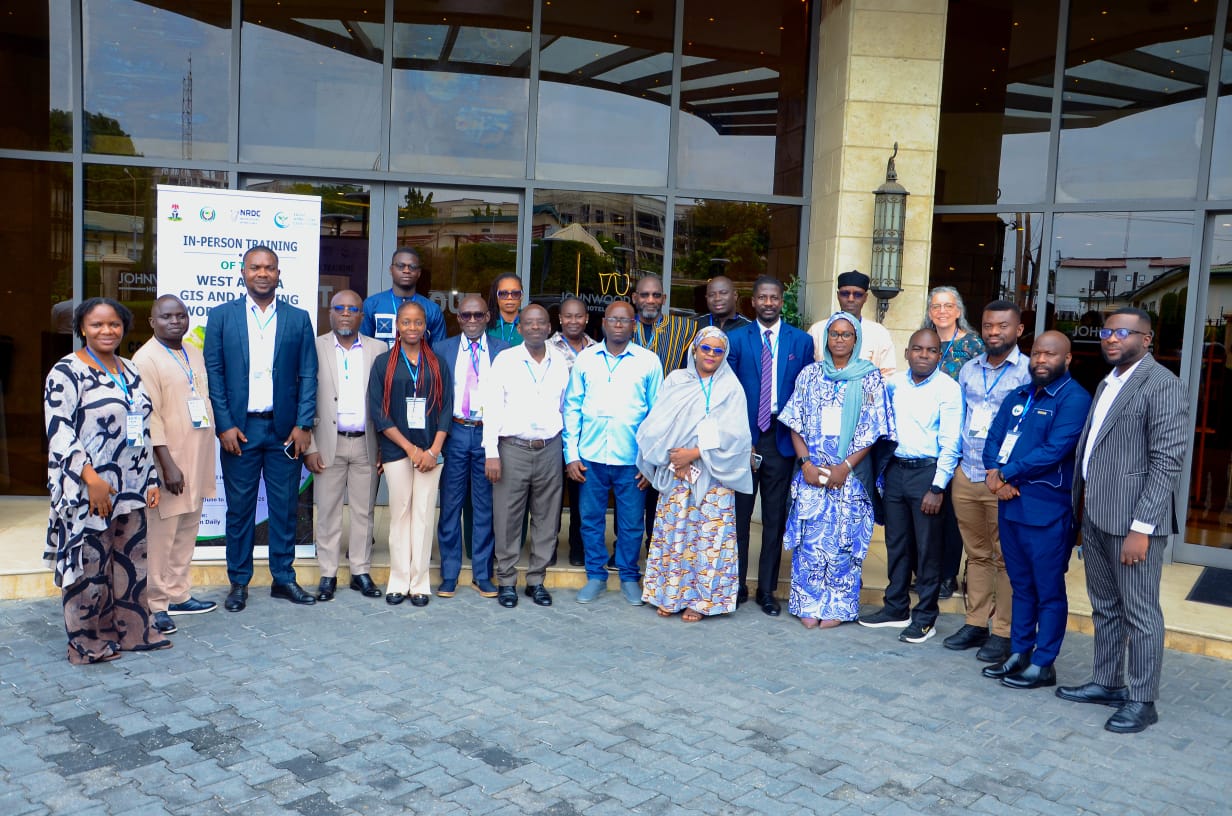
Technical experts from 12 West African countries have converged in Abuja for a major Geographic Information System (GIS) training programme aimed at strengthening the region’s capacity to protect biodiversity and accelerate the implementation of the global “30 by 30” conservation target.
The week-long capacity-building initiative brings together members of the West Africa GIS and Mapping Working Group from Benin, Burkina Faso, Côte d’Ivoire, The Gambia, Ghana, Guinea, Liberia, Niger, Nigeria, Senegal, Sierra Leone and Togo.
Supported by the Natural Resources Defense Council (NRDC) and the High Ambition Coalition for Nature and People, the training is designed to equip participating countries with advanced GIS skills for mapping critical ecosystems, monitoring species richness, identifying priority conservation areas, and supporting evidence-based environmental decision-making across the region.
Speaking at the programme, Nigeria’s representative in the GIS Working Group, Chief Forest Officer and GIS/Remote Sensing Specialist, Mr Ajibola Abayomi, described West Africa as one of the world’s most important biodiversity hotspots, stressing that protecting the region’s ecosystems is essential for environmental sustainability, economic development and climate resilience.
“West Africa is recognised as a global biodiversity hotspot, and our countries therefore have a significant role to play in the successful implementation of the global ’30 by 30′ commitments,” Abayomi said.
He noted that improved geospatial data and mapping would enable experts to provide policymakers with scientific evidence to identify the most suitable locations for new protected areas and restore degraded ecosystems.
According to the organisers, the training marks a significant milestone in developing West Africa’s regional implementation plan for the “30 by 30” target by ensuring that all participating countries possess the technical capacity required to analyse spatial data and coordinate conservation efforts across national borders.
The programme also seeks to strengthen the implementation of the first three targets of the Kunming-Montreal Global Biodiversity Framework (KM-GBF), which focus on biodiversity-inclusive spatial planning, the restoration of degraded ecosystems, and the effective conservation of at least 30 per cent of the world’s land, inland waters, and marine environments by 2030.
Chair of the West Africa GIS and Mapping Working Group, Dr Emmanuel Donkor, Principal Manager of GIS and Mapping at Ghana’s Forestry Commission, described the initiative as a defining moment for biodiversity conservation in the region.
“The importance of this work cannot be overstated. This initiative is fundamental to the long-term future and well-being of the West African region and all its citizens. Now is the time for action, and I am confident that if we work together with determination, we will achieve lasting and meaningful success. Future generations are relying on us,” he said.
Stakeholders also emphasised that achieving the region’s conservation ambitions would depend not only on technical expertise but also on increased international and domestic funding to bridge biodiversity financing gaps and support the implementation of national and regional conservation priorities.
The initiative follows a landmark commitment by ECOWAS member states to develop a regional strategy for conserving at least 30 per cent of West Africa’s terrestrial, freshwater, coastal and marine ecosystems by 2030, in line with the Kunming-Montreal Global Biodiversity Framework.
Experts said the enhanced mapping capacity would enable governments to make informed decisions on the establishment and expansion of protected areas while strengthening regional collaboration on biodiversity conservation.
Environmental experts believe that the successful implementation of the regional conservation strategy will help protect endangered species, preserve ecosystem services, strengthen climate resilience, safeguard livelihoods and promote sustainable economic growth across West Africa.