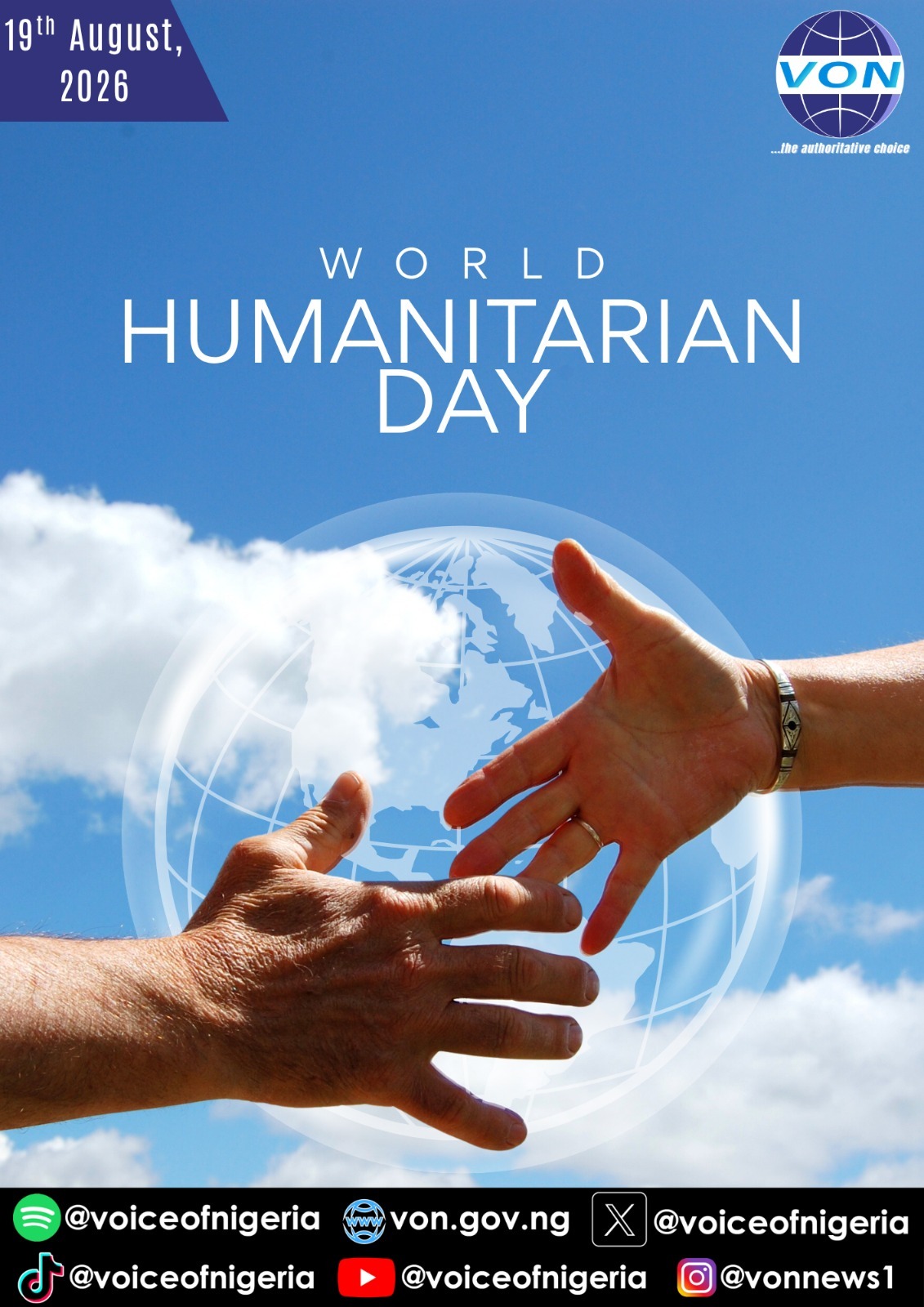
Annually, World Humanitarian Day is dedicated to recognising humanitarian personnel and those who have died working for humanitarian causes.
It was designated by the United Nations General Assembly as part of a Swedish-sponsored General Assembly Resolution on Strengthening of the Coordination of Emergency Assistance of the United Nations.
The day was also designated to increase public awareness of humanitarian assistance activities worldwide and the importance of international cooperation in this regard.
It is an opportunity to honour humanitarian, United Nations and associated personnel who have worked in the promotion of the humanitarian cause, as well as those who have lost their lives in the line of duty.
World Humanitarian Day was designated by the United Nations General Assembly in 2008 to commemorate the 2003 bombing attack on the Canal Hotel in Baghdad, Iraq, which killed 22 humanitarian aid workers, including the UN Special Representative of the Secretary-General for Iraq, Sergio Vieira de Mello.
Each year, World Humanitarian Day focuses on a theme, bringing together partners from across the humanitarian system to advocate for the survival, well-being and dignity of people affected by crises, and for the safety and security of aid workers.
This year, the call is to act early before warning signs become casualty lists. Stop the violence. Stop the obstruction. Investigate every attack. Prosecute those responsible. Support survivors and families.
For the World Health Organization, the day, aside from being an opportunity to honour the memory of colleagues and health workers who lost their lives in the line of duty, is also a day to recognise the dedication of health workers who continue to provide care in some of the world’s most challenging and dangerous environments.
Against this backdrop, the World Health Organization, on this day, also reiterates its call for all parties to conflict to respect and protect health workers, patients, health facilities and medical transport in accordance with international humanitarian law.
Protecting healthcare means protecting lives, ensuring access to essential services and preserving the resilience of health systems when they are needed most.
Recognising the men and women who stand between people in crisis and the worst consequences of that crisis is of paramount importance.
Humanitarian workers operate in conflict zones, displacement camps and communities devastated by floods, drought, disease and hunger, providing food, medicine, shelter and protection.
Across Africa, conflict, displacement, food insecurity and climate-related shocks continue to affect millions.
In the Sahel alone, more than 24 million people are expected to require humanitarian assistance and protection in 2026.
The crises in Sudan, South Sudan, Somalia and the Democratic Republic of Congo further demonstrate the scale of the challenge.
Humanitarian workers are increasingly being attacked, abducted, detained and killed while carrying out work that international law is supposed to protect.
At least 383 aid workers were killed in 2024, making it the deadliest year on record for humanitarian personnel.
When those providing assistance become targets, access to vulnerable communities becomes harder, and the people who need help are placed at even greater risk.
In Nigeria, humanitarian needs are driven by prolonged insecurity, displacement, food insecurity, poverty and natural disasters.
The North-East continues to bear the consequences of years of conflict, while flooding and other emergencies periodically threaten communities across the country.
The United Nations estimates that nearly 35 million Nigerians could face acute food insecurity during the 2026 lean season.
In Borno, Adamawa and Yobe states, about 5.9 million people are projected to experience severe to extreme humanitarian needs.
Behind those figures are families struggling to feed their children, farmers whose livelihoods have been disrupted, and people who have been forced to leave their homes in search of safety.
Nigeria has established institutions and mechanisms to respond to and reduce these challenges.
The Federal Ministry of Humanitarian Affairs and Poverty Reduction is assigned the responsibility of humanitarian policy and coordination, while the National Emergency Management Agency coordinates disaster response and provides relief to affected communities.
Nigerian government agencies also work with the United Nations, international organisations and partners on assistance, recovery and durable solutions for displaced populations.
These efforts matter. But emergency relief cannot be the whole answer.
The real test of humanitarian policy is whether it reduces vulnerability and prevents the same communities from falling back into crisis.
That means investing in early-warning systems and disaster preparedness; strengthening food production, healthcare and resilient infrastructure; improving security; and creating conditions for displaced people to return safely and rebuild their livelihoods.
It also means ensuring that humanitarian programmes are adequately funded and that aid reaches people based on need, without discrimination or political interference.
Globally, governments have an equally important responsibility. Heads of state must work to prevent and resolve conflicts before they become humanitarian catastrophes.
Parties to conflict must respect international humanitarian law and protect civilians and aid workers.
Donor countries must also recognise that humanitarian assistance is not a luxury.
For people trapped by war, disaster or displacement, aid can mean the difference between survival and death.
Yet aid should not become a permanent substitute for peace, good governance and development.
The goal must be resilient societies and governments capable of protecting people before emergencies escalate.
As the world marks World Humanitarian Day under the call to “Act early before warning signs become casualty lists,” nations are being urged to join the commemoration and create awareness to end violations and impunity.