
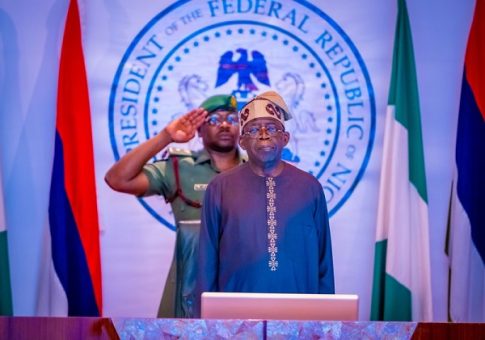
President Bola Tinubu’s administration has intensified dialogue, reconciliation and stakeholder engagement to resolve longstanding national disputes and strengthen national stability, economic recovery and sustainable development over the past three years.
This was asserted in a policy feature written by the State House, Director of Information and Public Relations, Abiodun Oladunjoye, who identified peace-building and conflict resolution as one of the less celebrated pillars of the administration’s reform agenda since President Tinubu assumed office.
Oladunjoye noted that alongside major economic reforms such as fuel subsidy removal, foreign exchange harmonisation, the introduction of NELFUND, the Compressed Natural Gas initiative, workers’ welfare improvements and infrastructure expansion, the administration has also focused on resolving disputes threatening national cohesion and investment growth.
READ ALSO: Nigeria Achieving Fiscal Stability, Investor Confidence — President Tinubu
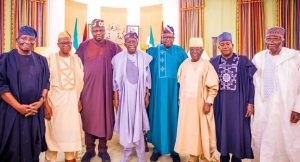
He listed one of the major interventions to include the renewed engagement on the Ogoni crisis in Rivers State, which dates back to the 1990s and led to the suspension of oil exploration activities in the area.
Oladunjoye highlighted that through consultations coordinated by the Office of the National Security Adviser involving community leaders, the Nigerian National Petroleum Company Limited, traditional institutions and security agencies, the government rebuilt trust and established a framework for reconciliation.
He further stated that the submission of the report of the Presidential Committee on Ogoni Consultations chaired by Professor Don Baridam in September 2025 paved the way for renewed peace and the planned resumption of oil exploration activities in Ogoniland.
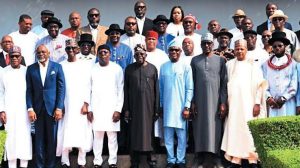
The State House communications director referenced President Tinubu’s engagement with stakeholders and the honouring of notable figures killed during the crisis, including Ken Saro-Wiwa.
Oladunjoye further identified the resolution of the long-running Malabu Oil (OPL 245) dispute as another major achievement of the administration’s conflict resolution efforts.
The settlement he mentioned ended years of legal and political uncertainty surrounding one of Nigeria’s most commercially significant oil assets and is expected to boost investor confidence and increase oil production capacity.
He also articulated the resolution of the over two-decade dispute between the Federal Government and Bi-Courtney Aviation Services Limited over the concession of the Murtala Muhammed Airport Terminal Two in Lagos.
Oladunjoye reviewed that the intervention by the Ministry of Aviation and Aerospace Development helped ease tensions in the aviation sector and reassure investors in Nigeria’s infrastructure concession environment.
Quoting former United States First Lady, Eleanor Roosevelt, that “it isn’t enough to talk about peace, one must work at it,” the Director referenced President Tinubu’s broad-based stakeholders’ engagement in Plateau State involving political, traditional and religious leaders, as well as youth groups, to address recurring ethno-religious and land-related violence in the state
He pointed that rather than imposing solutions, President Tinubu encouraged stakeholders to review previous recommendations and propose workable measures for lasting peace.
According to him, “A stable and peaceful environment remains essential for national prosperity.
“Across the country, the administration has increasingly relied on negotiation, institutional coordination and diplomacy in handling security, commercial and political disputes.
Oladunjoye maintained that the administration’s approach reflects President Tinubu’s conviction that sustainable development can only thrive in an atmosphere of peace, dialogue and national consensus.
He stressed that resolving disputes through engagement remains critical to preserving unity and attracting investment.
“As President Tinubu enters the fourth year of his administration, the sustainability of these gains will depend on continued dialogue, transparency, implementation of agreements and inclusive governance,” he stated.
The Director of Information added that beyond economic reforms and infrastructure expansion, the administration would sustain its emphasis on inclusive consultations, institutional collaboration and stakeholder-driven solutions to strengthen national stability and advance long-term development across the country.

