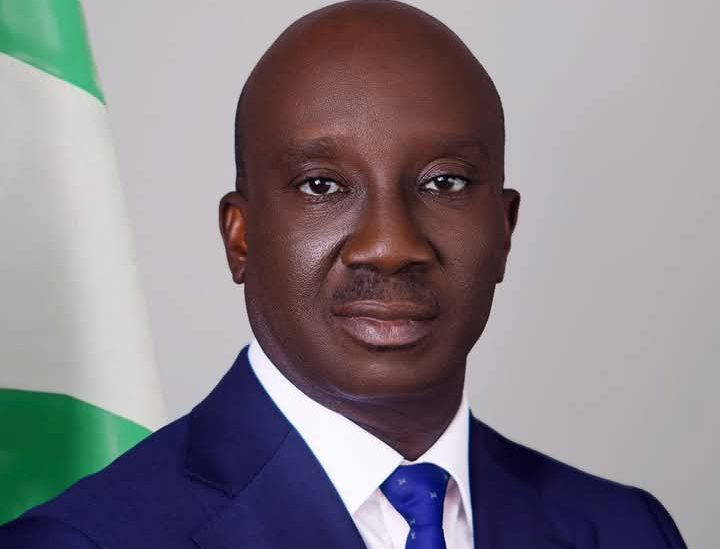
The Edo State Government has launched a roadmap to achieve Universal Health Coverage (UHC) through strengthened primary healthcare services, reaffirming its commitment to increased investment, digital innovation and strategic partnerships.
Governor Monday Okpebholo unveiled the roadmap on Thursday at the Edo SHINE Primary Healthcare Summit 2026 in Benin City.
The summit, themed “Strengthening Primary Healthcare Systems to Accelerate Progress Towards Universal Health Coverage and Improved Health Outcomes,” brought together policymakers, healthcare professionals and development partners to discuss strategies for improving healthcare delivery in the state.
Represented by the Commissioner for Health, Dr Cyril Oshiomhole, the governor described the summit as a call to action and reiterated his administration’s commitment to building a resilient, people-centred healthcare system that provides quality and affordable healthcare services to all residents.
Okpebholo said primary healthcare remains the foundation of Universal Health Coverage, serving as the first point of contact for most citizens through maternal care, child immunisation, disease prevention, early outbreak detection and other essential health services.
He noted that his administration has prioritised investments in healthcare infrastructure, workforce development, disease surveillance, digital health solutions, quality improvement and data-driven decision-making under the SHINE Agenda.
The Governor added that collaboration with development partners, particularly through the World Bank-supported IMPACT Project, has strengthened healthcare infrastructure, improved service delivery and increased public confidence in the state’s health system.
He, however, acknowledged challenges such as workforce shortages, financing gaps, infrastructure deficits and rising healthcare demands, stressing the need for sustained attention and innovative solutions.
Okpebholo called on local governments, traditional and religious institutions, development partners, civil society organisations, the private sector and communities to work together to ensure no community is left behind in the drive towards Universal Health Coverage.
Highlighting Edo State’s growing recognition in healthcare innovation, the governor said Benin City won the $1 million Bloomberg Philanthropies Mayors Challenge in February 2026 after competing against more than 600 cities worldwide.
According to him, the award recognised Edo’s innovative healthcare delivery model, which combines digital health solutions, neighbourhood healthcare kiosks and referral systems to improve access to healthcare and strengthen responses to disease outbreaks, including Lassa fever.
“The innovation demonstrated Edo’s leadership in digital health transformation and has the potential for global replication,” he said.
The governor urged participants to ensure that resolutions reached at the summit translate into practical actions that strengthen the healthcare system and improve health outcomes.
Speaking in his capacity as Commissioner for Health, Oshiomhole described primary healthcare as the backbone of an effective, equitable and resilient health system.
He said strong primary healthcare is critical to disease prevention, health promotion, immunisation, outbreak response and the delivery of quality healthcare services at the community level.
Oshiomhole disclosed that malaria testing and treatment are provided free of charge in all government hospitals across the state, including the Reference Hospital in Abudu.
He commended healthcare workers for their professionalism and dedication while acknowledging persistent challenges such as workforce shortages, financing constraints, infrastructure deficits and changing disease patterns.
The commissioner called for stronger partnerships, innovation and sustained investment to improve healthcare delivery across the state.
Delivering the keynote address, Prof. Andrew Obi described primary healthcare as the cornerstone of Universal Health Coverage.
He said sustained political commitment, strategic leadership and stronger institutions are essential to achieving quality healthcare for all.
Obi revealed that Edo State’s health budget increased from 4.6 per cent in 2016 to 9.6 per cent in 2025, while health insurance coverage rose from three per cent to 31 per cent during the same period.
According to him, 61 primary healthcare facilities have been upgraded, BCG immunisation coverage has exceeded 95 per cent and disease surveillance has improved through the adoption of digital technology.
He identified inadequate financing, shortages of healthcare workers, infrastructure deficits, limited 24-hour services and population growth as major challenges facing the health sector.
Obi recommended increased domestic health financing, expansion of health insurance coverage, accelerated digital health transformation, stronger community participation and sustained investment in healthcare workers to enable the state achieve Universal Health Coverage by 2030.
Excellence awards were presented to Oshiomhole and several local government chairmen in recognition of their contributions to strengthening primary healthcare delivery and advancing healthcare development in Edo State.
NAN