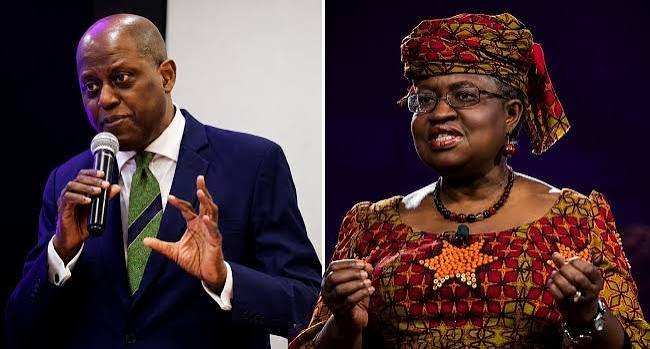
The Governor of the Central Bank of Nigeria (CBN), Mr Olayemi Cardoso, and the Director-General of the World Trade Organisation (WTO), Dr Ngozi Okonjo-Iweala, have urged African countries to leverage the evolving global economic landscape by strengthening regional trade, building resilient institutions and investing in value-added industries.
They made the call at the 7th Africa Emerging Markets Forum held in Abuja, with the theme: “Building Resilience Amidst Geo-economic Uncertainties.”
Speaking at the forum, Cardoso said the global economic order was undergoing profound changes, presenting Africa with both challenges and opportunities.
READ ALSO: CBN to Host 7th Africa Emerging Markets Forum
“The question is no longer whether the global order is changing, but how we turn that change from a source of vulnerability into a source of growth and shared prosperity,” he said.
He identified trade fragmentation, selective global capital flows and the rise of artificial intelligence as the three major trends shaping Africa’s future.
He noted that Africa must strengthen regional value chains through the African Continental Free Trade Area (AfCFTA), mobilise domestic capital and invest in digital infrastructure and AI-ready skills.
“We must produce more of what we consume and trade more with one another,” Cardoso stated.
The CBN Governor also highlighted Nigeria’s recent macroeconomic reforms, saying the country had restored exchange rate transparency, strengthened the foreign exchange market and reinforced financial sector stability.
“Credibility is built intentionally, one right decision after another, and strengthened through consistent action,” he said.
The WTO Director-General, Dr. Ngozi Okonjo-Iweala, urged African countries to move away from exporting raw minerals and instead develop regional value chains that promote industrialisation and job creation.
“Africa holds an estimated 30 percent of the world’s known mineral reserves,” she noted, adding that the continent must embrace value addition rather than continue the “extract and export” model.
“For Africa in particular, instead of the extract-and-export model that has been the source of so much volatility, economic underperformance, corruption, conflict and banditry, the goal should be higher value and higher productivity growth,” she said.
She praised countries including Morocco, Zambia, the Democratic Republic of Congo, Mozambique, Angola and Nigeria for efforts to process critical minerals locally, while stressing the need for greater regional coordination.
Okonjo-Iweala also commended Cardoso and the Central Bank for stabilising Nigeria’s monetary environment.
“I want to commend the Central Bank Governor of Nigeria, Governor Cardoso, on the work that he and his team have done on currency and monetary policy stabilisation,” she said.
However, she emphasised that Nigeria must sustain broader macroeconomic reforms.
“Nigerians have to feel the dividends of reform in the real economy,” she added.
The forum brought together policymakers, business leaders and development partners to discuss strategies for strengthening Africa’s resilience amid growing global economic uncertainty.