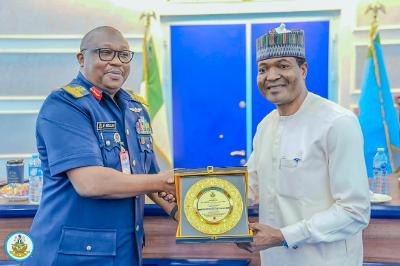
The Director-General of Voice of Nigeria, Mallam Jibrin Ndace has urged Nigerian Air Force, NAF, Public Relations and Information Officers to strengthen strategic relationships with the media, describing credible communication as an essential component of modern military operations.
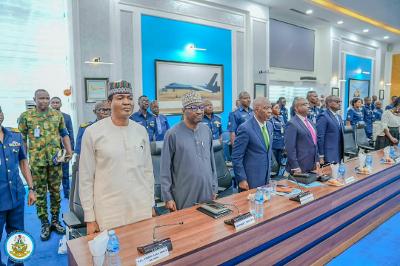
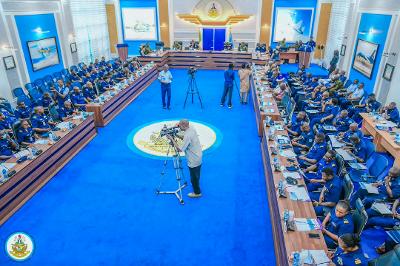
Mallam Ndace made the call while presenting a paper titled “Maintaining Strategic Media Relationship: Best Practices for NAF Public Relations and Information Officers” at the 2026 NAF Directorate of Public Relations and Information Annual Media Workshop and Meeting with Information Officers at the NAF Headquarters, Abuja.
The workshop, themed “Enhancing Strategic Media Operations of NAF Public Relations and Information Personnel Through Capacity Building of Crisis Management Skills,” focused on strengthening the capacity of military information officers to manage crises, counter misinformation and communicate effectively in an increasingly complex information environment.
According to Mallam Ndace, military operations are no longer confined to the physical battle space, as every operation generates narratives across television, radio, social media and international digital platforms.

He said “a successful military operation could be undermined by poor communication, while a minor incident could escalate into a major crisis when official information is delayed or unavailable.”
Media and Military
The VON Director-General cautioned against viewing journalists and the military as natural enemies, saying “disagreements and difficult questions should not automatically translate into hostility.”
He explained that the military and media have different responsibilities that can coexist professionally, with the military protecting national security and providing credible information, while journalists inform the public accurately.
Mallam Ndace cited recent comments by senior Nigerian military officials on the importance of media engagement, arguing that the relationship should be based on professionalism, mutual respect and public interest rather than attempts to control narratives.
He stressed that relationships with journalists should be developed before crises occur.
Mallam Ndace urged NAF information officers to place credibility ahead of publicity, warning that “inaccurate information released under pressure could damage institutional trust.”
He advised officers to communicate what is known, clearly identify what is still being verified and provide updates as facts emerge.
VON DG also called for clearly established communication procedures that identify who verifies information, who authorises statements, who drafts responses and who monitors media coverage.
Lessons
Drawing lessons from previous NAF incidents, Mallam Ndace said crisis communication must include accountability and engagement with affected communities.
He referenced the 2023 accidental airstrike near Rukubi in Nasarawa State, noting that “subsequent engagement with victims and their families demonstrated the importance of listening, transparency and reconciliation.’
Mallam Ndace also cited the investigation into reported civilian casualties following a 2025 air operation in Zamfara, stressing that crisis communication should involve local authorities, traditional leaders, civil society organisations and affected families in addition to journalists.
The VON Director-General further referred to misleading information circulated online following the 2023 MI-171 helicopter crash at Chukuba in Niger State.
He said such incidents demonstrated the need for information officers to understand misinformation, disinformation and malinformation and respond appropriately.
Artificial Intelligence
Mallam Ndace warned that artificial intelligence had created additional challenges for military communication by making it increasingly easy to produce convincing fake photographs, videos, audio recordings and statements.
He said! “every photograph, video or statement released online should be assessed for whether it is accurate, authorised, safe and necessary.”
According to him, the most effective defence against false information remains credible, authoritative and timely communication through trusted official channels.
Communication Framework
Mallam Ndace proposed a five-point framework, known as the 5Cs, for effective crisis communication;
- Clarity: Communicate verified information in language the public can understand.
- Credibility: Never knowingly publish inaccurate information.
- Consistency: Ensure official channels communicate the same verified facts.
- Compassion: Recognise the human consequences of crises.
- Continuity: Continue communicating as facts develop.
He urged NAF formations to prepare for crises before they occur by developing scenarios, training spokespersons, maintaining media contacts and strengthening internal information flows.
During crises, he advised officers to establish facts quickly, activate communication teams, address dangerous misinformation and provide regular updates.
After a crisis, he said officers should review their performance, provide final verified information and rebuild relationships where trust may have been damaged.
Public Trust
The VON Director-General emphasised that the ultimate objective of strategic media relations should not be to win every media argument or control every narrative. Rather, he said the NAF should ensure that Nigerians regard the Service as one of the most credible sources of information about its operations.
Mallam Ndace noted that credible communication could serve as a force multiplier by strengthening public confidence, protecting institutional reputation and supporting military operations.
He added that the relationship between the military and the media was no longer optional but strategic.