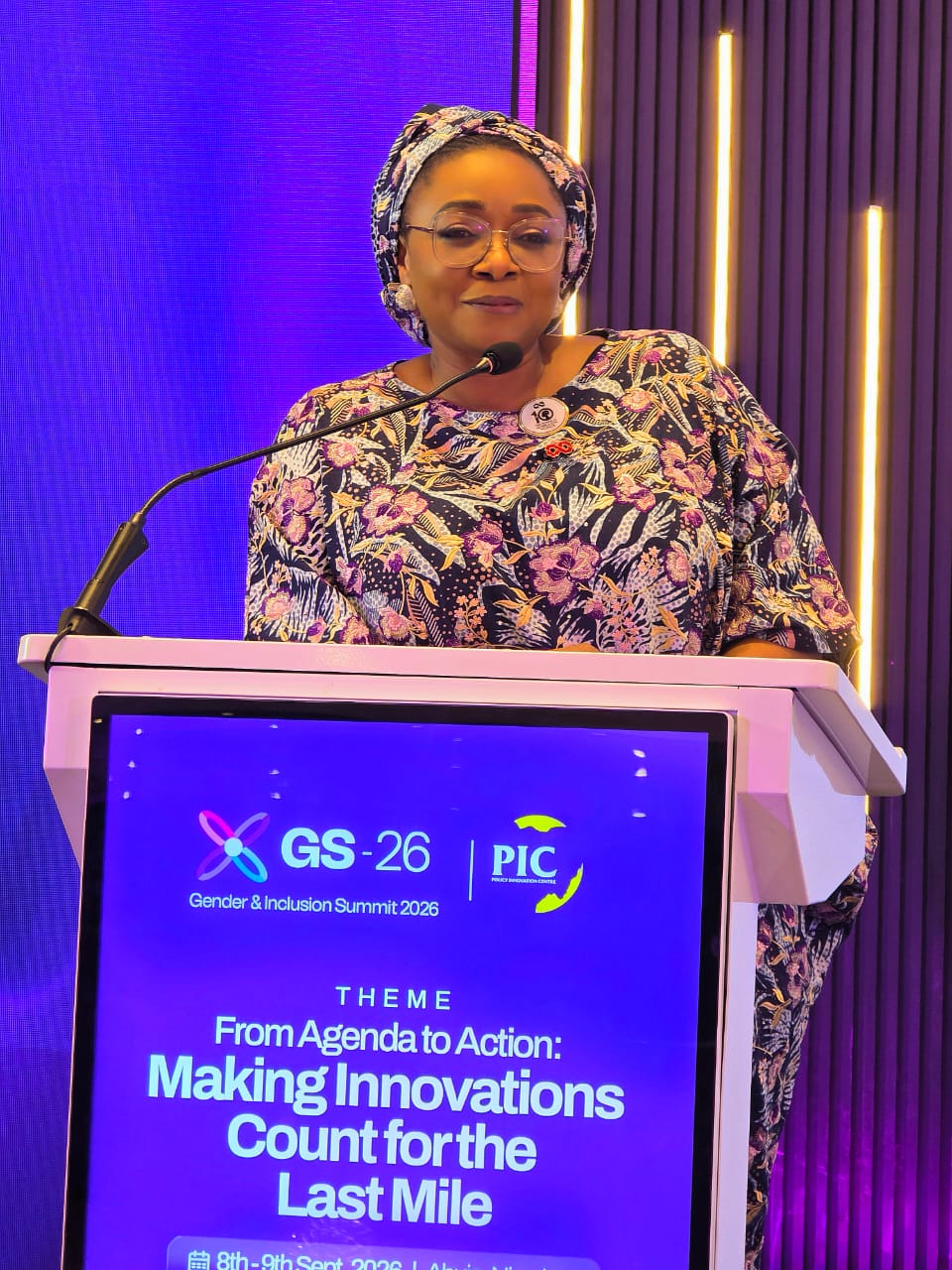
The Minister of Women Affairs and Social Development, Hajiya Imaan Sulaiman-Ibrahim, has called for women to be placed at the centre of Nigeria’s last-mile development strategy.
She made the call while delivering a ministerial keynote address at the Gender and Inclusion Summit 2026, themed “From Agenda to Action: Making Innovations Count for the Last Mile”.
Sulaiman-Ibrahim said sustainable inclusion required moving women from beneficiaries of interventions to owners of productive assets.
She said the effectiveness of government policies and innovations must ultimately be measured by their ability to reach women and other underserved citizens across Nigeria’s 774 Local Government Areas.
“So let me state my central message plainly: we will not reach the last mile unless women stand at the centre of how we get there,” she said.
The minister said the Nigerian government was implementing a range of interventions under President Bola Tinubu’s Renewed Hope Agenda to expand women’s access to energy, finance, productive assets, agriculture, digital opportunities and enterprise development.
READ ALSO:Achi: Inclusion Must Drive Africa’s Economic Growth
She listed PowerHer774, the Renewed Hope Women Agro-Value Expansion Programme, the Women in Nigeria’s Gas Sector Empowerment Project, Women on Wheels, EmpowerHer774, DigitHer774 and HerSafeHaven as initiatives aimed at addressing barriers confronting women at the community level.
“We are no longer only handing women things that finish in a few months; we are now also handing them assets they own,” Sulaiman-Ibrahim said.
She identified the Nigeria for Women Programme Scale-Up, co-financed by the World Bank and state governments, as an example of how economic opportunities could be taken directly to women in their communities.
The programme targets at least five million women across the 36 states and the Federal Capital Territory.
The minister disclosed that the first phase enrolled more than 560,000 women into over 26,000 savings and enterprise groups, which collectively saved nearly N5 billion.
She said the ongoing scale-up had mobilised N2.7 billion in savings and provided more than N2.2 billion in loans.
According to her, the figures demonstrated that women could become significant economic actors when provided with appropriate financial and institutional support.
Sulaiman-Ibrahim also disclosed that 38 national instruments had been developed, reviewed and validated to strengthen implementation in areas including childcare, social protection, gender equality, menstrual health, disability services and protection of survivors of violence.
She said innovation should be judged by its capacity to deliver sustainable results rather than by the novelty of an intervention.
“An intervention is innovative when it solves a real problem better, when it improves access, reduces cost, increases efficiency, strengthens dignity, or produces better outcomes and when those gains can be sustained and taken to scale,” she said.
The Minister urged stakeholders to ensure that innovations move beyond the pilot stage through financing, institutional adoption, measurement and scaling.
She also called for broad stakeholder participation in the development of the National Gender Policy 2027–2032, stressing that implementation must receive equal attention as policy formulation.
“We will carry its recommendations from the page into policy, and from policy into the lives of the people we are privileged to serve,” she added.