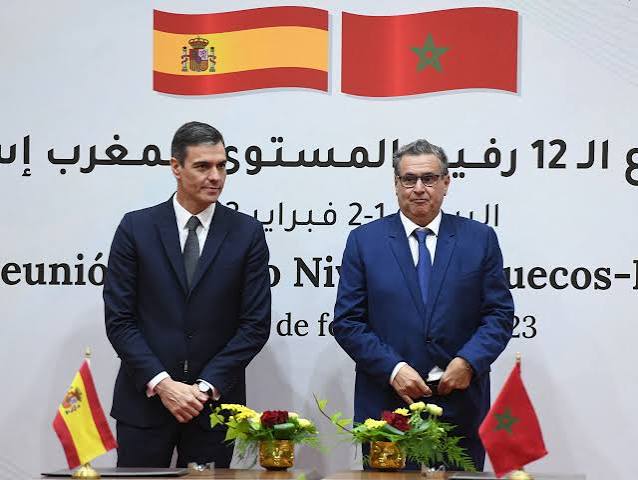
Spain’s King Felipe VI has called for stronger relations with Morocco during a landmark visit to Ceuta, reaffirming Spain’s sovereignty over the North African territory amid continuing tensions over migration and border management.
The king, accompanied by Queen Letizia, said Spain’s sovereignty over Ceuta and Melilla was not negotiable, while emphasising the need for cooperation and good neighbourly relations with Morocco.
The visit was the first by the Spanish monarch to Ceuta since 2007 and came amid strained relations over migration, with the two territories remaining a source of disagreement between Madrid and Rabat.
READ ALSO: Nigeria’s New Ambassador Seeks Stronger Ties With Spain
More than 70,000 migrants reportedly entered Ceuta on July 30 and 31 during an unprecedented influx. Many were returned to Morocco within hours, while others remained in difficult conditions, sleeping on the streets and beaches.
The migration crisis has also fuelled political debate in Spain ahead of a general election scheduled for November 29, with some opposition politicians accusing Morocco of using migration to exert political pressure. Morocco and Spanish Prime Minister Pedro Sánchez have rejected the allegations.
Morocco’s King Mohammed VI has criticised what he described as irresponsible political and media statements exploiting the crisis, insisting that cooperation with Spain should not be subjected to pressure or blackmail.
During the visit, the Spanish royal couple also paid tribute at a cemetery to migrants who died attempting to reach Ceuta, including those who drowned while trying to swim around border barriers.
Ceuta, located on the North African coast, is a key entry point for migrants seeking to reach Europe.
The crisis has renewed concerns about the dangers of irregular migration and the need for safer routes, effective asylum procedures and greater protection for vulnerable migrants.
Despite continuing disagreements over sovereignty and border management, Spain and Morocco maintain cooperation on migration and other bilateral issues.
Africanews