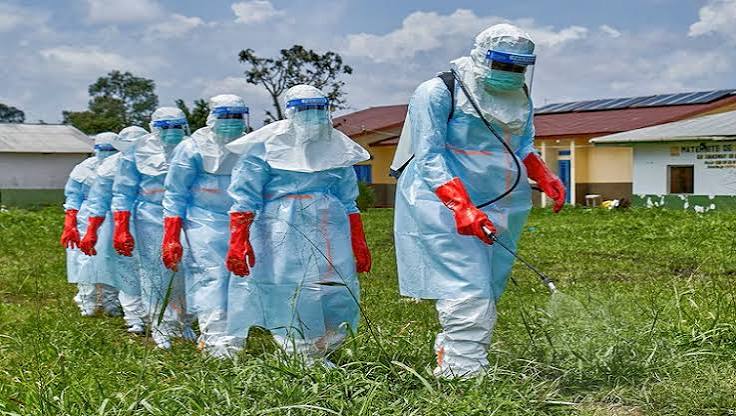
Kenya has confirmed four new cases of the Ebola Bundibugyo virus, including three health workers who treated the country’s first patient, bringing the total number of confirmed infections to seven.
The Ministry of Health announced this on Saturday, adding that the fourth new case involved a male relative of the first patient, who died after arriving in Kenya from the Democratic Republic of the Congo (DRC).
According to the ministry, the relative had been in quarantine since October 6, while the three health workers, two men and a woman aged 29, 35 and 32, respectively, had been quarantined since October 9.
The health workers treated the first patient on October 3 and 4. All four newly confirmed patients developed symptoms while in quarantine and were subsequently diagnosed with the virus.
The ministry said the cases marked the first known instances of local transmission in Kenya, following the arrival of the index patient from the DRC on October 3.
It, however, maintained that the risk to the general public remained low, as there was no evidence of wider community transmission.
READ ALSO: Kenya Confirms No New Ebola Case after 293 Tests
The ministry added that 128 of the 130 identified contacts, representing 98.5 per cent, had been traced and placed in quarantine, while efforts to locate the remaining two contacts were ongoing.
It said the contact-tracing rate exceeded the 85 per cent global benchmark it cited as necessary to help break the chain of transmission.
The ministry also reported that the second and third confirmed patients were stable and responding well to supportive treatment.
Kenya’s outbreak is linked to the Ebola epidemic in the DRC, which has recorded more than 9,000 cases and over 4,000 deaths.
The first patient, a man who had been ill in the DRC for about a month, travelled by road to Uganda before flying to Nairobi on October 3. He died two days later, on October 5.
His journey raised concerns about health screening at the DRC-Uganda border and Nairobi’s Jomo Kenyatta International Airport.
The ministry said there were no restrictions on travel, trade or public gatherings, reiterating that the risk to the general public remained low in the absence of evidence of wider community transmission.
There are currently no approved vaccines or specific treatments for the Bundibugyo strain of the Ebola virus.
Reuters