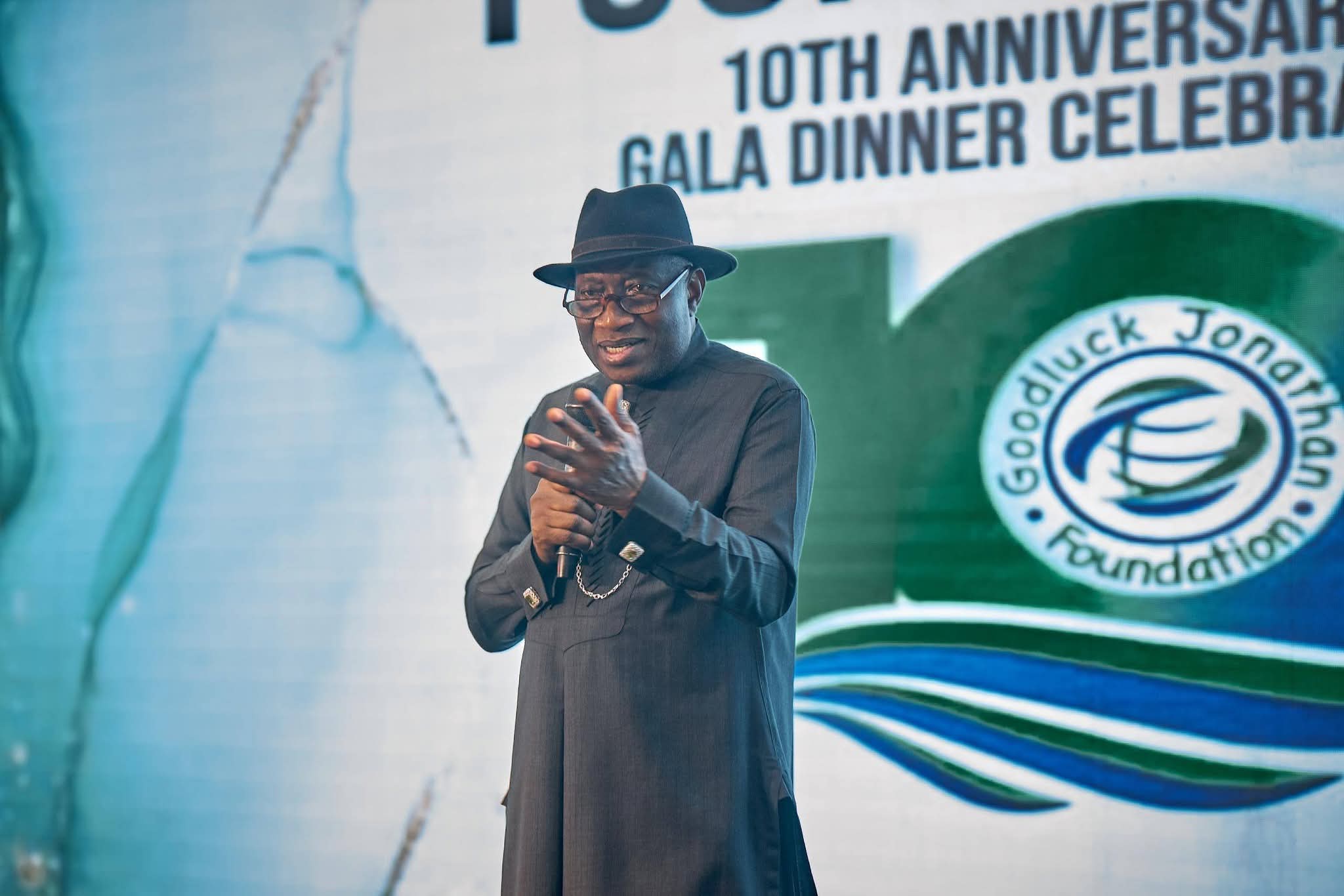
The Goodluck Jonathan Foundation is ready to host the 2026 edition of its flagship Democracy Dialogue which will take place on Tuesday, the 11th of August 2026, at the International Conference Centre, Bauchi State, Northern, Nigeria.
The dialogue will examine the role of political parties and the judiciary in safeguarding democracy across Africa.
According to a statement issued by the Goodluck Jonathan Foundation (GJF) Foundation’s Communications Officer, Mr. Wealth Dickson Ominabo, the Dialogue is themed ‘Beyond Elections‘: Can Political Parties and the Judiciary Save African Democracy?’.
The event would convene distinguished African leaders, eminent jurists, scholars, political actors, policymakers, civil society leaders and democracy advocates to examine the institutions that sustain democracy beyond the electoral process.
The invited African political leaders, eminent jurists and democracy advocates, including the President of Ghana, John Dramani Mahama; Nigeria’s Vice President, Senator Kashim Shettima; former Nigerian President, Chief Olusegun Obasanjo; and former Sierra Leonean President, Dr. Ernest Bai Koroma, are expected to attend the 2026 Goodluck Jonathan Foundation (GJF) Democracy Dialogue, which will hold in Bauchi State, Northern, Nigeria.
Former President Chief Olusegun Obasanjo will chair the Dialogue, while President John Dramani Mahama and Vice President Kashim Shettima will serve as the Special Guest of Honour and Guest of Honour, respectively.
The Chairman and Founder of the Goodluck Jonathan Foundation, Dr. Goodluck Ebele Jonathan, and the Governor of Bauchi State, Senator Bala Abdulkadir Mohammed, will host the event.
The Royal Father of the Day is His Royal Highness Alhaji (Dr.) Rilwanu Suleiman Adamu, Emir of Bauchi and Chairman of the Bauchi State Council of Emirs and Traditional Rulers.
Other distinguished participants will include former supreme court justice Amina Augie, Chairman of the National Democratic Congress (NDC) of Ghana, Johnson Asiedu Nketia, while renowned University of Kenyan scholar and board member, African leadership Centre, Kings College London, Professor Karuti Kanyinga will deliver the keynote address.
Mr. Wealth Dickson Ominabo, noted that the choice of Bauchi State, the home of Sir Abubakar Tafawa Balewa, Nigeria’s first and only Prime Minister, as the venue underscores the state’s historic significance in Nigeria’s democratic evolution.
Speaking on the significance of the year’s theme, the Executive Director of the Foundation, Ms. Ann Iyonu, observed that political parties and the judiciary across the continent are increasingly challenged in fulfilling their responsibilities as pillars of democratic governance.
She stressed that the Dialogue would “interrogate how these critical institutions can be renewed to strengthen democratic resilience, protect constitutional order and restore citizens’ confidence in governance.”
A major highlight of this year’s Dialogue will be a Fireside Chat featuring political leaders and senior jurists who have navigated the complexities of governance, democratic transitions and constitutional leadership.
The interactive session will provide a rare opportunity for candid conversations between experienced statesmen, young leaders, scholars and civic actors, generating practical insights that extend beyond formal speeches and official communiqués.
Iyonu further explained that, unlike conventional governance conferences, “the Goodluck Jonathan Foundation Democracy Dialogue is designed as a platform for consensus-building, policy engagement and knowledge exchange. By bringing together those who have led African nations, managed democratic transitions and defended constitutional institutions alongside serving leaders and citizens, the Dialogue seeks to foster practical solutions for strengthening democracy across the continent.”
She said that this vision reflects the enduring belief of former President Jonathan, who has consistently maintained that “democracy is a communal asset that brings peace and progress. It requires collective action and consensus-building by all stakeholders to safeguard it.”
The Foundation believes that Africa’s democratic renewal will be driven not only by credible elections but also by strong institutions, active citizenship and sustained dialogue that promotes accountability, transparency and good governance.