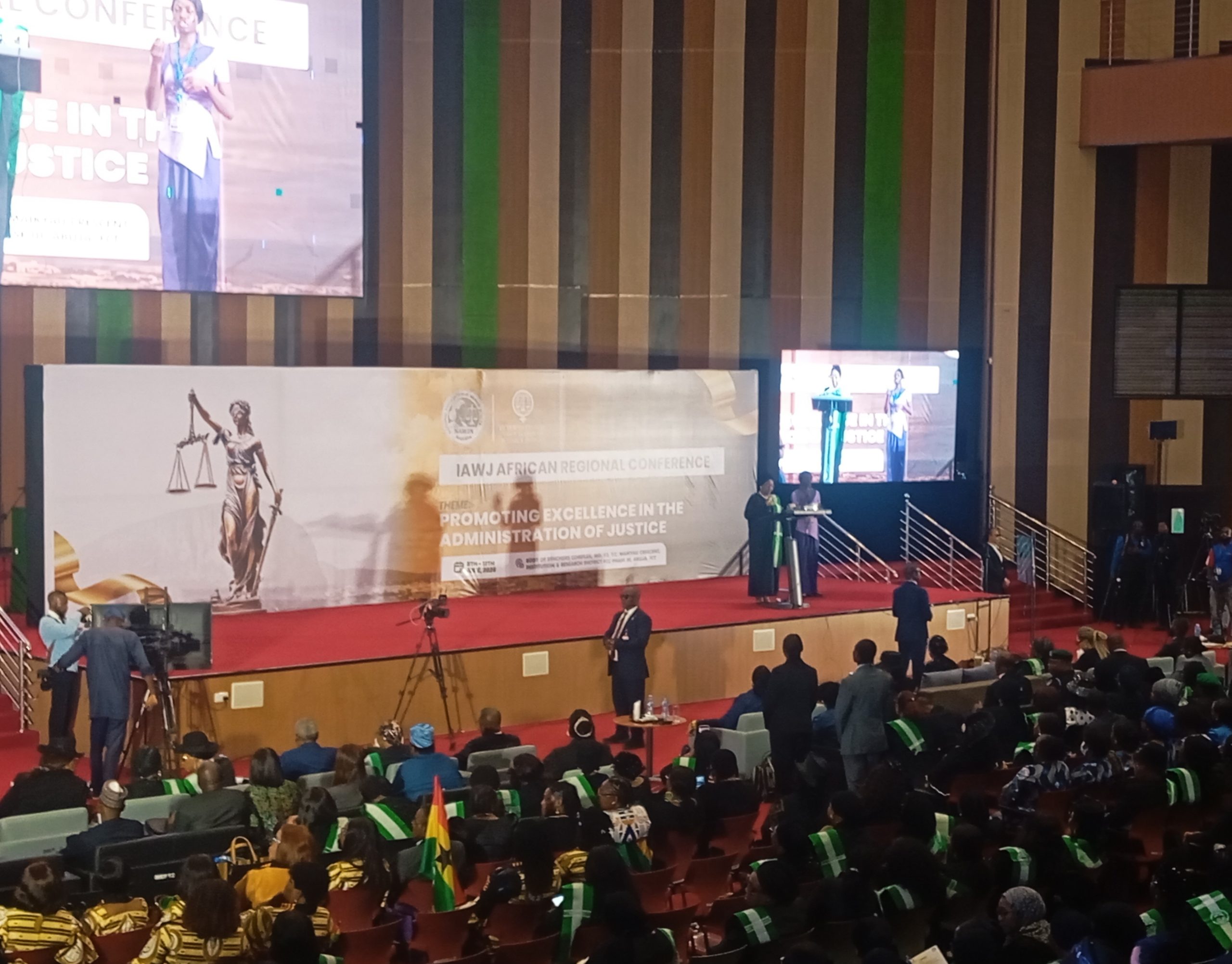
The Chief Justice of Nigeria, Justice Kudirat Kekere-Ekun has called for greater investment in Africa’s justice systems, stronger judicial excellence and increased gender inclusion.
Justice Kekere-Edund said public confidence in the judiciary is essential to safeguarding democracy, the rule of law and good governance across the continent.
Speaking at the opening of the International Association of Women Judges, IAWJ, African Regional Conference in Abuja, Justice Kekere-Ekun joined senior judicial leaders from across Africa in urging reforms aimed at strengthening courts, improving access to justice and enhancing the representation of women in judicial leadership.
The conference, themed “Promoting Excellence in the Administration of Justice,” brought together women judges and justice sector leaders from Kenya, Ghana, South Africa, Côte d’Ivoire, the Democratic Republic of Congo and Nigeria, alongside government officials and legal professionals.
In her keynote address, Kekere-Ekun described the administration of justice as the foundation of democratic governance and societal stability, stressing that the strength of the rule of law depends largely on public trust in judicial institutions.
READ ALSO: CJN Urges Courts to Advance Women, Peace, Security Agenda
“The judiciary occupies a unique position within democratic governance. Unlike the Executive, it commands no army. Unlike the legislature, it controls no public purse. Yet its authority derives from something far more enduring, and that is the confidence of the people in its impartiality, integrity, and fidelity to the law,” she said.
She argued that judicial excellence should not be measured solely by the speed of case resolution but by the quality of judicial reasoning, the integrity of judges, fairness in legal processes, and public confidence in the courts.
“Excellence is ultimately reflected in the ability of the judiciary to uphold the Constitution, protect the vulnerable, preserve the rule of law, and dispense justice without fear, favour, affection or ill will,” she stated.
Technological Innovation
Kekere-Ekun said judicial systems must embrace efficiency, transparency, accountability, and ethical standards while leveraging technology and continuous professional education to improve performance.
However, she cautioned that technological innovation should complement, not replace, judicial wisdom and human judgment.
Mentorship
She also underscored the importance of mentorship and leadership development to prepare the next generation of judges.
Addressing the conference, Kenya’s Chief Justice and President of the Supreme Court, Martha Koome, represented by Supreme Court Judge Justice Njoki Ndungu, called for stronger international representation of African women judges in global courts and tribunals, including the International Criminal Court, ICC.
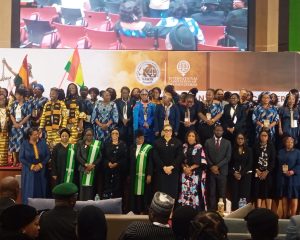
She noted that women judges across Africa are increasingly shaping jurisprudence and leading judicial institutions.
She urged governments to support qualified candidates seeking international judicial appointments.
“A generation of women judges are mentoring others, shaping jurisprudence, and leading institutions,” she said, noting that Kenya has already nominated a candidate for the ICC and stands ready to support other African contenders for international judicial positions.
Regional Judicial Cooperation
Koome also advocated stronger regional judicial cooperation and expanded use of alternative dispute resolution mechanisms to improve access to justice.
Nigeria’s First Lady, Oluremi Tinubu, said women judges play a vital role in broadening perspectives within the judiciary and strengthening justice delivery.
She praised African women jurists for breaking barriers and creating opportunities for future generations while stressing that judicial systems must remain transparent, compassionate, and firmly rooted in the rule of law to retain public confidence.
Representing Nigeria’s Attorney-General and Minister of Justice, Lateef Fagbemi, the Solicitor-General, Beatrice Jedy-Agba said women judges are no longer merely participants in jurisprudence but are actively shaping legal thought and institutional development across Africa.
She described judicial excellence as fundamental to democracy, human rights protection and sustainable development, while acknowledging that many women in the justice sector continue to face systemic barriers, including gender discrimination, economic hardship and cultural stereotypes.
“African women aspiring to enter and excel in the justice sector still face systemic gender biases and economic hardships,” she said.
Jedy-Agba called for bold reforms to deepen access to justice and strengthen legal institutions across the continent.
Promoting Judicial Excellence
Nigeria’s President of the Court of Appeal and President of the National Association of Women Judges Nigeria, Justice Monica Dongban-Mensem, said the conference would explore practical solutions to challenges facing justice systems across Africa through panel discussions and collaborative engagements aimed at promoting judicial excellence and reinforcing trust in the courts.
The IAWJ President, Mina Sougrati who was represented by Justice Binta Nyako said the gathering provides a platform for African women judges to share experiences, strengthen professional networks and exchange ideas on advancing justice, protecting human rights and promoting gender equality.
She noted that the work of women judges continues to strengthen public confidence in the judiciary and improve access to justice for women, children, and vulnerable communities.
The conference, which runs until June 12, is expected to feature technical sessions on judicial principles, gender inclusion in judicial leadership, access to justice and the role of the judiciary as a catalyst for social change.