The Nigerian Government has called for urgent and concrete measures to end xenophobic and Afrophobic attacks against Africans in South Africa, urging stronger migration governance, responsible leadership and deeper people-to-people relations across the continent.
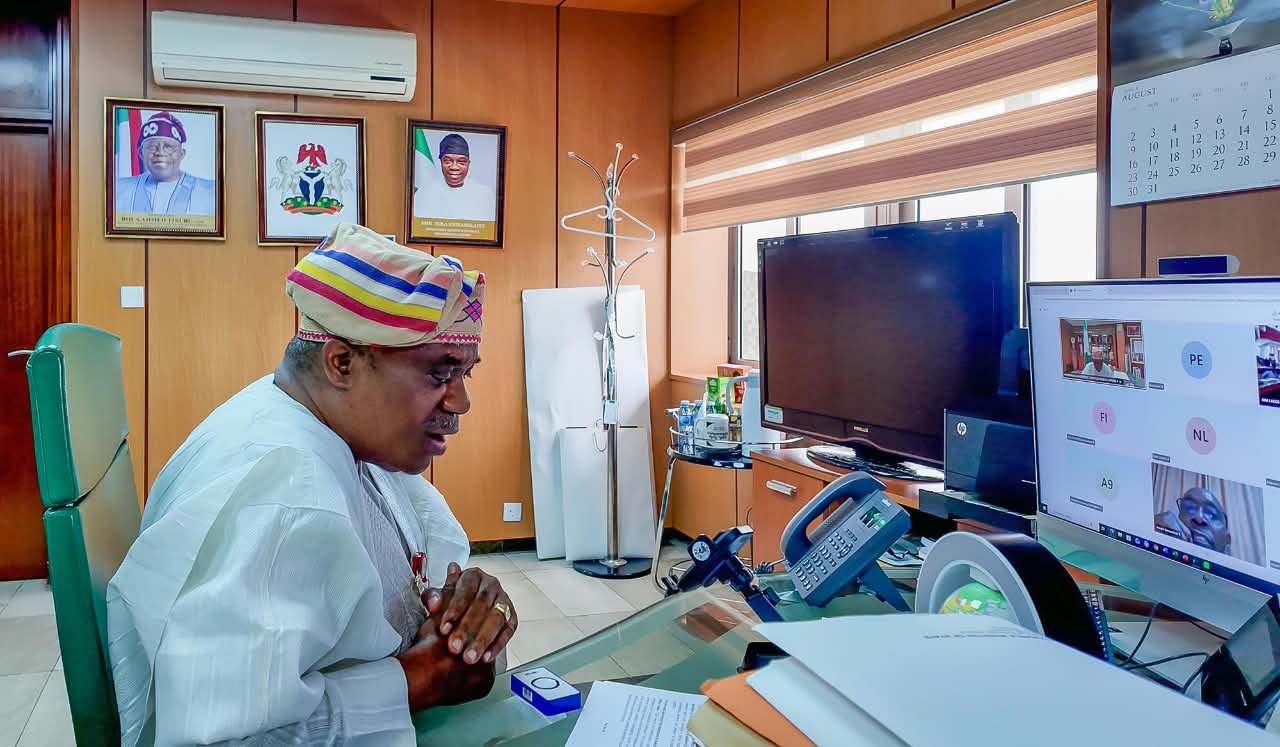
The Minister of State for Foreign Affairs, Ambassador Sola Enikanolaiye, made the call at a virtual roundtable on “South Africa’s Xenophobia in Comparative Perspective”, convened by the Nigerian Institute of International Affairs (NIIA).
In a statement by the Spokesperson of the Ministry, Kimiebi Ebienfa, Enikanolaiye said Nigeria viewed the situation as a challenge that must be addressed without denial or exaggeration.
READ ALSO: Afrophobic Attacks: Nigeria Prioritises Diplomacy
He described the violence as having a “particularly African, post-colonial and post-apartheid character,” making the term Afrophobia more appropriate.
The Minister expressed concern over the targeting of citizens from countries that supported South Africa during its anti-apartheid struggle as “unwanted outsiders” decades later.
He disclosed that the Ministry of Foreign Affairs had directed the NIIA to undertake a comprehensive study documenting Nigeria’s contribution to South Africa’s liberation struggle.
Enikanolaiye said Nigeria’s financial commitment to the struggle was estimated at more than $60 billion, apart from the nationalisation of British Petroleum, scholarships provided to South Africans and the hospitality extended to South African leaders in Nigeria.
“The relationship between Nigeria and South Africa is not reducible to trade statistics or diplomatic communiqués. There is history in that relationship. There is blood, sacrifice and solidarity in that history,” he said.
The Minister expressed concern over the loss of Nigerian lives, stating that about 90 Nigerians had been killed in Afrophobic violence since June 2022, with fresh attacks and displacement reported in 2026.
He said the continued violence risked damaging South Africa’s international reputation, weakening investor confidence, undermining regional integration and eroding the moral authority it earned during the liberation struggle.
To address the crisis, Enikanolaiye urged South African authorities to strengthen transparent and humane migration systems while ensuring that enforcement of immigration laws remained the responsibility of the state.
He cautioned against vigilantism and urged political leaders to moderate their rhetoric, warning that descriptions of migrants as “criminals” or “job thieves” could create an atmosphere conducive to violence.
The Minister also called for public discourse based on facts and reliable data rather than misinformation and social media rumours.
He said Nigeria was calling for the full activation of existing Nigeria-South Africa early-warning and rapid-response mechanisms to identify and defuse tensions before they escalated.
Beyond government intervention, Enikanolaiye stressed the importance of people-to-people diplomacy, urging businesses, universities, religious and traditional institutions, youth groups, civil society organisations and the media to play greater roles in rebuilding trust and promoting a shared African identity.
He announced that Nigeria, in collaboration with Ghana, would present the issue at the next session of the African Union Assembly of Heads of State and Government.
While acknowledging South Africa’s willingness to examine the “push and pull factors” behind migration, the Minister maintained that priority attention must be given to hate-driven violence and attacks causing distress among African nationals.
He said Africa needed more than tolerance, stressing the importance of building a continent where Nigerians in Johannesburg and South Africans in Lagos were regarded first as Africans and treated with equal dignity.
Enikanolaiye also reaffirmed President Bola Ahmed Tinubu’s commitment to the welfare and protection of Nigerians abroad, citing the President’s direct intervention in the recent repatriation of Nigerians from South Africa.
He commended Nigeria’s Heads of Mission in Pretoria and Johannesburg, as well as other stakeholders, for ensuring that the repatriation exercise was carried out promptly.
The Minister reaffirmed the Federal Government’s resolve to work with South Africa, the African Union, ECOWAS and other partners to ensure that the ideals of African integration were matched by unity and solidarity in practice.