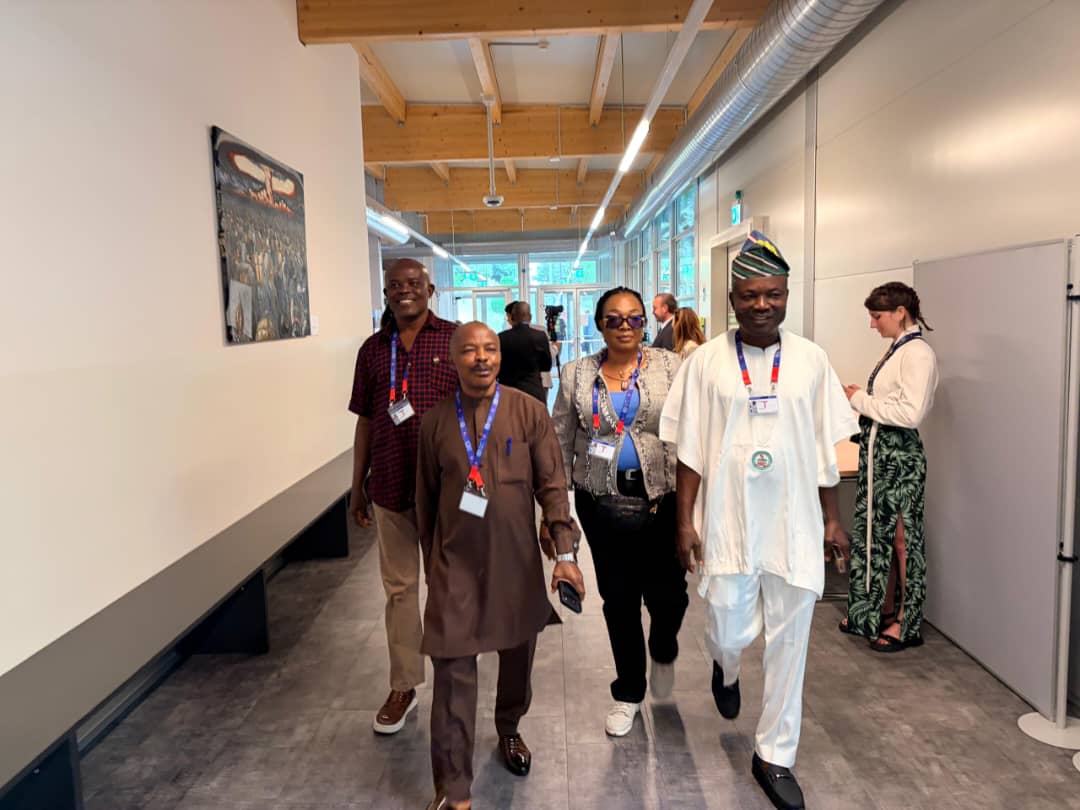
The President of the Radio, Television and Theatre Workers’ Union of Nigeria (RATTAWU), Comrade Emeka Kalu, has said that artificial intelligence (AI) poses no threat to workers, noting that continuous training and upskilling have adequately prepared workers to adapt to emerging technologies.
Kalu stated this in an interview with Voice of Nigeria on the sidelines of the ongoing 114th Session of the International Labour Conference (ILC) in Geneva, Switzerland.
According to him, workers in the media and cultural sectors have consistently adapted to technological changes and are well-positioned to leverage AI to improve productivity and efficiency.
“There is no threat that AI poses because individuals are the ones who drive whatever happens in AI. For us, we will continue to train our people and ensure that we remain on top of it,” he said.
The RATTAWU President noted that workers in the broadcasting and creative industries have always been at the forefront of technological innovation and are prepared to seize the opportunities presented by AI.
According to him, broadcasters embraced digital transformation long before many other sectors and have continued to update their skills and tools in response to changing industry demands.
“We in the broadcasting industry are miles ahead of others. Before many people started going digital, we had already been digitised.
“We do not wait for government before training our members,” he emphasised.
Kalu described AI as a tool that would support and simplify work processes rather than replace workers, provided users acquire the necessary skills to utilise it effectively.
“AI is not a threat to any RATTAWU member. We are abreast of it. We understand it and we embrace it because it assists what we do and makes our work easier,” he stated.
Speaking at the conference, Kalu said the 114th Session of the ILC had provided fresh insights into emerging workplace issues, including decent work, technological transformation, collective bargaining and workers’ rights.
He noted that discussions at the conference had reinforced the importance of sustained collective bargaining and the right of workers to organise and belong to trade unions.
“This particular session has given credence to the sustained collective bargaining that we have and has also reinforced the right of workers to unionise under our umbrella,” he said.
The RATTAWU President further disclosed that the union had prioritised strategic partnerships and continuous capacity building to ensure its members remain competitive in a rapidly evolving work environment.
On workers’ welfare, Kalu reiterated the union’s commitment to securing improved remuneration and better working conditions for media and cultural workers across the country.
He expressed optimism that the proposed special salary structure and welfare package for media and cultural workers, earlier announced by the Minister of Information and National Orientation, would receive the necessary government approval.
“The Minister of Information and National Orientation has publicly acknowledged ongoing efforts towards improving welfare packages for workers in the sector.
“The Minister made it clear that there is a package for RATTAWU members awaiting approval. We came prepared and remain committed to pursuing it,” he said.
Kalu also revealed that housing schemes and other welfare initiatives form part of his administration’s agenda to improve the wellbeing of union members nationwide.

He said his leadership emerged with a clear mandate and a 12-point agenda focused on protecting the professional and economic interests of media and cultural workers.
“I came prepared. It is my duty to defend and protect the legitimate professional rights of my members. Housing for RATTAWU members is one of the initiatives I am already working on,” he said.
Kalu stressed that participation in the International Labour Conference remains important for labour leaders, as it provides opportunities to understand global labour policies, trends and developments.
He added that the knowledge gained from the conference would strengthen labour advocacy efforts and enable unions to engage more effectively with employers and governments.