
The All Progressives Congress (APC) Professionals Forum has proposed an integrated five-port maritime and logistics corridor connecting major deep-sea ports in Lagos, Ondo, Ibom, Port Harcourt and Calabar through modern road and rail networks.
The APC National Chairman, Prof. Nentawe Yilwatda, said the proposed network would connect Nigeria’s maritime gateways with major cities, production centres and landlocked markets across the region, including Niger, Chad, Burkina Faso, Sudan and the Central African Republic.
Yilwatda, who represented President Bola Tinubu at the second edition of the Asiwaju Scorecard Series and Policy Roundtable in Abuja, said the initiative would help transform Nigeria into the maritime gateway and logistics hub of West and Central Africa.
He said the infrastructure would stimulate logistics, warehousing, manufacturing, agro-processing, banking, insurance and distribution while creating jobs and generating foreign exchange.
Yilwatda linked the proposal to President Tinubu’s ambition of building a $1 trillion economy by 2030, saying industrial parks, export-processing zones, logistics parks, agro-processing clusters and manufacturing centres should be developed along the transport corridors to ensure infrastructure directly supports production.
He said the administration’s economic reforms, including the removal of fuel subsidy and foreign exchange reforms, were beginning to strengthen Nigeria’s macroeconomic foundations.
According to him, external reserves had risen to about $52.7 billion by August 2026, while consolidated non-oil revenue increased from about ₦13.63 trillion in 2023 to ₦16.4 trillion in the first two quarters of 2026.
He also cited a rise in the merchandise trade surplus to approximately ₦7.54 trillion in the first quarter of 2026, GDP growth of 4.43 per cent in Q2 2026, and a decline in inflation to about 15.4 per cent.
Yilwatda, however, said economic stability must ultimately translate into cheaper food, more jobs, affordable credit, reliable electricity and increased purchasing power for Nigerians.
He also identified energy and human capital as critical to achieving the $1 trillion target, highlighting the Ajaokuta-Kaduna-Kano gas pipeline as strategically important for electricity generation, fertiliser production and industrialisation.
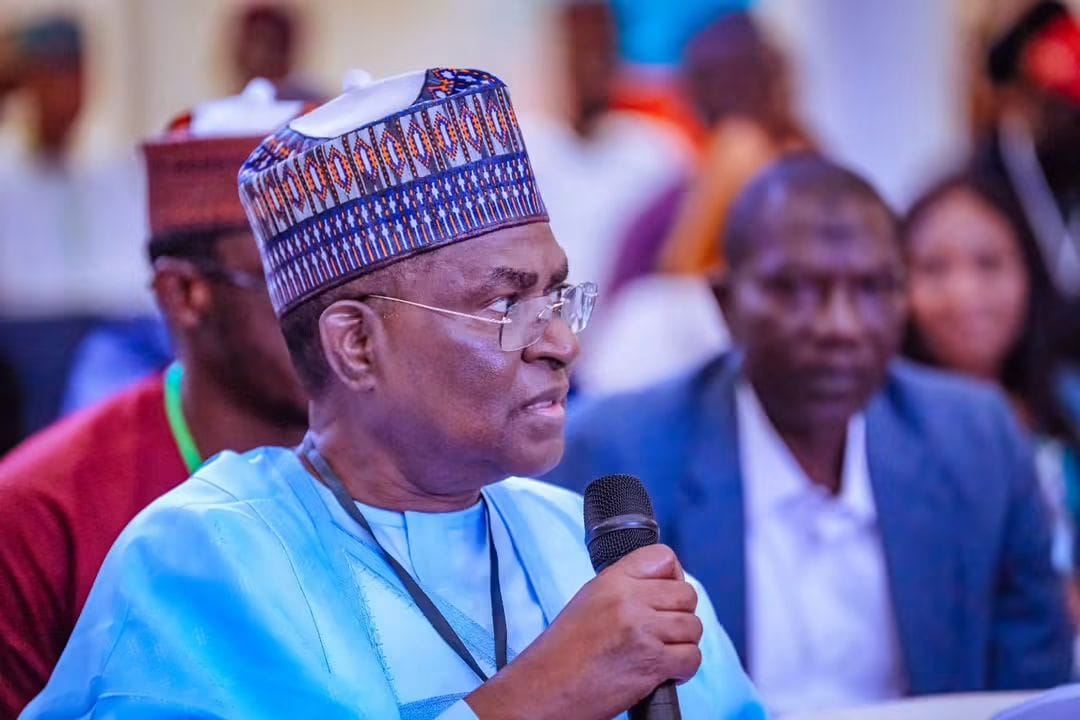
At the forum, Chairman of the APC Professionals Forum Board of Trustees, Dr Isa Yuguda, defended the removal of the fuel subsidy, saying his experience with the 2009 Fuel Subsidy Task Force exposed irregularities and financial leakages in the subsidy regime.
Yuguda highlighted the Nigerian Education Loan Fund, agricultural support programmes and increased security spending as areas where government resources were being redirected.
He acknowledged that Nigeria still faced serious security challenges, including porous borders and cross-border movements by armed groups and criminal networks, and urged continued investment in intelligence, surveillance, border security and regional cooperation.
Yuguda cautioned Nigerians against promises to restore the former fuel subsidy regime without addressing what he described as its historical weaknesses.
“Every Nigerian has the democratic right to present alternative policies, but economic choices must be guided by facts, experience, sustainability, and the long-term interest of the country,” he said.
Yuguda urged Nigerians ahead of the 2027 elections to assess competing economic promises based on facts, sustainability and the long-term interest of the country rather than short-term political considerations.

