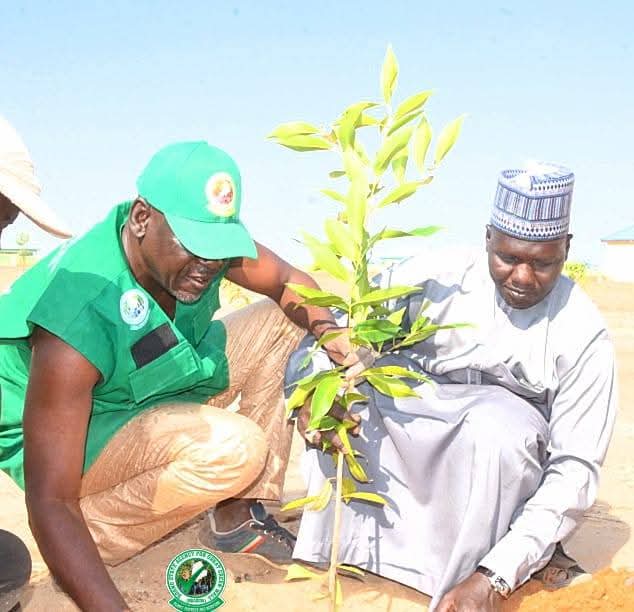
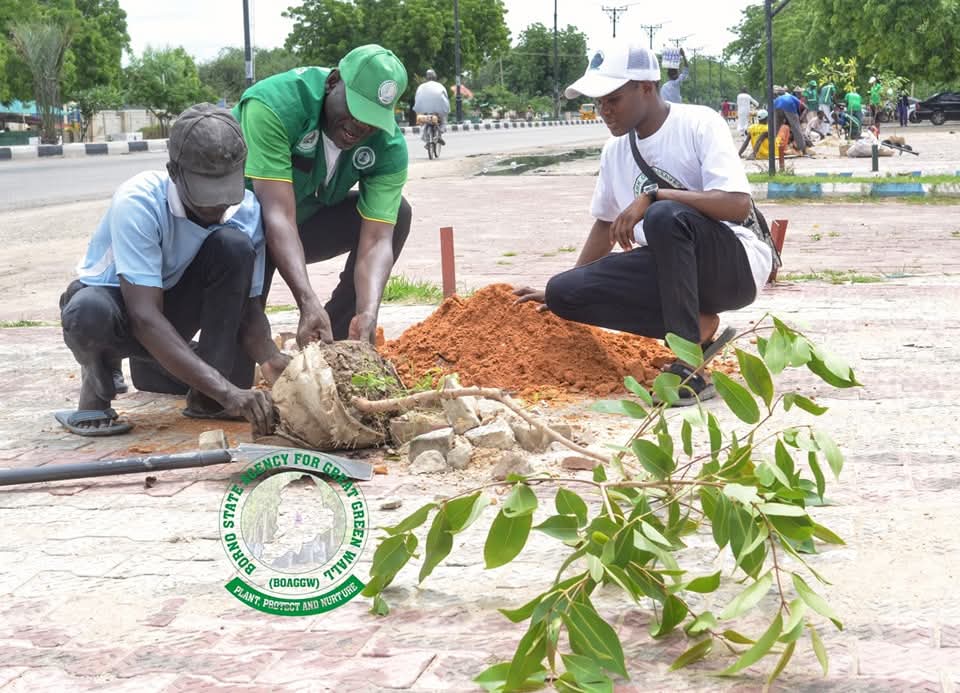
The Borno State Agency for the Great Green Wall says it has planted about three million seedlings and established more than seven kilometres of shelter belts as part of efforts to combat desertification, restore degraded land and strengthen climate resilience across the state.
The agency’s Director-General, Mr Usman Aliyu, told Voice of Nigeria in Maiduguri, highlighting the agency’s achievements since its establishment in July 2024.
Mr Aliyu said the agency was established by Governor Babagana Zulum on 4 July 2024 as an extension of the African Great Green Wall initiative, which was launched in 2007 by African countries confronting the growing threat of desertification and environmental degradation.
He said Nigeria was among the frontline countries affected by desert encroachment, prompting the Government to establish the National Agency for the Great Green Wall in 2015.
According to him, the Great Green Wall initiative seeks to combat desertification, reverse desert encroachment, restore degraded land and help communities adapt to and build resilience against the effects of climate change.
READ ALSO: Borno State Flags off 2026 Tree Planting Campaign
Mr Aliyu explained that the programme also supports Nigeria’s commitment to environmental sustainability and the Sustainable Development Goals.
He said it had made significant progress despite being relatively young.
“Over these two years, we have raised about eight million seedlings for afforestation,” he said.
The Director General stated that about three million seedlings had been planted, while more than seven kilometres of shelter belts had been established to protect communities and farmlands from the effects of desertification.
Mr Aliyu said the agency had also trained and equipped more than 200 women in the production of biochar, briquettes and backyard farming under its climate-smart agriculture initiatives.
He said environmental clubs and associations had been established in selected primary, secondary and tertiary institutions to educate young people about climate change, global warming, desertification and environmental protection.
Grassroot Awareness
According to him, the agency has also embarked on grassroots awareness campaigns aimed at encouraging communities to abandon practices that contribute to environmental degradation.
The Director Genera attributed some of Borno’s environmental challenges to human activities, including the depletion of vegetation and practices that contribute to greenhouse gas emissions.
He said the agency was therefore promoting tree planting, renewable energy and climate-smart agricultural practices to reduce pressure on the environment.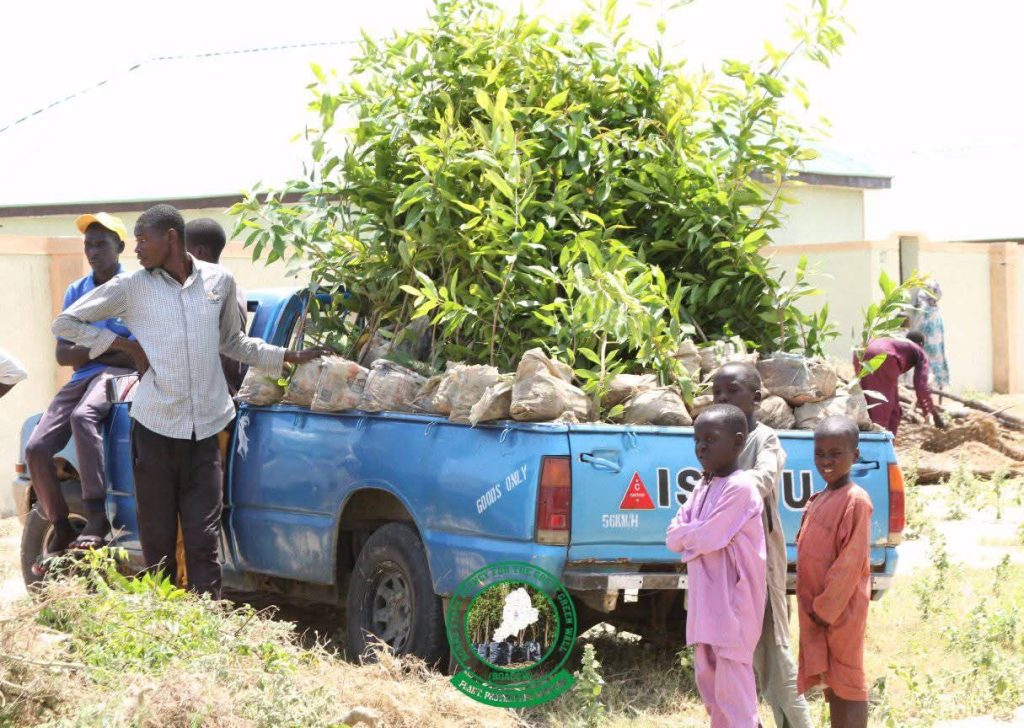
The DG disclosed that the agency had also restored degraded areas through banana plantations and other agricultural initiatives, while creating opportunities for collaboration with development partners, local governments, non-governmental organisations, clubs and community associations across the state.
He noted that a training room had been established to provide members of the public with knowledge on climate change mitigation, adaptation and resilience.
Ambassador Aliyu further disclosed that the state government had recently flagged off the planting of three million assorted seedlings as part of its environmental restoration efforts.
He said the programme was complemented by the distribution of 5,000 complete cooking gas cylinders and the provision of 1,000 clean cooking stoves.
The initiatives, he explained, were designed to provide alternatives to firewood and reduce pressure on forests and vegetation.
The Director-General commended Governor Zulum for what he described as strong support for environmental protection and the activities of the agency.
Ambassador Aliyu said the governor had demonstrated commitment to tackling environmental degradation in the state, including through the review of environmental laws and the introduction of an executive order aimed at curbing indiscriminate tree felling.
Ambassador Aliyu revealed that the agency’s funding since its establishment had largely come from the Borno State Government.
“We thank God as His Excellency has demonstrated visionary leadership in this regard,” he said.
He noted that the agency had yet to receive significant financial support from development partners and other organisations involved in combating climate change and desertification, making the state government’s support critical to its operations.
Employment
The DG also said the Great Green Wall programmes were creating employment and economic opportunities for women and young people in communities where projects were being implemented.
He explained that youths and women were engaged in tree planting, while women were trained in briquette production, seedling production, backyard farming and other climate-smart agricultural practices.
More than 300 women, he said, had been engaged in raising seedlings, from preparation and planting to nurturing and eventual transplantation.
Startup Support
Aliyu stated that the agency had provided start-up support to some women trained in briquette production to enable them to establish small-scale businesses.
He said the initiative was therefore not only focused on environmental restoration but also on improving livelihoods and creating sustainable economic opportunities for vulnerable communities.
The Director-General called for continued cooperation among government institutions, communities, development organisations and individuals to protect the environment and ensure a sustainable future for present and future generations.