The Stakeholders reviewing Nigeria’s 2003 Child Rights Act (CRA) have called for a stronger, adequately funded, child-centred protection and justice system that can translate rights into measurable improvements in children’s everyday lives.
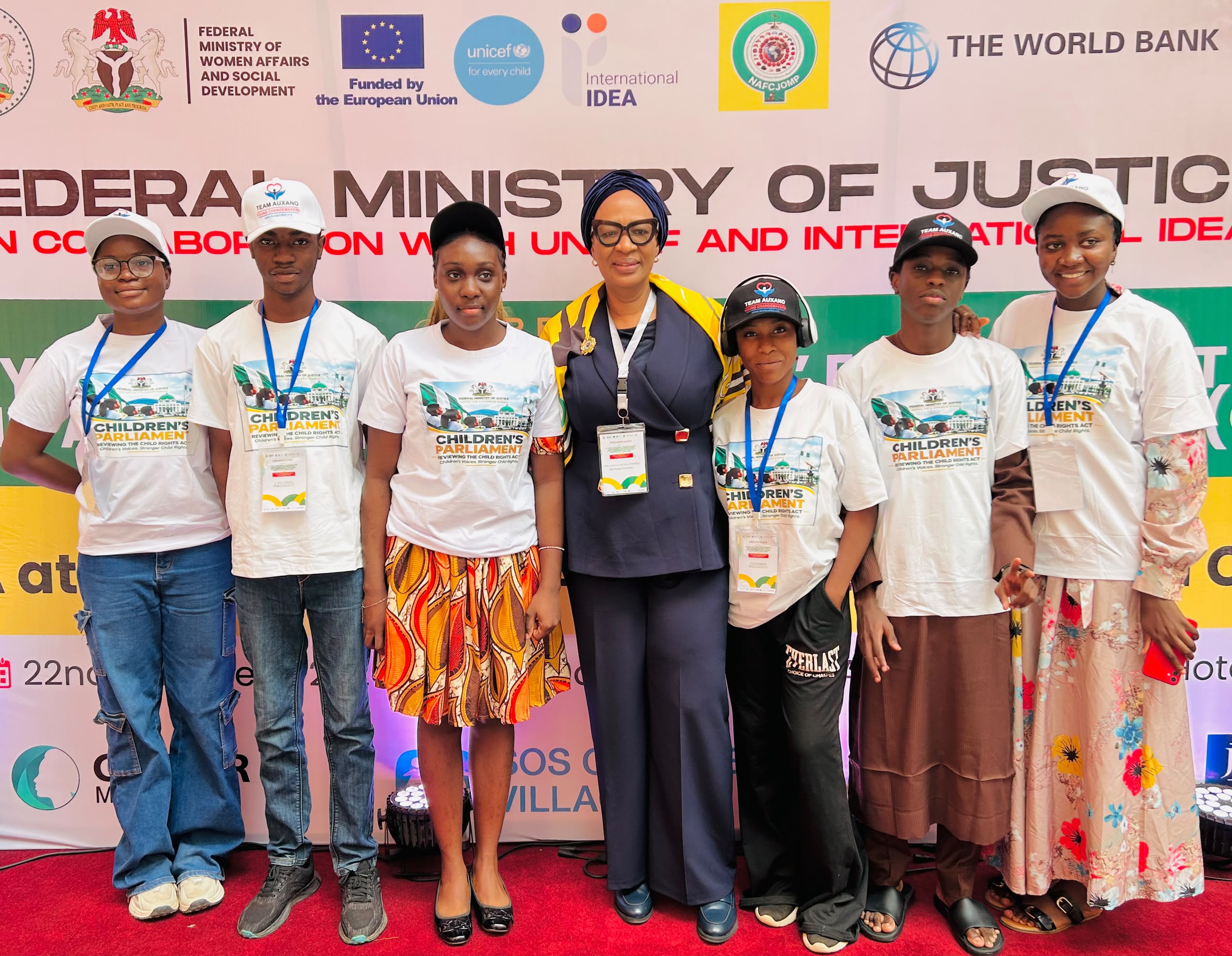
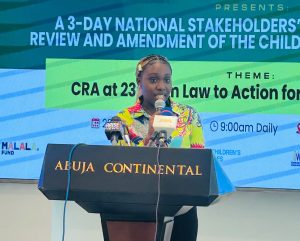
The call formed a major thrust of the National Stakeholders’ Engagement on the Review and Amendment of the Child Rights Act (CRA), 2003, held from September 22 to 24, 2026.
Speaking on behalf of UNICEF Nigeria, Chief Child Protection Officer, Natalie McCauley said the review presented an opportunity to build a functioning child protection system that reaches children across states and communities.
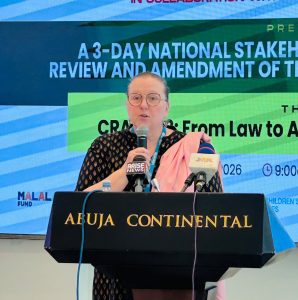
McCauley said: “We need a child protection system that is capable of preventing harm. Not just responding to it.”
READ ALSO: Women Affairs Ministry, TRCN Strengthen Child Protection Partnership
She said the scale of protection challenges underscored the urgency of the reform, noting that nine out of 10 Nigerian children experience violence in the home every month, while one in three girls is married before age 18.
She also cited gaps in birth registration, child detention and exploitative labour, stressing that the review must ultimately answer whether the law would make a tangible difference in the life of a child.
“Is this law working for them or are we just having another meeting?” she asked, urging stakeholders to focus on implementation alongside legislative reform,” she said.
According to her, the revised framework must be supported by professional social workers, specialised police officers and courts, effective referral and case-management mechanisms, reliable data, sustainable financing, and strong monitoring and accountability.
“A law that affects every child in Nigeria must benefit from the perspectives of those who will implement it. Those who will hold institutions accountable. And importantly, children themselves,” she said.
Longstanding Concerns
McCauley said the proposed reforms address longstanding concerns including violence, exploitation, harmful practices, child marriage and child justice, while responding to emerging challenges such as online safety, institutional safeguarding, alternative care, children affected by conflict and humanitarian emergencies, disability inclusion and sustainable financing.
She urged stakeholders to measure success not by the number of new provisions introduced, but by whether the law changes children’s experiences.
Similarly, the Speaker of the Nigerian Children’s Parliament, Progress Umoh, said the review should bridge the gap between recognising children’s rights and making those rights accessible.
“The child does not encounter a section, a subsection or an institutional mandate. The child encounters a situation,” Umoh said.
She stressed that meaningful child participation should go beyond ceremonial inclusion, arguing that children’s experiences and recommendations must inform the reform process and attract accountability for decisions ultimately taken.
According to Umoh, “Because ultimately, the child does not encounter a section, a subsection or an institutional mandate. The child encounters a situation, and when that situation requires protection, the question is very simple:Does the system work?” .
2026 Child Rights Bill
The Commissioner for Women Affairs, Cross River State and Dean, College of Commissioners of Women Affairs, Nigeria, Oedema Irom, said the proposed 2026 Child Rights Bill represents an opportunity to transform legal commitments into lived protection for children.
Representing the College, Irom reaffirmed the commitment of state commissioners to aligning state laws with national minimum standards, strengthening child protection and family-support institutions, and ensuring that women, families and communities remain central to implementation.
She particularly welcomed provisions on coordination, monitoring, data systems, sustainable financing and the proposed Office of the National Children’s Ombudsman as mechanisms for closing implementation gaps.
Also, Chairman of the Nigerian Law Reform Commission, Dakas C.J. Dakas, said the review offered an opportunity to plug legislative loopholes, harmonise federal and state protections and introduce safeguards reflecting Nigeria’s changing socio-economic and technological realities.
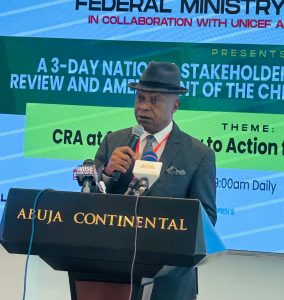
Dakas said law reform must go beyond amendments to legal language, stressing the importance of aligning the framework with societal evolution and regional and international human rights obligations.
For the Legal Aid Council of Nigeria, its Director-General, Aliyu Bagudu Abubakar, represented by Ogechukwu Ibenegbu, said implementation gaps, resource constraints and systemic barriers continued to expose children to inadequate protection despite existing constitutional and statutory safeguards.
The Council said the proposed amendments address critical child-justice concerns, including improper documentation at first contact with the law, prolonged detention, profiling of children as adults, emerging digital safety challenges and jurisdictional conflicts involving minors accused of serious offences.
He expressed hope that the review would produce harmonised national legislation capable of strengthening child justice administration and ensuring indigent children and their families receive adequate legal representation.
The three-day Stakeholders’ Engagement, organised by the Federal Ministry of Justice in collaboration with UNICEF and International IDEA, is expected to consolidate stakeholders’ inputs towards finalising the proposed amendments and advancing them through the legislative process.
The reform comes 23 years after the enactment of the CRA and is being positioned as an opportunity to establish a contemporary legal and institutional framework responsive to the realities facing Nigerian children.
For stakeholders, however, the central test remains implementation: whether the revised law will be backed by the institutions, workforce, financing and accountability mechanisms required to ensure that every Nigerian child can actually access the protection the law promises.