As part of its broader economic diversification strategy, the Cross River State Government has intensified efforts to develop a sustainable coffee industry, positioning the crop as a viable source of jobs, value addition and export earnings.
The Commissioner for Agriculture and Irrigation Development, Johnson Ebokpo, disclosed this during a press conference in Calabar, the capital of Cross River State, South-South Nigeria.
Ebokpo outlined the government’s agenda for building a globally competitive coffee value chain through strategic partnerships, legislation, farmer support and quality assurance measures.
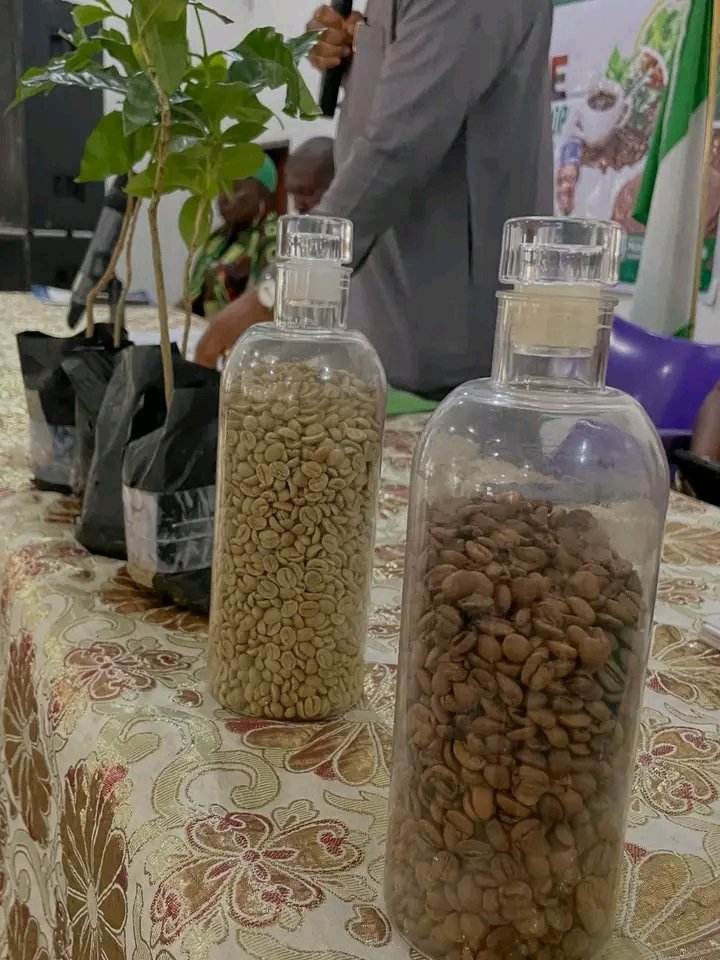
According to Ebokpo, the state distributed one million coffee seedlings in 2025 and plans to distribute an additional four million before the end of 2026.
“We have a seven-year plan to plant 30 million coffee seedlings on 27 thousand hectares of smallholder farms across the state. We are hoping that by 2032, Cross River will have planted at least 13 million seedlings,” he said.
 Stakeholder collaborations
He said that the initiative was being implemented in collaboration with key stakeholders, including the National Coffee and Tea Association of Nigeria, relevant federal agencies, private investors, the Cross River State Geographic Information Agency, the Forestry Commission, the Cross River State House of Assembly and the Office of the Wife of the Governor.
“We have concluded a reformer enumeration; we have taken steps to ensure that coffee seedlings will not be grown within the gazetted forest reserve by using the Cross River Agricultural Traceability System,” Ebokpo explained.
Giving further details on the state government’s decision to invest in coffee, Ebokpo said, “The process of extracting value from cocoa is highly expensive and very capital intensive. That is why we brought in coffee. It does not take too much to extract value from coffee, and we want to use a more inclusive approach from the community to the ward and the local government levels.”
He further noted that the government was promoting coffee entrepreneurship among women and young people, while encouraging the establishment of coffee shops and locally owned coffee brands to stimulate domestic consumption alongside exports.
“We want to drive a coffee culture. We want coffee shops in our communities, our restaurants and even our bars. Outside export, we also want to increase local consumption because that is how sustainable industries are built,” he said.
 Institutional framework
The commissioner said Cross River State was putting in place the institutional and legal framework needed to attract investment and guarantee quality production.
He noted, “A proposed amendment to an existing legislation, the Cross River Produce Law, to strengthen coffee development has already passed first reading in the State House of Assembly. We have also proposed the establishment of a Tree Crop Development Agency as well as a Coffee Commodity Exchange for marketing.”
Furthermore, Ebokpo stated that the state was working with federal government agencies, including the Nigeria Export Promotion Council, the Nigerian Agricultural Quarantine Service and the National Agricultural Seed Council to ensure that coffee produced in Cross River meets international standards.
“Quality starts from the seed. The planting materials we are distributing have received the necessary regulatory clearances. We are building institutions backed by strong legal frameworks because that is how countries like Rwanda have based their development on coffee, and Uganda has made coffee its primary export. That is the kind of system we are building in Cross River,” he stated.
The commissioner said the state was strengthening research, farmer cooperatives and extension services to ensure adherence to international agronomic practices, improve product quality and enhance market access.
He said that the government’s long-term objective was to build an internationally competitive coffee industry capable of generating foreign exchange while creating employment and business opportunities across the value chain.